Languages
Wednesday, August 12, 2026



News and Views from the Global South

Floods and Droughts are Two Sides of the Same Crisis
Water emergencies are deeply personal to us. Coming from Southeast Asia and southern Africa—two regions that struggle with water challenges—we have witnessed firsthand how water defines the fate of communities and nations.
The Disappeared: Mexico’s Industrial-Scale Human Rights Crisis
They found shoes, hundreds of them, scattered across the dirt floor of an extermination camp in Jalisco state. These abandoned shoes, once belonging to someone’s child, parent or spouse, stand as silent witnesses to Mexico’s deepest national trauma. Alongside charred human remains and makeshift crematoria meant to erase all evidence of humanity, they tell the story of a crisis that has reached industrial-scale proportions.
Global Community in Busan to Define Sustainable Future for Life Under Water
“As the son of a haenyeo, a traditional Korean female diver, I grew up by the sea, often watching the ocean with my mother. Captivated by the beauty and majesty of the sea, I chose to study marine science and have devoted my entire career to the ocean,” said Do-hyung Kang, Minister of the Ministry of Oceans and Fisheries of the Republic of Korea.
Germany’s Role in International Security: Time to Match Words with Deeds
For the first time ever in its history, the United Nations Peacekeeping Ministerial (PKM) will take place in Berlin from 13 to 14 May. The aim of the meeting is to discuss the future of UN peace missions. These biennial meetings serve as a gauge of the continuing political support for such missions, which are, of course, just one of the tools in the UN’s comprehensive ‘toolkit’ for handling conflict — alongside general conflict prevention, mediation missions and peacebuilding measures.
If the US Nuclear Umbrella Collapses, Will it Trigger a Euro-Bomb?
The Trump administration’s hostile attitude towards Western Europe—and the threat to pullout of the 32-member military alliance, the North Atlantic Treaty Organization (NATO) – signifies the danger of losing the longstanding protection of the US nuclear umbrella over Europe. Jana Puglierin, director of the German office of the European Council on Foreign Relations, was quoted as saying: “Trump may, or may not, want to leave NATO officially, but he has every means to undermine NATO”.
Korea’s Troubled Waters: Traditional Women Divers Protecting an Ocean in Crisis
Ahead of the 10th Our Ocean Conference, with the theme "Our Ocean, Our Action," comes a global call to protect the world's oceans.
Venezuela’s Oil trapped in Hurricane Trump’s Onslaught
Reduced to a marginal oil producer over the past decade, Venezuela has suffered another blow as United States president Donald Trump ordered punitive measures to blockade and further restrict the country’s oil exports.
Afghan Women Defy Taliban Repression With Underground Protests
“Even if our murals don't change much, they will surely leave a mark - at least on the mind of one Taliban member who sees them.” These words from Afghan women activists reflect the bold and creative tactics they continue to use in their resistance against the Taliban's oppressive regime.
African Giving Practices: Understanding a Tradition of Generosity and Community Support
Across Africa, giving is not just an act of charity; it’s a deep-rooted tradition embedded in culture, community, and mutual care. The concept of giving has evolved through generations, often taking on forms that are as diverse as the continent itself.
Reclaiming Equity: Why G20 Must Center Women, Children & Adolescents in the UHC Agenda
As the G20 Health Working Group convened in KwaZulu-Natal under South Africa’s presidency earlier this year, a central question echoed across plenaries: How can we accelerate universal health coverage (UHC) in an increasingly unequal world?
US Plans at Restructuring May Include World Bank, IMF & UN Agencies
The US State Department, in a wide-ranging political re-structuring of its policies, will eliminate 132 domestic offices, lay-off about 700 federal workers and reduce diplomatic missions overseas. The proposed changes will also include terminating some of the funding for the United Nations and its agencies, budgetary cuts to the 32-member military alliance, the North Atlantic Treaty Organization (NATO), and revamping 20 other international organizations, including the World Bank (WB) and the International Monetary Fund (IMF).
Kashmir Reels After Pahalgam Attack, Fear Long Term Impacts on Livelihoods
Abdul Majeed Mir strolls leisurely among the purple crocus flower rows in Pampore's saffron fields as the morning mist hovers low over them. His family has been growing this valuable spice, called "red gold," for many generations, but now his hands go through the harvest mechanically. There is a noticeable lack of the typical commotion of tourists haggling over saffron packets.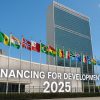
Financing for Whom? The Financing for Development Summit Must Address Social Dimensions
The Fourth International Conference on Financing for Development (FfD4) will bring world leaders together to forge a new international consensus on how to finance a better future for all. Yet, in practice, the first drafts of its outcome reveal a glaring omission: people. Despite rhetoric about inclusivity, the drafts are strikingly weak on social issues, as if financing and macroeconomic policies exist in a vacuum, detached from the lives they impact.
The Growth of One-Person Households
In much of the past, few people lived alone. At the start of the 20th century, one-person households were relatively rare and are estimated to have accounted for less than 10% of all households worldwide.
‘Noboa Did Not Receive a Blank Cheque: He Will Have to Show Tangible Results’
CIVICUS discusses Ecuador’s presidential election with Jorge Tapia de los Reyes, Coordinator of the Democracy and Politics Department and the Political Funding Observatory of the Citizenship and Development Foundation (FCD). FCD is an Ecuadorian civil society organisation that promotes participation, citizen monitoring and open government.
UN Warns of an Imminent Collapse in Haiti
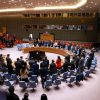
As gang violence in Haiti continues to target civilians and critical infrastructures, humanitarian organizations and the Haitian National Police (HNP) have found it increasingly difficult to manage the growing scale of needs. The United Nations (UN) and its partners fear that Haiti will approach a nationwide collapse due to numerous shortfalls in funding, a widespread lack of essential resources, and rampant insecurity.
Rampant Tourism, Climate Change Threatens Varkala’s Unique Geodiversity
From the top of the cliff, the beach down below appears like a box of sand, with people scattered on it like tiny ants. This is Varkala, arguably the most sought-after coastal tourism spot in Kerala, India, right now. The Varkala cliff—spanning across Edava Cliff, North Cliff, and South Cliff—is 7.5 km long and has a maximum height of 40 m. Religious rituals take place at the part of Papanasam beach that divides the North and South Cliffs.
A Nation Bleeds While the World Watches: The Tragedy in Sudan Must End
The ongoing civil war in Sudan is tragic, but the greater tragedy is that if the international community sits on its hands and does nothing to stop this horrific war and prevent further escalation of the conflict, it will come at an unfathomable price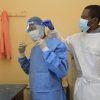
African Countries Still Underfunding Health by as Much as 50 Percent
The majority of African countries are yet to commit 15 percent of their GDP to funding the health sector, despite the growing disease burden weighing down the continent and two decades after the coming into force of the Abuja declaration on health sector funding.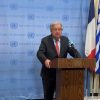
UN Chief, Brazil Gather World Leaders to Reaffirm Commitments Paris Agreement
UN Secretary-General António Guterres and President Lula da Silva of Brazil on Wednesday, April 23, held a closed-door meeting with heads of state to discuss strengthening global efforts against the climate crisis and to ensure a just energy transition.
Climate Groups Report 2025 Is Unlikely To Be Hotter Than 2024
On March 19, the World Meteorological Organization (WMO) and the Copernicus Climate Change Service (C3S) issued a report on the State of Global Climate in 2024, detailing the numerous heightened natural disasters that were a consequence of human-induced climate change. With the past three years having been recorded as the three hottest years in human history, climate scientists are optimistic that 2025 will see slightly cooler global temperatures.« Previous Page — Next Page »


Want to keep up with the latest news and views from the Global South? Sign up for IPS Daily News Report for daily emails with our top stories about international development, climate change, gender and more. (Formerly IPS TerraViva since 1993).

The Week with IPS

NEXT STOP - SDGs
Tracking global progress towards a sustainable world
Tracking global progress towards a sustainable world
