
Monday, November 16, 2026



News and Views from the Global South
IPS UN: Inside the Glasshouse

The United Nations At 75 Remains The World’s Moral Compass
“The vision and promise of the United Nations is that food, healthcare, water and sanitation, education, decent work and social security are not commodities for sale to those who can afford them, but basic human rights to which we are all entitled.” Those were the poignant words of the UN Secretary-General, Antonio Guterres, in a hard hitting speech on 18 July 2020 to mark Mandela Day.
Relevance of US Peace Corps in Post-COVID World
I have had 5-decade long and happy association with the Peace Corps since I was a 7th grade student in the hills of Nepal. My wonderful Peace Corps teachers were instrumental in helping transform my life. And the 4000+ Peace Corps Volunteers who have served in Nepal have contributed immensely to my country’s development.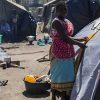
World Poverty: We Have Come So Far… But So Much Further To Go
The United Nations’ first Sustainable Development Goal (SDG) is “No poverty,” the most important because almost half the world, 46%, lives on less than $5.50 a day according to the World Bank. But world attention has turned away from poverty. Why?
US, UK, Interpol Give Ghana Phone Hacking Tools, Raising Journalist Concerns on Safety & Confidentiality
In May 2019, senior members of Ghana’s law enforcement posed for photos with the U.S. ambassador to their country at a ceremony in the capital, Accra. Between them they held boxes and bags, gifts from the U.S. government to Ghana which, according to one of the recipients, contained Israeli phone hacking technology.
UN Chief Remains Focused on Re-election While Geneva Staff Feel Abandoned
Two years have passed since the introduction of the illegal pay cuts imposed on staff in the Professional category-- and above-- working for the UN in Geneva, following a cost of living survey conducted by the International Civil Service Commission (ICSC) in 2016.
Q&A: Understanding COVID-19’s Impact on Food Security and Nutrition
While it is too early to assess the full impact of the global COVID-19 lockdowns, at least 83 million to 132 million more people may go hungry this year -- 690 million people were classified as hungry in 2019 -- as the pandemic has highlighted the vulnerabilities and inadequacies of global food systems.
Electrification of Transport: A Challenge for Urbanised Latin America
Electric transport, still limited in Latin America despite its urban benefits, could expand during the post-pandemic economic recovery, says Adalberto Maluf, president of the Brazilian Association of Electric Vehicles (ABVE).
On World Youth Skills Day, Don’t Forget the Importance of Soft Skills
It’s no secret that under pandemic lockdown for so many months, young people around the world have coped in tremendous ways. They have found new outlets for learning and creative channels for developing and using their skills.
Q&A: How Kazakhstan’s Transgender and Lesbian Women are Being Impacted by COVID-19
The coronavirus lockdown in Kazakhstan, and the resultant limited public oversight and limited publication engagement, has paved the way for the government to propose amendments to the country's laws around gender that could see the exclusion of the rights of the Lesbian, Gay, Bisexual, Transgender, and Queer (LGBTQ) community.
Beware the ‘Hunger’ to Access Indigenous Peoples’ Land and Resources for Post-COVID-19 Recovery
When governments and states begin their recovery journey from the economic downturn caused by the coronavirus pandemic, there might be a heightened threat to indigenous peoples, their land and resources. “The fear is [that] the economic recovery is based on access to land and natural resources,” Lola García-Alix, senior advisor on Global Governance at the International Work Group for Indigenous Affairs (IWGIA), told IPS.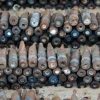
UN Chief Warns of Deadly Germs as Potential Bioterrorist Weapons
The coronavirus—which has claimed the lives of over 538,000 people and infected more than 11.6 million worldwide—has destabilized virtually every facet of human life ever since its outbreak in late December.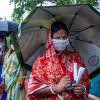
Security Council’s Overdue COVID-19 Ceasefire Resolution Must Put Women & Youth at Center
More than three months after UN Secretary General Antonio Guterres made an urgent appeal for a global ceasefire in response to the COVID-19 pandemic, the UN Security Council has finally passed a resolution supporting his call.
Q&A: Child Marriage, FGM and Harmful Practices on Women’s Bodies to Increase Because of COVID-19
An additional 5.6 million child marriages can be expected because of the coronavirus pandemic, which resulted in a short-term increase in poverty and the shutdown of schools. The current pandemic is also expected to have a massive impact on the projected growth of harmful practices on women’s bodies.
Global Economic Recovery must Prioritise Restructuring of Debt for Developing Countries
Unless there is a restructuring of debt for developing countries, the servicing for this debt will take away valuable resources from these nations that are needed to prevent the further suffering of people during the coronavirus pandemic -- particularly with regards to safeguarding the health systems, and protecting the “integrity and resilience of economies”.
Nuclear Testing, Never Again
Seventy-five years ago, on July 16, the United States detonated the world’s first nuclear weapons test explosion in the New Mexican desert. Just three weeks later, U.S. Air Force B-29 bombers executed surprise atomic bomb attacks on the cities of Hiroshima and Nagasaki, killing at least 214,000 people by the end of 1945, and injuring untold thousands more who died in the years afterward.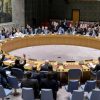
Cover-up at the UN: You Scratch My Back & I’ll Scratch Yours
The ongoing battle between China and the United States is threatening to paralyze the most powerful body at the United Nations – the 15-member Security Council (UNSC)—which has virtually gone MIA (missing in action) on some of the key politically-sensitive issues of the day.
India’s Test along the Line of Actual Control
Being the sole candidate from the Asia Pacific region for the non-permanent seat of the United Nations Security Council (UNSC), India was elected by 184 votes in the 193-member United Nations’ General Assembly. on June 17, 2020.
Safety of Children an Afterthought for Tech Companies
Global upheaval caused by the COVID-19 pandemic has left society’s most vulnerable exposed. Instances of child sexual exploitation material (CSEM) found online have increased at an alarming rate over past months.
Q&A: Post COVID-19 Pandemic Let’s Stop the Next Wave of Medicalisation over Mental Health
The current pandemic is not only heightening mental health concerns, but might also put many at risk of becoming institutionalised or being neglected by the system.
African Governments Failing Survivors of Child Sexual Exploitation
In Malawi, Mary* was only 14 years old when she was recruited and trafficked to the city of Blantyre and sold for sex in a bar. A man had arrived in her village looking for girls to work as domestic helpers for families.
COVID-19 Increases Suffering of Children in Conflict
The current coronavirus pandemic is having a profound affect on children in conflict zones -- with girls especially being at higher risk of violence and sexual health concerns.« Previous Page — Next Page »


It was dubbed "The Glass House" by U.S. ambassador James Wadsworth in 1966. Half a century later, the United Nations has gradually expanded its role as agent of peace and protector of the world's vulnerable populations, while simultaneously facing internal pressures to become more inclusive, increase transparency and maintain legitimacy in the post-Cold War political and economic order. Highlighting the local impacts of global policies on economic development, environment, health and human rights, IPS's coverage goes beyond the edicts of the Security Council to illuminate the power struggles, successes and shortcomings of the 193-member institution as it grapples with crises like climate change, armed conflict, poverty and HIV/AIDS.

The Week with IPS
