
Monday, November 16, 2026



News and Views from the Global South
IPS UN: Inside the Glasshouse
We Must Prioritize Local Solutions to Global Problems
World Humanitarian Day is the perfect time to refresh our push to localize humanitarian aid for COVID-19 and all the challenges we face. Celebrating #RealLifeHeroes!
Q&A: Family Farming in Latin America & the Caribbean Hard Hit by COVID-19 Restrictions
With limited transport options to carry their goods to the market, lack of protective gear, and limited financial resources, family farmers across Latin America are facing grave consequences as a result of the COVID-19 pandemic.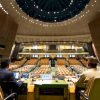
If Trump Delivers His Last Hurrah to an Empty United Nations, Will it Still Make a Sound?
There is no love lost between the United Nations and US President Donald Trump. When he addressed the high-level segment of the UN General Assembly in September 2018, Trump falsely told delegates that "in less than two years, my administration has accomplished more than almost any administration in the history of our country"
Impending Food Crisis in Lebanon will Largely Affect Migrant Workers
Migrant workers and refugees in Lebanon will “inevitably” suffer the most as food insecurity threatens the nation following last week’s blast.
Reform of the United Nations Organization
The US detains essential keys to the political and economic stability of the planet. The last four years have been challenging for Americans, their allies, and the rest of the world.
COVID-19 – Some 23.8 Million More Children Will Drop out of School
Countries with low human development are facing the brunt of school lockdowns, with more than 85 percent of their students effectively out of school by the second quarter of 2020, according to a United Nations policy brief on the impact of COVID-19 on education.
The UN General Assembly: A 75-Year Journey Towards the Future We Want
The United Nations came into existence at a time of great despair, when the penholders of its founding document dared to imagine a better world, one that would be defined by peace and equality. Visionary world leaders chose hope over cynicism, empathy over indifference and partnership over distrust when they came together in San Francisco on 26 June 1945 to sign the Charter of the United Nations. They embarked upon a new, rules-based world order, with an Organization of unrivalled legitimacy at its core.
The Charter of the United Nations: Ideals for Shaping Our Reality
“Reconciling the requirements of the ideal with the possibilities of the real": this is how Georges Bidault, Minister for Foreign Affairs and head of the French delegation to the San Francisco Conference, summed up the objective pursued by the drafters of the Charter of the United Nations. On the still living ashes of the Second World War, the fathers of an Organization charged with developing friendly relations between nations, promoting human rights and economic and social progress were less utopian than visionary. They understood that the community of States should have a common constitution. It has been tested by conflict, crisis and upheaval, but its resilience and strength have shaped the very structure of contemporary international relations.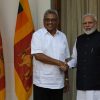
Modern Tools, Age-old Wisdom: on India-Sri Lanka Relations
The unique India-Sri Lanka relationship, de jure, is between equals as sovereign nations. But it’s asymmetric in terms of geographic size, population, military and economic power, on the one hand, and social indicators and geographical location, on the other. It is steeped in myth and legend, and influenced by religious, cultural and social affinities.
Southeast Asia Has a Chance to Build Back Better Post-Pandemic
Southeast Asia’s response to the coronavirus pandemic has been efficient, but some areas such as data privacy, measures to go back to normalcy after lockdown is lifted, and resources for migrant or transient populations will need addressing.
Statue Smashing – Heroes, Values and Racism
On Friday the 24th of June, President Trump announced he was skipping a weekend at his New Jersey golf resort to ”ensure law and order in Washington”, tweeting:- I just had the privilege of signing a very strong Executive Order protecting American Monuments, Memorials, and Statues – and combatting recent Criminal Violence. Long prison terms for these lawless acts against our Great Country!

Coronavirus – Urban Areas Face the Brunt of the Pandemic
The effect of the coronavirus pandemic and its subsequent global lockdown might have a graver effect on cities and urban areas than on rural areas, possibly making women more susceptible to violence.
Reflections on the Charter of the United Nations on its 75th Anniversary
This year we celebrate the 75th anniversary of the Charter of the United Nations, written and signed during a period of great global change. Today, the world is again shifting beneath our feet. Yet, the Charter remains a firm foundation for our joint efforts.
Ride-Hailing App Delivers Contraceptives to Users’ Doorsteps
When Betty Nagadya walks through the trading centre on her way home, she sings a song in the local Luganda language: “SafeBoda, SafeBoda, who needs a helmet?” she sings. “For those who feel cold, I have a coat for you.” But her song is not about clothing – it’s about condoms.
Myanmar’s Protection Bill falls Short of Addressing Violence against Women
A legislation that aims to protect women against violence in Myanmar, while long overdue, is raising concern among human rights advocates about its inadequate definition of rape, vague definition for “consent”, and anti-lesbian, gay, bisexual, and transgender rhetoric.
The Charter of the United Nations After 75 Years: Personal Reflections
The Charter of the United Nations is not only the constituent instrument of the United Nations as an organization. It is a multilateral legal manifesto encompassing a set of basic principles and norms aimed at ensuring peace, freedom, development, equality and human rights throughout the world. These principles and norms reflect the shared values proclaimed in the preamble on behalf of the “Peoples of the United Nations”. As such, it is the most innovative and trailblazing multilateral treaty ever concluded among States. Today, it is a universal instrument by which all States have solemnly accepted to be bound in their international relations.
If UN is Working “Full Throttle” While Locked Down, Shouldn’t Most Staffers Work from Home –Permanently?
When the coronavirus pandemic delivered a mortal blow to the United States, grounding the country to a virtual standstill and throwing its economy into a deep recession, hundreds and thousands were forced to work “remotely” while offices remained shuttered, beginning late March.
Trump the Wannabe Dictator
I, like many of my fellow Americans, am extremely concerned about Trump’s dictatorial tendencies. Given his behavior – what he said and did over the past four years – he may well act on some of these tendencies, especially if he loses the election by a narrow margin.
Marking 75 Years of the Charter of the United Nations
The Charter of the United Nations has been a constant presence in my life. My awareness of it started with the usual brief introduction to the basics of the United Nations as an organization that many young people receive in school. Later, as my political awareness took shape against the backdrop of military rule in Portugal and my country’s status as a colonial power, the Charter’s calls for self-determination and other freedoms registered with urgency. During the time I spent as a volunteer in the poor neighbourhoods of Lisbon, the Charter’s vision of social justice was equally resonant. In subsequent service as a parliamentarian and then as Prime Minister, I was privileged to have an opportunity to advance not only national progress but one of the Charter’s other main objectives: international cooperation. Across a decade as High Commissioner for Refugees and now in my current role, the Charter’s power inspires me onward every day in serving “we the peoples”, including the most vulnerable members of the human family, who have a special claim on that landmark document’s provisions and protections.
COVID-19 Impact Means Women and Girls Will Still Eat Last, Be Educated Last
Catherine Bertini, former executive director of the World Food Programme, began the IPS United Nations Bureau webinar “The Impact of the COVID-19 Pandemic on Women and Girls” by reminiscing on a talk she gave in 1995 entitled “Women eat last”. She remarked that after 25 years, the phrase is still something that is relevant to the present day.
Tobacco Industry Factoid on Illicit Trade Leading Governments Astray
A factoid is unreliable information repeated so often that it becomes accepted as fact. One such factoid repeatedly echoed across the globe by the tobacco industry is that tobacco tax increases worsen cigarette smuggling.« Previous Page — Next Page »


It was dubbed "The Glass House" by U.S. ambassador James Wadsworth in 1966. Half a century later, the United Nations has gradually expanded its role as agent of peace and protector of the world's vulnerable populations, while simultaneously facing internal pressures to become more inclusive, increase transparency and maintain legitimacy in the post-Cold War political and economic order. Highlighting the local impacts of global policies on economic development, environment, health and human rights, IPS's coverage goes beyond the edicts of the Security Council to illuminate the power struggles, successes and shortcomings of the 193-member institution as it grapples with crises like climate change, armed conflict, poverty and HIV/AIDS.

The Week with IPS
