Languages
Saturday, October 24, 2026



News and Views from the Global South
Projects

This Year’s Three UN Summits Set the Stage for COP30 to Transform Food Systems
This year has been a landmark one for climate and environment policy. Starting with the UN’s COP16 biodiversity talks in October, followed by the COP29 climate talks in November, and closing with the desertification COP16 in December, few years have offered such critical moments back-to-back.
Maya Train: Still Waiting to Become Promised Engine of Development – VIDEO
 When he promoted the Maya Train (TM) in 2019, then-President Andrés Manuel López Obrador, who ruled Mexico between 2018 and October this year, stated that the railway line would be an engine of development for the southeastern Yucatan peninsula.
Targeting Transformative Disaster Risk Reduction in Asia-Pacific Subregions
In December 2024, Vanuatu experienced yet another harrowing reminder of its vulnerability to disasters—a powerful 7.4 magnitude earthquake struck the Pacific nation’s capital, Port Vila, leaving 14 dead, over 200 injured, and thousands more affected.
Japanese Bank Criticized for Financing Mozambique LNG Project Blamed for Displacement
Climate and environmental activists from Japan have criticized the Japan Bank for International Cooperation (JBIC) for financing the controversial Mozambique Liquefied Natural Gas (LNG) project to the tune of USD 3 billion in a loan signed in July.
We Can and Must Do Our Best
As 2024 comes to a close, I dare to say that this has been an especially gruesome year for millions upon millions of young children, their parents and their teachers. The world has witnessed one horrific crisis of cruelty, dispossession and human suffering after another.
Power Arrives but the River Dries Up for Brazil’s Amazonian Dwellers
The flow of the igarapé always dropped for three months every year, but now it has been dry for two years in a row, complains Maria Aparecida dos Anjos, looking at the trickle of water that when flooded reaches the stilts of her wooden house, 50 metres away and on a slope of more than 10 metres high.
Expansion of Mexico’s Largest Port Causes Alarm Over Environmental Damage
The expansion of the port of Manzanillo, Mexico's most important port in terms of cargo movement and located on the central Pacific coast, has major environmental impacts, as well as presenting climatic risks.
The Climate Crisis as a Diplomatic Battlefield
The climate crisis, a defining challenge of the 21st century, is not just an environmental issue; it is increasingly a critical arena for international diplomacy. From intense negotiations at COP summits to the politics of energy transitions and resource control, climate change is shaping the geopolitical landscape.
Interlinked Solutions Key to Tackling Biodiversity, Water, Food, Health and Climate Change, says IPBES
Biological diversity is on the decline worldwide, and current approaches to address its loss have been piecemeal and ineffective in tackling the crisis facing nature—this is despite estimates that over half of global GDP (USD 58 trillion of economic activity in 2023) is generated in sectors that are moderately to highly dependent on nature, a new report by the Intergovernmental Platform on Biodiversity and Ecosystem Services (IPBES) finds.
America’s Climate Carousel
The rhythmic swing of American climate policy has taken another dramatic turn. With Donald Trump’s return to the US presidency in mid-January next year, the international climate community will find itself bracing for what many fear will be another American exodus from the Paris Agreement.
How an African Bioeconomy Can Strengthen Agrifood Systems in the Context of a Changing Climate
From increased pests and diseases to lower crop yields and extreme weather events, the adverse impacts of climate change on agriculture in Africa cannot be overstated.
Small Island States Put Faith in International Court’s ‘Wayfinding’ Advisory Opinion
The “crazy, weird and at some point (what seemed like) insurmountable” plan to ask the International Court of Justice for an advisory opinion on the obligations of UN member states regarding climate change was a success, Vishal Prasad, a representative for the. Pacific Islands Students Fighting Climate Change (PISFCC) said at a post-hearing press conference today (December 13).
‘We Will Not Go Quietly Into the Rising Sea,’ Tuvalu Tells International Court of Justice
Rising sea level caused by greenhouse gas emission-fueled climate change is threatening existence in coastal communities and island nations. At the International Court of Justice (ICJ), on Thursday, December 12, 2024, small island states, including Tuvalu and a Pacific-based fisheries agency detailed their ongoing existential threats caused by the climate change-induced sea level rise and impacts on fishery-based livelihood.
New Law in Cuba Makes Investing in Renewable Energy Sources Mandatory
With Decree 110, published on 26 November, Cuba made it mandatory for major consumers, whether they are state or private entities, to invest in the use of renewable energy sources, while the energy crisis facing the country worsens.
Nobel Peace Prize Forum Breaks Down Nuclear Risks and Solutions
The existential threat that nuclear weapons present remains as pertinent as ever, even when they have not been deployed in war for nearly 80 years. As some countries seek out nuclear weapons or to upgrade and modernize their existing warheads, global voices in nuclear politics and disarmament warn of the potential risk of a new nuclear arms race amid the weakening of nuclear treaties that prohibit the proliferation and use of nuclear arms.
Once Scattered by Colonialism, Today United in Urgent Pursuit of Climate Justice
The Seychelles consider the ongoing public hearings at the International Court of Justice (ICJ) both timely and critical “for the people of the small island developing state in the middle of the Indian Ocean,” Flavien Joubert, Minister for Agriculture, Climate Change and Environment of the Seychelles, told the court today.
Micro-Dams Spark a Wave of Water Sustainability in Brazil – VIDEO
They look like attempts to copy the moon’s surface, in some cases, as craters multiply in the grasslands. But they are actually micro-dams, barraginhas in Portuguese, which have spread in Brazil as a successful way to store water and prevent soil erosion in rural areas. 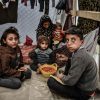
FAO Renews Its Commitment to Right to Food Guidelines
The Food and Agriculture Organization (FAO) launched its newest report on the Right to Food Guidelines on December 10, which focuses on that focused on the urgency of food security as well as the measures that will be taken by the organization to eradicate hunger and malnutrition in the coming decade.
Africa’s Time – Delivering Transformation via Innovation
Africa, the world’s youngest continent is brimming with creativity, talent and innovation. With more than 60% of its population under the age of 25, Africa’s youth are fueling entrepreneurship and job creation across the region.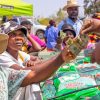
In Zimbabwe, Women Are Leading the Battle Against Climate Change
When Susan Chinyengetere started to focus on farming in her home village in south-eastern Zimbabwe, she wondered if she could earn a living and raise her children. With climate catastrophes ravaging the country, her hesitation on rain-fed agriculture worsened. But two years later, the 32-year-old mother of two from Mafaure village in Masvingo, about 295 km from the capital Harare, is now a champion in farming.
No State Is Truly Independent if It Suffers Significant Injury Without Consequence—Palau
After many decades of colonial rule, Palau was the last country to emerge from the UN Trusteeship. Palau celebrated 30 years of independence in October 2024 “and takes seriously the rights and responsibilities of independence. Independence should mean that Palau is free to build its own future and be responsible for the security, safety, and well-being of its own people,” said Gustav N. Aitaro, the Minister of State of the Republic of Palau at the International Court of Justice (ICJ).« Previous Page — Next Page »





The Week with IPS

NEXT STOP - SDGs
Tracking global progress towards a sustainable world
Tracking global progress towards a sustainable world
