Languages
Monday, October 26, 2026



News and Views from the Global South
Projects
Robust Negotiations Still Needed to Push Rich Countries to Honor Financial Commitments
The irony is that whatever the stakes, finance always features as the “crying onion” at each COP. Hence for the COP29, dubbed the finance COP, no wonder we reach an ocean of tears—especially in view of the current geopolitics, when the world is facing the likelihood of having its historically biggest financial contributor on climate pull out.
CGIAR Developing Farmers’ Resilience in the Face of Climate Shocks
As COP29 negotiations continue in Baku, agricultural leaders are pitching the need for climate-resilient and data-driven solutions to support marginalized farmers and low-income communities.
Building Resilience: Spotlight on Poorest, Rural Communities Amid COP29 Competing Priorities
Life in remote, marginal areas, drylands and deserts is increasingly becoming difficult because rural people are in the crosshairs of an unprecedented climate onslaught. A substantial number of lives and livelihoods are on the line, as nearly half of the world's population, 3.3 billion, lives in rural areas and 90 percent of them are in developing countries.
‘Show Me the Money’—Grenada PM Calls for Climate Justice
"Though I come from a 'no worries' island, climate change is deeply worrisome for us," Grenada's Prime Minister Dickon Mitchell told IPS in an exclusive interview at COP29 currently underway in Baku, Azerbaijan. Asked how his country was recovering from Hurricane Beryl, Mitchell said the island in the last 24 hours “experienced flash flooding and landslides... So, apart from Hurricane Beryl, we are also dealing with other climate catastrophes.”
Latin America: Pass on Renewables, Fail on Efficiency
The Latin American and Caribbean region is a student with good grades in renewable energy, but not in energy efficiency, and has a long way to go in contributing to global climate action and overcoming the vulnerability of its population and economies.
Leather Cooperative Stops Unemployment in Northeast Brazil
The small community of Ribeira stands out in the Northeast, the poorest region of Brazil. There is no unemployment here. One in five inhabitants make a living directly or indirectly from the Arteza Cooperative of Tanners and Leather Artisans.
UN Climate Summit Needs Action – not a COP-Out
The Paris Agreement on climate change is a decade old this month. While there has been progress - with new net zero pledges and new technological solutions, we are still grappling with the reality that global temperatures continue to soar. 2023 was the hottest year ever on record.
How Blue Carbon Ecosystems are Saving the Philippines’ Sinking Islands
Imagine living with water up to your knees for half of the year, where homes are flooded, and people constantly fear that the sea might one day engulf the town and everyone in it.
As Forests Felled Wood Shortage Hits Villagers in Zimbabwe
Linet Makwera (28) has a baby strapped on her back as she totters barefoot, picking tiny pieces of wood on both sides of a dusty and narrow road, peering fearfully at people passing by along the road in Chimanimani’s Mutambara area in Gonzoma village located in Zimbabwe’s Manicaland Province, east of the country.
Brazil Promotes a Freer Global Biofuels Market
Holding this year's presidency of the Group of 20 (G20) large industrial and emerging economies is allowing Brazil to push forward the dream of creating a global biofuels market without the current trade barriers.
Mexican Cooperative Promotes Energy Transition on Indigenous Lands
What began as a search for fair prices for indigenous handicrafts in 1985 has evolved into a women's organisation in Mexico that promotes climate justice while advocating for land and environmental rights.
Voices from the Margins: Small-Scale Fishers Demand Rights, Recognition at COP16
Small-scale fishers play a fundamental role in feeding people—they use sustainable methods of catching and processing fish products and are a significant force in the employment and livelihoods of millions of people internationally—yet, until now, they have been excluded from climate and biodiversity conferences.
Diverse Diets Are Essential for Nourishing a Healthy Planet as Well as Healthy People
It’s often said that we are what we eat. However, our diets are also a reflection on the health of our food systems, the environment and agricultural biodiversity.
Education Cannot Wait Interviews Matthias Schmale, UN Resident and Humanitarian Coordinator in Ukraine
Matthias Schmale is the Assistant Secretary-General, UN Resident and Humanitarian Coordinator in Ukraine. Schmale brings more than 30 years of experience in humanitarian and development work. He previously served as Senior Adviser to the UN Development Coordination Office’s regional team for Africa, as Resident and Humanitarian Coordinator (a.i) in Nigeria, and in several high-level positions with the United Nations Relief and Works Agency for Palestine Refugees in the Near East (UNWRA), including Director for UNRWA Affairs in Lebanon, Gaza and New York, acting Chief of Staff and acting Deputy Commissioner General.

Navigating the Waves: Strengthening Tsunami Preparedness in a Changing Climate
This year’s World Tsunami Awareness Day presents a moment of reflection 20 years on from the catastrophic Indian Ocean Tsunami in 2004. The tsunami resulted in 225,000 fatalities across 14 countries and emphasized the urgent need for effective tsunami preparedness, especially in the face of growing climate change challenges.
Solar Energy Saves Dairy Cooperative in Brazil’s Semi-Arid Region
“Ixe! If it wasn't for solar energy, we would have closed down, you can be sure. We had to stop due to the pandemic on 15 March 2020, but the energy costs were fixed,” said Erika Cazuza, administrative and financial manager of the Brazilian Cooperative of Rural Producers of Monteiro (Capribom).
Transforming Africa with the Power of Education
Africa has the youngest population in the world today. Around 40% of the population is 15 or younger. They have a non-negotiable right to an inclusive and continued quality education, just like young people everywhere across the globe.
Small Farmers Reap Growing Benefits From Solar Energy in Chile
The production of solar energy by means of panels installed on small farmers' properties or on the roofs of community organisations is starting to directly benefit more and more farmers in Chile.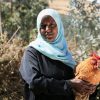
Chickens as Well as Cheetahs: Biodiversity Conservation Must Also Include Livestock
As the UN’s COP16 biodiversity conference continues, the temptation is to focus on the wild flora and fauna under threat. But there is another, less obvious yet just as critical biodiversity crisis unfolding around the world that also deserves attention.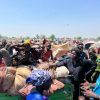
Sudanese Civil War Exacerbates Economies in Neighbouring Countries
Critical levels of nationwide hunger in Sudan has only increased to critical levels since the start of the Sudanese civil war in April 2023. Escalated hostilities between the Sudanese Armed Forces (SAF) and the Rapid Support Forces (RSF) have led to limited mobility and repeated blockages of humanitarian aid. This, coupled with the volatile floods and droughts, have decimated crop fields which has only exacerbated famine levels greatly. All of these factors have left nearly 25 million people in Sudan in need of humanitarian assistance in 2024.
By Choosing What We Eat, We Choose the World We Want To Live In
“How we prepare and eat food should not be at the expense of our biodiversity,” says 3-Michelin-starred chef Mauro Colagreco, who is on a mission to change our relationship with food and what we choose to eat. Colagreco, the owner of Mirazur, an award-winning restaurant in Menton, France, is a tribute to gastronomy. Among other world rankings, Mirazur's fine food and service have earned it first place in the World's 50 Best Restaurants. In the 2020 edition of the "100 Chefs" world ranking, Colagreco's peers named him the Best Chef in the World and Chef of the Year in 2019.« Previous Page — Next Page »





The Week with IPS

NEXT STOP - SDGs
Tracking global progress towards a sustainable world
Tracking global progress towards a sustainable world
