Languages
Sunday, September 20, 2026



News and Views from the Global South
Projects

Ecuadorians Vote to Preserve Yasuní National Park, but Implementation Is the Problem
The decision reached by Ecuadorians to put an end to oil production in Yasuní National Park, in a popular referendum in August, was a triumph for civil society and a global milestone in environmental democracy. But when it comes to implementation, the result is less promising.
Religious Leaders Can Help Bring about World Peace
It is not a secret that the world is witnessing rising international tensions and erosion of the global order that has been in place since the establishment of the United Nations. Divisive blocs, which have not been seen since the Cold War, are making a swift return. As a result, our planet is facing severe threats, including a new global arms race, the threat of the use of nuclear weapons, and the proliferation of wars in all formats, including hot, hybrid, cyber, and trade.
Our Teachers, Our Heroes
We are in a race to deliver on our global promise of education for all by 2030 – especially for the 224 million girls and boys impacted by armed conflict, climate change, forced displacement and other protracted crises who so urgently need our support. At the frontlines of this movement are the inspiring, caring, brilliant teachers who work tirelessly to educate future generations.
Wanted: Teachers For Change!
Once a year, on October 5, we celebrate World Teachers’ Day. Why is it so important to have a closer look on the teaching profession? What is so special about being a teacher nowadays?
Are Many Children in Japan Going Hungry? How Can We Help?
Picture this: It’s the scorching days of summer, and kids are flocking to the nearby mall, eager to bask in the cool air and hang out with friends. But among the laughter and chatter, one girl stands alone in the food court.
Growing Appetite for Nutrient-Rich Native Indigenous Australian Foods
Growing up in Sydney, Kalkani Choolburra, a Girramay, Kuku Yalanji, Kalkadoon and Pitta Pitta woman from Far North Queensland, would frequently travel with her family up and down Australia’s eastern seaboard. Her grandfathers and uncles would bring fresh catch of dugong, her favourite bush food, and she would go hunting for the short-necked turtle with her aunties and female cousins.
Innovative Family Farm in Cuba Uses Mix of Clean Energies
Combining technologies and innovations to take advantage of solar, wind, hydro and biomass potential has made the Finca del Medio farm an example in Cuba in the use of clean energies, which are the basis of its agroecological and environmental sanitation practices.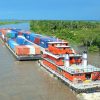
Traffic on the Paraná Waterway Triggers Friction between Argentina and Paraguay
In addition to being a majestic river - the second longest in South America after the Amazon - the Paraná River is the waterway through which a large part of the area's primary goods are exported. Today, its economic importance has sparked an unexpected diplomatic conflict between Argentina and the countries with which it shares the basin.
Pemex Exploits Fossil Fuels with Money from International Banks
At the entrance to the municipality of Paraíso, in the southeastern Mexican state of Tabasco, there is a traffic circle that displays three things that are emblematic of the area: crabs, pelicans and mangroves.
Skyrocketing Inflation Puts Food Security in Pakistan at Risk
“We are under extreme stress about skyrocketing prices of essential edible commodities and the cost of gas and electricity. The situation is becoming worse because every day. We must pay more for wheat flour, sugar, tea, milk, oil, etc.,” Azizullah Khan, a civil servant, says.
Why Root Crops Are the Future of Food Security in Africa
Despite the dominance of the “Big Three” cereal crops and a steady rise in meat consumption, an overlooked food sector is projected to become ever more central to Africa’s food security and rural economic growth between now and 2050.
With Hope and Courage, They Inspire Us
“My dream is to become a teacher,” says 13-year-old Alia. A small glimmer of hope can be traced in her beautiful, almond-shaped, brown eyes. Together with her mother, siblings and aunt, Alia has fled the conflict in Sudan to Chad. With extraordinary courage to survive, she made the harrowing journey at night across checkpoints, threatened by guns and militia roaming around in the dark. While her eyes are still hollow from the flight, I see that sparkle for a split second: she still has hope.
The Taliban Can Reverse the Unacceptable Ban on Girls’ Education
Today, we mark the second anniversary of the ban on secondary school girls’ education in Afghanistan and join the world in calling for it to be lifted now.
The Case for Afghan Women and Girls: How an International Criminal Court Investigation Could Expand Human Rights
Two years have passed since the Taliban re-assumed power in Afghanistan, and women and girls have yet to return to work or school. Can the international justice system now come to their defense? Experts say a case for Afghan women and girls has the potential to change the way the legal community thinks about human rights abuses. Will it?
Multilingual #AfghanGirlsVoices Campaign to Return Millions Back to School
A Taliban edict is rolling back time in Afghanistan after access to education for all Afghan girls over the age of 12 was indefinitely suspended on September 18, 2021. Afghanistan is the only country in the world where girls are forbidden from attending school beyond the primary level, leaving more than 1.1 million girls and young women without access to formal education.
Treated Wastewater Is a Growing Source of Irrigation in Chile’s Arid North
The reuse of treated wastewater in vulnerable rural areas of Chile's arid north is emerging as a new resource for the inhabitants of this long, narrow South American country.
The Vast Potential of the Human Spirit
With hope and courage, we must rise to the challenges before us. We must rise to the challenge of a world set afire by climate change, forced displacement, armed conflicts and human rights abuses. We must rise to the challenge of girls being denied their right to an education in Afghanistan. We must rise to the challenge of a global refugee crisis that is disrupting development gains the world over. We must rise to the challenge of brutal and unconscionable wars in places like Sudan and Ukraine that are putting millions of children at risk every day.
Mexico Turns to Military Entrepreneurs
Courage, sadness and impotence are expressed by Mayan indigenous activist Sara López when she talks about the Mayan Train (TM), the Mexican government's biggest infrastructure project, which will cross the town where she lives and many others in the Yucatan Peninsula.
ECW’s New Report Shows Successful Education Funding Model for Crises-Impacted Children
In a world set on fire by climate change and brutal conflict, millions of children in emergencies and protracted crises need educational support. Children in 48 out of 49 African countries are at high or extremely high risk of the impacts of climate change, particularly in the Central African Republic, Chad, Nigeria, Guinea, Somalia, and Guinea Bissau.
World’s Richest Countries Must Set More Ambitious Climate Change Goals, Report Finds
Individually and collectively, member countries of the G20 are falling far behind in their greenhouse gas reduction goals and are failing to make the significant cuts on emissions that would be needed to keep global temperatures low, despite possessing the technological and financial capabilities for reducing emissions.
Kazakhstan’s Transition: From a Nuclear Test Site to Leader in Disarmament
Exactly 32 years ago, on August 29, 1991, Kazakhstan, then part of the Soviet Union, made a historic decision that would alter its fate. On that day, Kazakhstan permanently closed the Semipalatinsk Nuclear Test Site, defying the central government in Moscow. This marked the start of Kazakhstan's transformation from a nuclear-armed state, possessing the fourth-largest nuclear arsenal at the time, to a non-nuclear-weapon state. Kazakhstan's audacious move to eliminate its nuclear weapons was rooted in a profound commitment to global disarmament, setting an inspiring precedent.« Previous Page — Next Page »


The Week with IPS

NEXT STOP - SDGs
Tracking global progress towards a sustainable world
Tracking global progress towards a sustainable world
