Languages
Sunday, September 27, 2026



News and Views from the Global South

Ecobreves – CUBA: Nuclear Technology for More Resistant Crops
Agricultural researchers in Cuba are using radiation in an attempt to develop banana, rice, avocado and tomato strains that are more resistant to drought and salinity, as part of a Latin American cooperation project.
Sustainable Fashion Born in Brazil’s Favelas
A Brazilian designer has taken fashion from the exclusivity of the catwalk to the reality of the favela, to demonstrate that styles, trends and fads are also born in these poor neighborhoods of cities like Rio de Janeiro.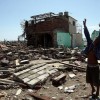
Tomorrow Is Too Late for Adaptation to Climate Change
You can still see broken plates, toys, books and some photographs among the rubble that was once the homes of Rey Antonio Acosta’s family and other families in Mar Verde, the beach community where Hurricane Sandy made landfall in this eastern Cuban city.Ecobreves – HONDURAS: Waste Management Training for Market Vendors
Young volunteers from the Vida Foundation of Honduras have launched a six-month campaign to raise awareness among street market vendors in Tegucigalpa of the importance of proper waste management and recycling.Ecobreves – ARGENTINA : E-Waste Bill In Danger, Say Activists
The Argentine government is blocking final approval of a bill on electronic waste that was passed four years ago by the country’s senate, according to the Argentine branch of Greenpeace.Ecobreves – BRAZIL: Energy and Waste Generate the Bulk of CO2 Emissions in São Paulo
The energy and waste sectors were responsible for the emission of 16.43 billion tons of carbon dioxide (CO2) equivalents in São Paulo last year, according to a study commissioned by the city’s department of the environment.
Nanotechnology Could Lighten Venezuela’s Oil Footprint
Venezuela is studying the use of nanotechnology as a means of reducing emissions of greenhouse gases caused by the oil industry.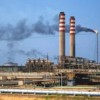
Nanotechnology Could Lighten Venezuela’s Oil Footprint
Venezuela is studying the use of nanotechnology as a means of reducing emissions of greenhouse gases caused by the oil industry. Nanotechnology operates at the sub-microscopic scale: a nanometre is a unit of measure equal to one billionth of a metre.
Bolivian Sugar Industry Recovers and Seeks Markets
Bolivia’s sugar mills are once again operating at full capacity, with producers flooding the domestic market and desperate to obtain permits to export a surplus of 138,000 tons to Chile, Colombia, Peru and the United States.Ecobreves – BRAZIL: Brazil Joins Global Biodiversity Platform
Brazil has become the latest country to join the Global Biodiversity Information Facility (GBIF), dedicated to promoting free and open access to data on biological diversity.Ecobreves – HONDURAS: Microfinance to Promote Clean Energy
The Microfinance Network of Honduras (Redmicroh) is promoting small-scale clean energy projects through its 27 member organizations willing to finance family farmers interested in entering this field.Ecobreves – CHILE: Courts Rule Against Oil Company in Pollution Case
A Chilean court has ruled in favor of an appeal for legal protection filed by the community of Hualpén against Empresa Nacional del Petróleo, spurred by the foul odor produced by the oil company’s Biobío refinery in Concepción, 500 km south of Santiago.
Brazil Embarks on Cloning of Wild Animals
Brazilian scientists are attempting to clone animals in danger of extinction, like the jaguar and maned wolf, although the potential impact on the conservation of these threatened species is still not clear.
A Posthumous Message from Hurricane Sandy*
Hi, this is Sandy. By the time you read this, I’ll be gone, after dissipating into increasingly weaker remnants of strong winds, heavy rains and snowfall in the Great Lakes region of North America.**Ecobreves – ARGENTINA : Social and Environmental Certification for Textiles
Argentine government certification to promote better social and environmental conditions in the textile industry has been granted for the first time to a clothing company.Ecobreves – HONDURAS: Agreement with EU to Protect Forests
The government of Honduras and the European Union have signed an agreement aimed at improving forest governance by prohibiting the illegal harvesting and sale of timber and establishing effective forest protection standards.Ecobreves – MEXICO: Studying the Effect of Pollen on Human Allergies
Researchers in Mexico are studying the effect of pollen and spores on the incidence of human allergies in Mexico City.Ecobreves – BRAZIL: Amazon Soy Moratorium Extended
Private companies, civil society organizations and the Ministry of Environment of Brazil have agreed to extend the Soy Moratorium – an agreement prohibiting the planting of soybeans on newly deforested areas in the Amazon region – until January 2014.
Towns in Argentina Unite to Confront Climate Change
Over 30 small and medium-sized municipalities in Argentina are jointly developing policies for climate change adaptation and mitigation. The idea is to raise awareness and work together to help these communities cope with a global problem, say the promoters of the initiative.
Towns in Argentina Unite to Confront Climate Change
Through everyday practices like avoiding the use of disposable products and sorting garbage for recycling, communities in the Argentine interior are joining forces to implement more effective environmental policies.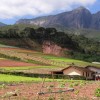
Beating Rural Poverty in South America
The development of agriculture through the adoption of technological innovations will help Latin America leave behind its status as the most unequal region in the world, and will especially benefit the Southern Cone, one of the planet’s largest food reserves.« Previous Page — Next Page »


Tierramérica is the main communications platform on sustainable development and the environment in Latin America and the Caribbean. It is produced by IPS Noticias, the agency’s Spanish-language service, which created it jointly with the United Nations Development Programme (UNDP) and the United Nations Environment Programme (UNEP), with later support from the World Bank. The weekly editions of Tierramérica are published in Spanish, Portuguese and English and are picked up and printed by dozens of media outlets in the region. Follow us on Facebook and Twitter.

From the Frontline of Environment
Supported by

Tierramérica en Español

Terramérica em Portuguese

