
Saturday, September 19, 2026



News and Views from the Global South
Trade and poverty: Facts beyond theory
Q&A: “EPAs Will Undermine Democracy in Africa”
The current course of the talks on economic partnership agreements (EPAs) is particularly destructive for low income African countries and may contract democratic space in such countries even further.LATIN AMERICA-EU: Labour Pains
Trade with the European Union has not significantly improved the situation of workers in Latin America, in spite of its volume having doubled between 1990 and 2007, according to a study by two Chilean academics.AFRICA: Anti-Counterfeit Laws Threaten Universal Access to ARVs
East African countries risk not attaining the millennium development goal (MDG) on universal treatment of people living with HIV and AIDS, malaria and other diseases if the region’s parliament adopts the anti-counterfeits policy and bill currently under consideration.
AFRICA: Growth Down; Unemployment Up
Due to the global economic and financial crisis, growth on the African continent dropped to an average of 1.6 percent in 2009, compared to 4.5 percent in 2008.
Q&A: “Impose an Embargo on the EPA Talks”
Respected Ugandan political economist Yash Tandon has added his voice to the call for a moratorium on the negotiations between African countries and the European Union (EU) on the trade deals known as economic partnership agreements (EPAs).
Q&A: Exposing the “Clandestine Passengers of Globalisation”
Between 30 and 40 percent of taxes that should be collected by developing countries end up in countries operating as tax havens. Overall, these "clandestine passengers of globalisation" contribute to capital flight from developing countries to the tune of 1,000 billion dollars a year.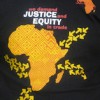
TRADE-SOUTHERN AFRICA: “Reclaim Control over EPA Talks”
Southern African governments must regain control over the negotiations on the trade deals known as economic partnership agreements (EPAs). Issues earmarked as deal-breakers should be resolved before talks to a full EPA are continued. These include limiting the EPA to a goods-only agreement and the EU dropping its demand for reciprocity.
Q&A: EPAs Are Still Not Developmental, Despite EU Promises
The contentious trade deals known as the economic partnership agreements (EPAs) will in their current form not do African countries any good as they still do not take those countries’ development needs into consideration, despite such an undertaking by the European Union (EU).AFRICA: Illegal Fishing in Guinea’s Waters “Worst in the World”
Rampant illegal fishing is hitting some of the poorest West African countries the hardest as this practice is globally most rife in the east central Atlantic Ocean area, which covers the territorial waters of some 15 African countries from Morocco and Mauritania in the north to Angola in the south.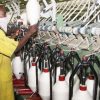
TRADE: Whither African Cotton Producers After Brazil’s Success?
African cotton-producing countries hope that Brazil’s intended retaliation after its success at the World Trade Organisation’s (WTO) dispute settlement body will have a positive spin-off for them but seem reticent about pursuing a similar course of action against the U.S. for its continued use of subsidies in cotton production.EAST AFRICA: Impatient EU Pushes for Progress on EPA Trade Deal
The European Commission (EC) is increasing the pressure on the East African Community (EAC) to sign the free trade deal known as an economic partnership agreement with the EU.
KENYA: State Insists Counterfeit Law Does Not Threaten Rights
Kenya’s Constitutional Court heard on Mar. 18 from counsel representing the government that the Anti-Counterfeit Act of 2008 does not threaten the importation or manufacturing of cheap generic medicines and therefore does not deny Kenyans their constitutional right to life.
DEVELOPMENT: Spain’s New Drive to Extend its Interests in Africa
Spain is breaking new ground in its relations with Africa through an ambitious programme which has seen it increasing its development funding to the continent more than six-fold from 2004 to reach 1,4 billion euros in 2008.HEALTH-UGANDA: EU Supports Law Threatening Access to Medicines
The European Union (EU) is funding the drafting of Uganda’s controversial Counterfeit Goods Bill, a proposed law that has caused an outcry as it threatens access to life-saving generic medicines in this low income East African country. Some 90 percent of medicines used in Uganda’s health-care system are imported, of which about 93 percent are generics.
SOUTHERN AFRICA: Women Traders Demand Support
Support for regional trade is one of the cornerstones of the Southern African Development Community (SADC). But the focus has been on large scale trade in goods and services, ignoring one important group trading throughout the region.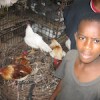
COTE D’IVOIRE: Policy Changes Revive Poultry Industry
Ivorian poultry producers are enjoying strong growth thanks to the imposition of a tax on imports of poultry products from the European Union and South America.
ETHIOPIA: Dam Critics Won’t Go Away
Ethiopia is building a 240-metre high dam on the Omo River that is intended to end the country's electricity shortage and supply power to neighbouring countries. Not everyone's happy.
COTE D’IVOIRE: Banana Producers Turn To Regional Markets
Twelve thousand people working on Côte d'Ivoire's banana plantations face uncertainty as the European Union begins implementing a new agreement governing tariffs on bananas.
Q&A: "Intellectual Property Rights Do Not Assure Quality"
Kenya and Tanzania have recently passed anti-counterfeit laws and regulations that risk blocking legitimate generic medicines instead of fake products, which is the purported purpose of these laws. Uganda is now considering a similar bill.
UGANDA: Railway Revival Planned
The collapse of the Uganda Railway Corporation 15 years ago opened up lucrative opportunities for privately-owned road transporters. But the high cost of maintaining the highways carrying heavy truck and bus traffic is leading government to take a fresh look at the rails.
KENYA: Anti-Counterfeit Law “Violates Right to Life and Health”
Kenya’s new Anti-Counterfeit Act will be challenged on Mar 8 next year in the country’s Constitutional Court on the basis that it violates the right to health. The petitioners, three people living with HIV, argue that the law confuses generic and fake medicine. This could cause a health crisis as generics constitute 90 percent of medicines used in Kenya.« Previous Page — Next Page »


Trade has historically been a geopolitical tool, creating significant economic imbalances in developing countries. However, many countries in East Asia and Latin America have been able to alleviate poverty due to increasing trade. Tackling poverty has proven to be much harder in low income countries in sub-Saharan Africa, Asia and Latin America, and their dismal trade performance is one important reason for that. They remain at the margins of world trade and indeed of the world economy. These articles are aimed at informing readers about the complexities of trade and its varying effects on development, with a special focus on the consequences of the global economic crisis, the potential of fair trade and the gender implications of trade policies.

The Week with IPS

Tracking global progress towards a sustainable world
