Languages
Wednesday, November 11, 2026



News and Views from the Global South
Africa

“Their Hope for a Brighter Future Inspires Us All”
Looking back upon 2020, we all bear the scars of a devastating year; none so much as girls and boys around the world. The COVID-19 pandemic disrupted education for over 1.6 billion children and youth globally and continues to do so. It has also deepened socio-economic inequities and heightened insecurities around the world, further impacting the lives of girls and boys everywhere. Ongoing, protracted conflicts, forced displacement and the worsening climate crisis were no less forgiving.
“Teach Us How to Become Carpenters” – South Sudanese Want to Shape Their Future
Located in Jonglei state, one of the most underdeveloped regions of South Sudan, Likuangole is a town badly hit by floods and often battered by conflict. Despite the lack of secondary schools and industry, its residents aspire to transform their lives. But real investment is needed to spur development.
Q&A: Why we Must Invest in Educating Children in Crisis-Hit Burkina Faso
Education Cannot Wait (ECW) - the first global fund dedicated to education in emergencies and protracted crises – was on the ground in Burkina Faso last week with its Director, Yasmine Sherif, to launch a new multi-year programme that aims to provide an education to over 800,000 children and adolescents in crisis-affected areas.
UPDATE** Conspicuous Silence as Ugandan President Wins Sixth Term against Bobi Wine
Thirty-five years ago when President Yoweri Museveni talked, a majority of citizens listened. But now, as he approaches almost four decades in power, his message is not resonating well — particularly with the country’s youth who constitute about 70 percent of the voting population in Uganda.
Africa’s Free Trade Area Opens for Business
African countries opened their markets on 1st January under the continental free trade agreement and duty-free trading of goods and services across borders is now underway despite the COVID-19 pandemic and other teething problems.
Learning From Indigenous Peoples: My Morocco Diary
Once a year, on 9 August, the International Day of the World’s Indigenous Peoples is commemorated, celebrating their unique culture and knowledge. This is done mostly from a distance, from our homes in (nominally) developed countries. But are we as developed as we pretend to be? On this question, I reflected for a while, still remembering a special and personal experience of having spent several days with an indigenous Berber family in Morocco.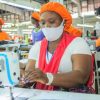
Making African Continental Free Trade Area Work for Women in a Post-COVID-19 World
On 1st January 2021, trading under the African Continental Free Trade Area (AfCFTA) Agreement commenced after months of delays caused by the COVID-19 pandemic.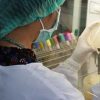
ANTICOV Treatment Clinical Trial Crucial for Africa
The ANTICOV COVID-19 clinical trial, aimed at identifying treatments that prevent mild cases from progressing to severe forms of the disease, is crucial to Africa, researchers say. The trial will investigate home-based treatments to help prevent local health systems from being overwhelmed.
This Is Not a Goodbye, Kenya – Asante na Kwaheri ya Kuonana
Happy New Year, Kenya. Several milestones in my personal and professional life have made Kenya a cherished place for me. I started my UNICEF career in Rumbek, South Sudan in June 2000, and my rest and recuperation breaks were in Nairobi. In fact Kenya was the first African country I had ever visited and, frankly, it was love at first sight.
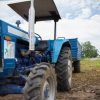
Tractors Can Change Farming in Good Ways and Bad: Lessons from Four African Countries
Agricultural mechanisation is on the rise in Africa, replacing hand hoes and animal traction across the continent. While around 80-90% of all farmers still rely on manual labour or draught animals, this is changing, driven by falling machinery prices and rising rural wages. During the last couple of years, tractor sales grew by around 10% annually.
A Decade after the Arab Spring, Tunisia Fails to Keep up with the Process of Democratisation
Ten years ago a young street vendor, Mohamed Bouazizi set himself afire in the central Tunisian provincial town of Sidi Bouzid to protest against police harassment. Bouazizi’s sacrificial act served as a catalyst and inspired the Tunisian people to take over the streets that led to the Jasmine Revolution in the country. On January 4, 2011 Mohamed Bouazizi died, and ten days later the country's authoritarian President Zine El Abidine Ben Ali’s rule ended when he fled to Saudi Arabia.
Uganda’s School Plan for Refugee Children Could Become a Global Template
Thirteen-year-old Wita Kasanganjo is a pupil at Maratatu Primary School in the Kyangwali Refugee Settlement based in Uganda’s Hoima district. But last month, when Uganda’s President Yoweri Museveni ordered the re-opening of schools for the first time since the mid-March nationwide closure, Kasanganjo was not part of the returning group of students. The government, in a cautious lifting of coronavirus lockdown restrictions, has allowed only pupils who are part of the final year or candidate classes to return to their schooling.
Africa Readying for Free Trade, Come January 2021
One day in February 2020, Accra-based coffee and cocoa trader Meron Dagnew visited the Secretariat of the African Continental Free Trade Area (AfCFTA) to introduce herself, even before the Secretariat was fully operational.
Human Rights Must Be at the Heart of the COVID-19 Recovery
On 10 December every year, we celebrate Human Rights Day, marking the anniversary of the adoption of the Universal Declaration of Human Rights. The Universal Declaration guarantees a spectrum of human rights that belong to each of us equally, and unite us as a global community and upholds our humanity.
Choice and Opportunity for African Farmers Will Transform Africa
’A hungry man is not a free man. He cannot focus on anything else but securing his next meal.’ So proclaimed the late Kofi Annan.
Digitisation Could Transform African Agriculture
Placing an online order for farming inputs saves Velebantfu Dlamini about USD12 in transport fees for a round trip of about 320 kilometres. The 26-year-old vegetable farmer from Nkhungwini in the Shiselweni Region, south of Eswatini, uses a portal to order from the National Agriculture Marketing Board (NAMBoard) Farm Store. NAMBoard then delivers his order leaving Dlamini with time to stay in the field and look after his crops.
Africa Should Be at the Forefront of a Global Response to COVID-19
As COVID-19 swept across the globe, one thing became clear: a well-functioning, well-resourced, agile and resilient health system can mean the difference between life and death.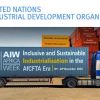
Can Africa’s Third Industrial Development Decade Deliver?
Industrialization and development go hand in hand. There is hardly a country in the world that has developed without building a strong manufacturing base. But for Africa – sometimes referred to as the continent of the future – the fruits of industrialization have often seemed just out of reach.
CARE Offers Policies That Engender Success for Young People in Agribusiness
Often cited as Africa’s greatest asset, its youth are also among the most vulnerable and volatile. A large and growing population of talented young people has the potential to drive economic growth and well-being of societies across the continent but, as the African Development Bank warns, current conditions of severe unemployment are translating into poorer living conditions, higher flows of migration, and greater risks of conflict – in short, a social disaster in the making.
It’s Time for Results as Sudan Enters Second Year of NDC Partnership
Earlier this year, when heavy rains caused massive flooding in Sudan, a three-month state of emergency was declared in September. The floods which began in July, were the worst the country experienced in the last three decades and affected some 830,000 people, including 125,000 refugees and internally displaced people.
How UN Helped Benin Become World’s Fastest Place to Start a Business via a Mobile Phone
Until recently, Benin was best known for its cotton exports and its vibrant clothing designs. Since this year it is also the fastest place in the world to start a company. By providing a full online service, the government helped entrepreneurs create businesses and jobs during the pandemic. A third of Benin’s new entrepreneurs are women.« Previous Page — Next Page » *#*

The Week with IPS

NEXT STOP - SDGs
Tracking global progress towards a sustainable world
Tracking global progress towards a sustainable world
