Languages
Saturday, October 17, 2026



News and Views from the Global South
Asia-Pacific

Conflict Deprives Children of Education in Northern Syrian IDP Camps
Twelve-year-old Walid Al-Hussein, displaced from the city of Kafranbel to a camp for internally displaced people (IDP) in northern Idlib on the border with Turkey, has given up his dream of becoming a lawyer. "The distance of schools from our home (in the camp) made me leave education and give up my dream and my mother's dream of becoming a lawyer who defends the rights of the oppressed," Al-Hussein told IPS.
Sawantwadi’s Traditional Handmade Toys Struggle for Survival
Sawantwadi in Maharashtra, on the western coast of India, bordering Goa, has always been known for its wooden toys. A picturesque town amid hills and lush greenery, Sawantwadi retains an old-world charm to this day. The regal Sawantwadi Palace holds pride of place, with colleges, schools, and temples cloistered around the periphery of the lake, which was once an extension of the royal grounds. In the centre of the town is the Ubha Bazaar, or Hanging Market, which houses rows of shops selling the iconic wooden toys that are a hallmark of Sawantwadi.
Bangladesh Can Boost Growth & Climate Resilience by Investing in Women
Bangladesh has made major gains for its population, the world’s eighth largest with more than 170 million people. Per capita incomes, one of the best measures of broad economic well-being, have risen seven-fold in the past three decades while poverty has been reduced to a fraction of former levels.
1,000 Days—Afghan Girls’ Voices Campaign Enters Second Phase
The global community is marking a tragic milestone for human rights, children's rights, and girls' rights, as it has been 1,000 days since girls were banned from attending secondary school in Afghanistan. The ban has wiped out decades’ worth of education and development gains, as approximately 80 percent of school-aged Afghan girls and young women are out of school.
Indignity, Disease, Death—The Life of a Sewer Worker in Pakistan
A dark head emerges, followed by the torso. The balding man heaves himself up, hands on the sides of the manhole, as he is helped by two men. Gasping for breath, the man, who seems to be in his late 40s, sits on the edge, wearing just a pair of dark pants, the same color as the putrid swirling water he comes out from.
Lawmakers Deliberate on ICPD30, Water Security at Tajikistan Conference
It's been 30 years since the International Conference on Population and Development Programme of Action (ICPD30) was adopted in Cairo, transforming policy and thinking on population and development issues.
Climate Change, Pollution Push Karnaphuli Fishers Out of the Profession
Jishuram Das, a sexagenarian who was born in Jelepara, located in Chattogram, has been catching fish from the Karnaphuli River since his childhood. But nowadays, he often sits idle without going to catch fish, as their catches have drastically fallen.
Explainer: What You Need to Know About Climate Change and Blue Carbon
The area where land meets the sea, known as coastal ecosystems, could be the key to reducing the effects of climate change. What is blue carbon? Blue carbon refers to the carbon dioxide (CO2) stored within marine or coastal ecosystems worldwide. These ecosystems include coastal plants such as mangroves, seagrasses, and salt marshes, which trap CO2 in their seabeds.
India’s Election: Cracks Start to Show in Authoritarian Rule
India’s Hindu nationalist strongman Narendra Modi has won his third prime ministerial term. But the result of the country’s April-to-June election fell short of the sweeping triumph that seemed within his grasp. Modi’s Bharatiya Janata Party (BJP) has shed seats compared to the 2019 election, losing its parliamentary majority. Modi remains prime minister thanks to coalition partners. It’s a long way from the 400-seat supermajority Modi proclaimed he wanted – which would have given him power to rewrite the constitution.
Explainer: How India’s Political Parties Neglect Climate Change
As India's 968.8 million voters were gripped by election fever, the worst-ever heat wave held the country in its clutches.
Commonwealth Secretary-General Calls for Concrete Finance Commitments for Small Island Developing States
Commonwealth Secretary-General Baroness Patricia Scotland is calling for concrete commitments to climate finance that will acknowledge the multi-dimensional vulnerability faced by the world’s small island developing states (SIDS).
UN, International Partners Coordinate Aid to Papua New Guinea Landslide Disaster
As the communities of Enga province in Papua New Guinea contend with the landslide that has devastated the residents of Yambani, the United Nations and its partners have been active on the ground addressing the immediate humanitarian needs, according to agencies.Papua New Guinea’s prime minister, James Marape, says “extraordinary rainfall” and weather pattern changes were responsible for multiple disasters in the Pacific Island nation this year, including the landslide last Friday.
Explainer: Why GLOFs Are Growing Concern in the Himalaya
Phu Chhettar Sherpa, who worked as an icefall doctor (a Sherpa who fixes ropes for climbers) for seven years from 2015 to 2021 on Mt. Everest, vividly recalls his fear of possible flash floods after the huge earthquake in Nepal in 2015.
Empowering Women Could Boost Fertility, & Economic Growth in Japan and Korea
Women in Japan and Korea face especially tough challenges juggling career and family. Many young women witness their peers encountering promotion delays after marriage and childbirth, dealing with problems splitting housework responsibilities, and having difficulty finding adequate childcare.
More Diversified Trade Can Make Middle East & Central Asia More Resilient
Dislocations from the pandemic, geoeconomic fragmentation, and Russia’s war in Ukraine have shifted world trade dynamics. While this has created challenges, the redirection of trade has also generated new opportunities, particularly for the Caucasus and Central Asia.
Solomon Islands: A Change More in Style than Substance
There’s change at the top in Solomon Islands – but civil society will be watching closely to see whether that means a government that’s grown hostile will start doing things differently.
‘I Couldn’t Remain Silent’: Son Fights for Uyghur Journalist’s Release from Chinese Prison
The last time Bahram Sintash saw his journalist father was in 2017. Qurban Mamut, an influential Uyghur editor had come to the United States for a visit but upon his return to Xinjiang in northwest China, he disappeared.
Transgender Health Rights Boosted by Hospitals’ ‘Separate Room’ Policy
Transgender people and civil society organizations have welcomed the decision of the chief minister in Khyber Pakhtunkhwa, Pakistan, to allocate separate rooms in hospitals for the transgender community so they can avail themselves of uninterrupted healthcare. “We demand that all provinces follow suit and announce facilities for more than 500,000 transgender people in the country,” Farzana Shah, president of the Khyber Pakhtunkhwa (KP) Transgender Association, told IPS.
Climate Crisis in Mountains: Borderless Struggle for Frontline Communities
For the last three years, Sambhunath Guragain has been waking up every morning to a view he doesn't want to see: discarded agricultural land where he and his family used to grow food, including rice, but the flood in 2021 changed everything. “We don’t have any crops now, but we are farmers,” Guragain said in November 2021, while looking towards a quietly flowing Melamchi river. This was six months after the massive flash flood in Helambu-Melamchi in Sindhupalchowk district in Nepal. After three years, the situation hasn’t changed.
Afghan Women’s Voices Stifled as Taliban Tightens Media Controls
Since the Taliban regained control of Afghanistan in 2021, the space for women in the public sphere has significantly narrowed, with successive orders further restricting their presence in various sectors, including the media.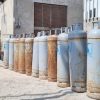
Fine, Sanctions, or Waiver: Iranian Gas Will Come at a Price for Pakistan
When Iranian President Ebrahim Raisi visits Pakistan this week (April 22, 2024), experts say the two issues topmost on his mind that he will want to discuss with his Pakistani counterpart, President Asif Ali Zardari, will be border security and the Iran-Pakistan gas pipeline.« Previous Page — Next Page »





The Week with IPS

NEXT STOP - SDGs
Tracking global progress towards a sustainable world
Tracking global progress towards a sustainable world
