Languages
Monday, October 19, 2026



News and Views from the Global South
Asia-Pacific
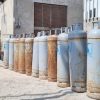
Fine, Sanctions, or Waiver: Iranian Gas Will Come at a Price for Pakistan
When Iranian President Ebrahim Raisi visits Pakistan this week (April 22, 2024), experts say the two issues topmost on his mind that he will want to discuss with his Pakistani counterpart, President Asif Ali Zardari, will be border security and the Iran-Pakistan gas pipeline.
Pioneering Digital Initiative Empowers Pacific Islands to Tackle Climate Disasters
Winning a battle for survival requires understanding the opponent. And, for the peoples of 22 island nations and territories scattered across more than 155 million square kilometres of Pacific Ocean, the volatility and wrath of the climate are their greatest threats.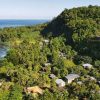
Climate Governance, Adaptation, and Digital Solutions
Let's take a moment to reflect on a critical question: In the decade since the Third International Conference on Small Island Developing States (SIDS3), what tangible progress have we made in addressing the challenges faced by our SIDS?
China, India & Sri Lanka Embroiled in the Geo-Politics of the Indian Ocean
Unfortunately, a rivalry that should not exist and did not exist historically between China and India is being stoked by the media and some policy makers, especially in the West. It is not too difficult to discern the Machiavellian geo-strategic objectives of this complex game plan.
Following Asian Countries’ Leads, Climate Action Opportunity for Developing Nations
In the deserts of Gujarat, something remarkable is happening. On my recent visit I saw hundreds of trucks moving under the warm Indian sun. Thousands of hardworking young people from all corners of Bharat, as Indians now often call their nation, are turning around the previously empty and harsh landscape.
Civil Registration is Shaping World’s Largest Election Year With 76 Nations Going to the Polls
Over four billion people will take to the polls in 2024 as 76 countries are set to hold elections. In Asia, this includes populous countries such as Bangladesh, India, Indonesia, Pakistan, and Russia.
Can Preserving Goa’s Khazans Address Climate Threats?
Growing up in a khazan ecosystem, the traditional agricultural practice followed in the south-western Indian state of Goa, Elsa Fernandes would love sitting in a koddo, a woven bamboo structure for storing paddy. Her family members would pour paddy around her and with the growing pile, she would rise to the top and then jump down with joy.
Tensions with China Drive Investors Towards Vietnam
In recent months, several European representatives embarked on trade missions to Vietnam. German President Steinmeier visited Hanoi in January. The Netherlands sent Prime Minister Mark Rutte, with the Dutch royal couple, King Willem-Alexander and Queen Máxima, soon to follow suit. Notably, the Netherlands stands as the most significant European investor in Vietnam.
India’s Farmers Could Use Better Monsoon Forecasts
Agriculture in India need not 'gamble' with the monsoons if accurate weather and climate forecasts are proactively made available to farmers, according to the results of a new experimental study conducted by the University of Chicago.
Food Security Issues in Asia
Asia has about 60% of the World’s population but only about a third of the world’s arable land. This region additionally has some of the most economically active countries with increasing urbanisation and a growing middle class. Asia is also home to some of the most affected countries by climate change. For these and other reasons, food security in Asia affects global food security through many inter-links. A new book, “Food Security Issues in Asia”, edited by Paul Teng and with multiple authors, explicates many of the key issues continuing to cause food insecurity in Asia as well as discourses on exciting developments. Through its twenty-seven chapters, the book, published by World Scientific Publishers Singapore was launched on 27 March 2024 in Singapore by Ambassador Ong Keng Yong, former ASEAN Secretary General.
Climate Change: the Partnership with Asian & Pacific Small Island Developing States
Stories of growing vulnerability make regular headlines across all Asian and Pacific small island developing States (SIDS). With tens of thousands of people displaced every year due to climate and disaster-related events, there are continued concerns about the costs of climate-related hazards.
Why Farmers in India and Pakistan Are Shifting to Natural or Regenerative Farming
Nine years ago, farmer Sultan Ahmed Bhatti gave up tilling the soil and using most fertilizers and pesticides on his farm in Doober Bhattian, Pakistan. His brothers at first derided him. But soon, his first experiment with growing wheat on raised beds was a runaway success. “We produced more wheat than what we grew on ploughed, flat land,” he said.
The Impact of Climate Change on a Biodiversity Hot Spot
If there is a place where the interlinkages and dependencies between the effects of climate warming and biodiversity loss are clearly at display, it’s Nepal. There is clear evidence on the impact of climate change on the country’s ecosystem considering the fact that Nepal is an important biodiversity hotspot.
Revival of Hope: How a Remote Indian Village Overcame Water Scarcity
The people of Patqapara Village, a hamlet in India's West Bengal State, were until recently reeling under absolute distress due to water scarcity. The lack of irrigation facilities in this far-flung and inaccessible hamlet had resulted in a steady decline in agricultural activities. With a population of around 7,000, as per government estimates, the village primarily depends on agriculture for its livelihood. However, in recent years, drastic changes in weather patterns, including unseasonal rainfall, delayed monsoons, and soaring temperatures above normal levels, led to the drying up of irrigation canals and wells in the village. This left the local population in chaos, as their cultivable fields were bereft of any irrigation facilities.
South Asian Network on Human Rights Calls on Bhutan to Free Political Prisoners
South Asians for Human Rights (SAHR), a regional network of human rights defenders, has called on the Government of Bhutan to release the political prisoners it has detained for decades.
Building Resilience and Mental Health Capacity of Youth
Sri Lankan lawmaker Hector Appuhamy, in conversation with IPS ahead of a two-day conference aimed at educating and involving university students in mental health issues, said parliamentarians were concerned about gaps in the programmes and financing for youth mental health. They were looking beyond the country's health budget for support in ensuring that youth were able to access mental health facilities in a supportive environment.
Taliban Rule Exacerbates Malnutrition Crisis: Afghan Women and Children Hardest Hit
Malnutrition in Afghanistan has reached an unprecedented level, according to United Nations humanitarian organizations. It is estimated that half of the country's population grapples with severe hunger year-round, placing Afghanistan among the top ten nations globally with the highest rates of maternal and infant mortality due to malnutrition.
Conservation Efforts by Ethnic Communities in Bangladesh Bolster Water Security
Just a few years ago, Sudarshana Chakma (35), a resident of the remote Digholchari Debarmatha village under Bilaichari upazila in the Rangamati Hill District, had to traverse a long hilly path to fetch water for her household because there were no local water sources. "Unchecked deforestation and degradation of village common forests (VCFs) led to the drying up of all-natural water sources in our village. We struggled to collect drinking and household water," Chakma explained to IPS.
Women’s Land Rights in Farming Need Further Recognition
In the developing world, land rights for women remain tenuous in the agricultural sector. But if women farmers are recognized as landowners in their own right, it can lead to greater economic empowerment and be a positive step towards eradicating poverty. This formed part of the wider discussions that are being hosted during the 68th session of the Commission for the Status of Women (CSW68) in New York. The leading theme of CSW68 and its side events is the effort to accelerate gender equality by addressing poverty and strengthening institutions.
In Pakistan, Death Can Be Just a WhatsApp Share Away
Justice Zafar Yab Chadhar's March 6 order sentencing 22-year-old Junaid Munir to ‘be hanged by his neck till he is dead’ on charges of sharing blasphemous material over WhatsApp was devastating for his family. “The earth moved from underneath my feet,” is how 57-year-old Chaudhry Munir Hussain, Munir’s father, described his feelings as he heard the judge read out the judgment that day in a court in Gujranwala, a city in Punjab province.
Exploring New Depths: NF-POGO Centre of Excellence Driving Innovative, Diverse Ocean Observation
Picture yourself as an early-career ocean researcher. You have the opportunity to be at sea in addition to learning on campus. Through cutting-edge technology and immersive facilities, you experience the most realistic ocean exploration scenarios, including braving extreme cold and harsh environments. That’s the experience at the Launch, a 'living lab' at the Marine Institute of Memorial University in Newfoundland and Labrador, located on the east coast of Canada. It’s an experience meant to prepare you for the real-world complexities of the type of ocean research needed to tackle urgent global issues like climate change.« Previous Page — Next Page »





The Week with IPS

NEXT STOP - SDGs
Tracking global progress towards a sustainable world
Tracking global progress towards a sustainable world
