Languages
Saturday, June 27, 2026



News and Views from the Global South
Asia-Pacific

Inclusive and Equitable Education in the Pacific
In 2019, the United Nations General Assembly proclaimed 24 January as International Day of Education, in celebration of the role of education for peace and development. The United Nations’ Sustainable Development Goal 4 challenges all nations to “ensure inclusive and equitable quality education and promote lifelong learning opportunities for all” by the year 2030. As we think about this in the context of the COVID-19 pandemic, and the emerging post-COVID-19 environment, what does inclusive and equitable education look like and how do we ensure that lifelong learning opportunities are benefitted by all?
Fiji’s Presidency of the Human Rights Council Brings Opportunity and Responsibility to the Pacific
On Friday, 15 January, Ambassador Nazhat Shameem Khan, Fiji’s Permanent Representative to the United Nations in Geneva, was elected the President of the United Nations Human Rights Council for 2021. As the first Pacific islander to hold this position, the President has a unique opportunity to enhance the protection and promotion of human rights in Fiji and the Pacific, and to amplify Pacific voices on human rights issues at the global level. The presidency reflects the Pacific’s growing presence on the international human rights stage and comes at a time of increasing marginalisation, social exclusion and poverty arising out of COVID-19; opening the door for the President (and Fiji) to promote a human rights-based and people-centred approach to ‘building back better’.
Change Financing Priorities to Address COVID-19, Conference Hears
Innovative financing to resolve COVID-19 crisis was needed, a joint African and Asian parliamentarians’ webinar heard this week. The webinar, facilitated by Asian Population and Development Association (APDA), was aimed at enhancing support for the implementation of International Conference on Population and Development (ICPD)commitments in the face of the pandemic.
Afghanistan Threatened With Rising Violence Once Again
When the Doha talks were launched in September, the Afghan people's hopes for an end of war and violence were high. So far, many have been disappointed as the negotiations have not done much to improve the security situation.
Nothing to Learn from East Asia?
Covid-19 infection and death rates in the Western world and many developing countries in Asia and Latin America have long overtaken East Asia since the second quarter of 2020. Perhaps unsurprisingly, considering prevailing Western accounts of the Asian financial crises, there have been no serious efforts to draw policy lessons from East Asian contagion containment.
Punch Like A Muslim Woman: An Egyptian-Danish Boxer Breaking Many Stereotypes
As a Muslim woman born and brought up in Denmark, Nadia Helmy Ahmed broke many stereotypes when she started boxing at the age of 15. “Back then it was not common for girls to take up elite boxing, let alone common for Muslim girls, I used to be the only girl in my gym, along with ten others boys,” said Nadia to IPS News.
Advisors Propose New System To Regulate China’s Overseas Investments
A government-backed coalition of international advisors to the Belt and Road Initiative (BRI) has recommended that China apply more stringent environmental controls over its overseas investments. If adopted, this would be a major departure from China’s usual approach of deferring to host country rules, many of them inadequate, for regulating its overseas investments.
Q&A: China Accused of Intimidating, Detaining Citizens Critical of COVID-19 Linked Abuses
China must end its campaign against individuals seeking redress for COVID-19 linked abuses and the human rights lawyers and activists who help them, Human Rights Watch (HRW) has said as reports ranging from allegedly trapping them inside their homes, to chaining alleged lock-down violators to metal posts emerge.
Culture of Misogyny and Toxic Masculinity Driving Sexual Violence in Bangladesh
In October 2020, Bangladeshi citizens took to the streets, outraged by the reports of gruesome gang rapes and sexual violence that were taking place in the country. According to Ain O Salish Kendra, a Bangladeshi human rights organization, 975 women were raped in the first nine months of 2020, 43 women were killed after being raped and 204 women were attempted to be raped by men in Bangladesh.
Tales of the 21st Century: Rohingyas Without home
 Mohammad Rakibul Hasan is a Bangladeshi documentary photographer, photojournalist, filmmaker and visual artist who has been visiting the camps in Cox’s Bazaar to document the Rohingya refugee crisis.

Shifting Conversations in Multifaceted Policymaking
As the people of Kiribati, Samoa and Tonga gear up as the first nations to welcome 2021, communities around the Asia-Pacific region and beyond look forward to bidding farewell to the most tumultuous year in recent decades.
Mining giant Rio Tinto Face Environmental, Human Rights Complaint in Papua New Guinea
Local communities in the vicinity of the abandoned Panguna copper mine, have taken decisive action to hold the global mining multinational, Rio Tinto, accountable for alleged environmental and human rights violations during the mine’s operations between 1972 and 1989.
Wanted: Affirmative Legislation in the Job Market in Nepal
In Nepal, a dominating culture traditionally representing the elites, the so-called higher castes of the society according to the Hindu culture, still endures and prevails.
Empowering Women through Wisdom
During the COVID 19 lockdown in Sri Lanka, seven women from diverse religious and ethnic backgrounds came together to deliver Wisdom and their message that women must be empowered and their voices for national unity must be heard through this movement.
Islamic Feminists Speak on Fight to Reclaim Rights
The court victory to allow women into the inner sanctum of a Sufi shrine in Mumbai was a significant victory for a secular rights-based movement led by Muslim women. However, there is a fear the political climate in India regarding Muslims, could put the women’s rights agenda on the back foot.
The Impact of COVID-19 on Child Marriage and Other Gender-Based Violence
I recently visited rural areas of Bangladesh amid the COVID-19 pandemic and returned to Dhaka with a new understanding of the impact that COVID-19 is having on child marriage, a harmful practice that is a global challenge. The fundamental shift that I saw was that child marriage, which has typically been encouraged by struggling parents, is now being encouraged by struggling girls. This worrisome trend underscores a new burden of the pandemic on the poor.
A Pakistani Farmer is Using Technology to Stop Agricultural Exploitation
Anas Shaikh is a Pakistani farmer on a mission to bring solutions to the many difficulties small and medium-scale farmer’s face in making a sustainable living.
Afghanistan’s Historic Year: Peace Talks, Security Transition but Higher Levels of Violence
While Afghanistan ends a historic year, filled with the hope for peace as the government and Taliban sat down for almost three months of consecutive peace talks for the first time in 19 years, it was also a year filled with violence with provisional statistics by the United Nations showing casualties for this year being higher than 2019.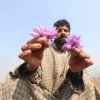
Kashmir’s New Land Laws Could Impact Biodiversity
Walking in the middle of fields of delicately-scented purple saffron crocus flowers, 36-year-old Mubeen Yasin, a saffron farmer from the southern region of Indian Kashmir, is not optimistic that in a few years time the scenery will remain as beautiful as it is today.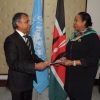
Sid Chatterjee Epitomizes the New Leadership Model of UN Resident Coordinators Worldwide
Siddharth Chatterjee, who has served with the United Nations for over 20 years, has been appointed as the new Resident Coordinator in China, the world’s second largest economy after the United States.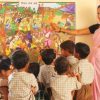
India: National Education Policy 2020 Could Transform Early Childhood Education If Implemented Effectively
It is after almost 34 years that the central government approved the new National Education Policy 2020 on July 29, 2020. This document contains comments on the entire education system and its various recommendations are being heavily debated.« Previous Page — Next Page »


The Week with IPS

NEXT STOP - SDGs
Tracking global progress towards a sustainable world
Tracking global progress towards a sustainable world
