Languages
Wednesday, November 11, 2026



News and Views from the Global South
Asia-Pacific

E-learning Divide Places World’s Disadvantaged Children at Risk of Dropping Out
The COVID-19 pandemic has brought a new layer of challenges to inclusive education. As many as 40 percent of low and lower-middle income countries having not supported disadvantaged learners during temporary school shutdowns, finds United Nations Educational, Scientific and Cultural Organization’s 2020 Global Education Monitoring Report released today, Jun. 23.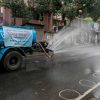
Helping Bangladesh Recover from COVID-19
One of the most densely populated countries in the world, Bangladesh exemplifies the triple blow that many emerging market countries have suffered from COVID-19: domestic slowdown caused by the disease and the efforts to contain its spread; a sharp decline in exports, particularly in the ready-made garment sector, and a drop in remittances. Its once robust economy has dramatically slowed in recent months.
We Should Not Aim to Return to Normal
The world before COVID-19 looks very attractive right now. In light of the disease, mass unemployment and social distancing, a return to pre-pandemic normality seems appealing. Yet we should remember what normal was.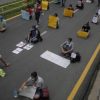
Social Movement Through Social Media
Last week, Kathmandu erupted with protests organised collectively through the social web by Nepal’s urban young fed up with the shenanigans of the country’s septuagenarian rulers.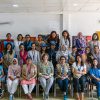
Women Leadership Is Key to Successful Post-COVID-19 Era, Says Cherie Blair
The impact of COVID-19 lockdowns falls heavily on the shoulders of women even in the global north. Women take the brunt of housework and caretaking duties, homes schooling, working from home and perhaps looking after elderly parents, says Cherie Blair.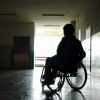
COVID-19 has Further Marginalised Persons with Disabilities
Since the beginning of the year, more than 200 nations across the globe have been affected by COVID-19. Many are still reeling under the devastating effects of the pandemic, with both public health and the global economy having taken a major blow.
Delivering Humanitarian Assistance in Cox’s Bazar During COVID-19
The novel coronavirus has affected the lives of millions worldwide at its very onset. The situation in Bangladesh is no different. Wearing masks and washing hands frequently have become the new normal. The first laboratory confirmed COVID-19 case was identified in Cox’s Bazar on 23 March. Unforeseen circumstances often lead to unprecedented innovative actions as is exemplified by a Humanitarian Access Project.
Was There Slavery in Australia? Yes. It Shouldn’t Even Be Up for Debate
Prime Minister Scott Morrison asserted in a radio interview that “there was no slavery in Australia”. This is a common misunderstanding which often obscures our nation’s history of exploitation of First Nations people and Pacific Islanders.
Impact of COVID-19 on Women in South Asia
Prior to the onset of the coronavirus crisis South Asian women participated only sparingly in the labor market. Even though South Asia was and still has the potential to become one of the fastest growing regions in the world (post COVID19) female labor force participation rates were low at 23.6% compared to 80% for men (World Bank figures).
Q&A: Global Poverty Expected to Move to Middle Income Developing Nations in Asia
Global poverty, which is increasing because of the economic impact of the coronavirus crisis and ensuing worldwide lockdowns, is shifting and a dramatic increase in middle-income developing countries in Asia is expected.
We Need to Slow down and Reconnect with Our Ocean for the Future of the Planet
 COVID19 has brought the world to a halt. The devastating impact of the global pandemic on people’s lives and the world’s economy is a jarring and historic turning point for all of us but it is also an opportunity to re-think many of our practices.

Philippines’ Senior Citizens Vulnerabilities Increase Because of COVID-19 Lockdown
In the Philippines, May has long been a month of joy when farmers harvest their rice crop and celebrate the Pahiyas harvest festival. But this year, the mood was somber. The food production and supply system also affected, thanks to the coronavirus lockdown, and the economy frozen. As a result, millions of Filipinos, especially senior citizens, are now looking at an uncertain future.
Covid-19: Caring for Care Workers
COVID-19 has brought the world to a halt. Nations, businesses, and schools have closed, and billions are confined to their homes. Yet millions of care workers step out daily to keep the lights on and support those in need.
Migrant Women Exploited by Those They Trust
Maliha Masud (25), was promised an affluent life and opportunities for higher education. A bright student studying Biochemistry and Molecular Biology, she wanted to complete her studies and become someone her parents would be proud of. She was promised an opportunity to get her Master’s degree from a good university in the United States but, two years later, was left battered and wounded at the doorstep of a shelter.
Shedding Some Light at the End of the Covid-19 Tunnel: Plotting a Way Forward
Lockdowns have been the main measures to ‘flatten the curve’ of COVID-19 infections. But lockdowns typically incur huge economic costs, distributed unevenly in economies and societies. In fact, some governments acknowledged that they were choosing ‘life over economy’. ‘Life vs. Economy’: A false dichotomy As lockdowns have been repeatedly extended arguing that economy can be revived but not the dead, it has become increasingly clear that ‘lives and livelihoods’ are intrinsically intertwined. The longer the lockdowns, higher is the risk of hunger and hence death.
The Struggle for Land and Food in the Locked-down Philippines
Landless farmers who produce rice for the landlords of big “haciendas” can’t get more than a little pocket money from their harsh work—not enough to provide diverse and healthy food for their families. Seasonal workers on sugar-cane plantations know that they can count on only six months of earnings. When summer arrives, those whose irrigation facilities have been destroyed by typhoons, or those who never had any, struggle while waiting for the rain.
‘I Can’t Breathe!’ Australia Must Look in the Mirror to See our Own Deaths in Custody
I can’t breathe, please! Let me up, please! I can’t breathe! I can’t breathe! These words are not the words of George Floyd or Eric Garner. They weren’t uttered on the streets of Minneapolis or New York. These are the final words of a 26-year-old Dunghutti man who died in a prison in south-eastern Sydney.
No Woman Should Ever Die Giving Life
Consider this. 24 women, children and babies were murdered at a hospital in Kabul, the Afghan capital. Even by standards of a country as accustomed to bloodshed as Afghanistan, the May 12 attack on a Kabul maternity clinic was an event of unmitigated horror.
Women are Often an After-Thought in a Humanitarian Crisis
In an interview*, Bina Pradhan, an independent researcher, focuses on gender, macroeconomics and emerging issues of inequality. She is affiliated with the Federation of Business and Professional Women, Nepal (FBPWN), and has been working on the promotion and advancement of women in enterprise development and trade, post-earthquake community reconstruction, and rebuilding people’s lives and livelihoods with a focus on sustainability.
COVID-19 Pandemic and the Pacific Islands
As of 11 AM (AEST) on 20th May 2020 the incidence of COVID-19 virus (henceforth virus) on the Pacific Islands was limited. Active cases (deaths) in some of the Pacific Islands were Australia 7,072 (100), New Zealand 1,503 (21), PNG 8(0), Guam 154 (5), Fiji 18 (0), Timor-Leste 24 (0), French Polynesia 60(0), and New Caledonia 18(0).1 Standards of comparison are not uniform across the region since testing capacities of the various countries differ widely. The low number of cases in the smaller Pacific Islands compared to their larger neighbours, i.e., Australia and New Zealand, reflect both variations in testing standards as well as their smaller population size. The smaller Pacific Islands were also not subject to some of the aberrations experienced by the larger countries, e.g., large number of arrivals from foreign countries in planes and cruise ships.
Logistics: The Backbone of Humanitarian Efforts Fighting COVID-19 in Asia and the Pacific
While most of the world self-isolates at home and skies are emptier than they have been for decades, humanitarian flights transporting life-saving aid are revving up around Asia and the Pacific.« Previous Page — Next Page »





The Week with IPS

NEXT STOP - SDGs
Tracking global progress towards a sustainable world
Tracking global progress towards a sustainable world
