Languages
Friday, November 13, 2026



News and Views from the Global South
Asia-Pacific
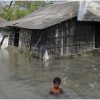
Rural Bangladesh Families Spend 2.0 Billion Dollars on Climate Change ― Dwarfing Government & International Finance
In an alarming imbalance struggling families in rural Bangladesh spend almost US$2 billion a year on preventing climate-related disasters or repairing damage caused by climate change ― far more than either the Bangladesh government or international bodies.
Community Management, Outmigration Help Nepal Double Forest Area
New analysis of historical satellite imagery indicates that Nepal’s forest area has nearly doubled, from 26% of land area in 1992 to 45% in 2016. The midhills have experienced the strongest resurgence, although forests have also expanded in the Tarai and in the mountains. This makes Nepal an exception to the global trend of deforestation in developing countries.
Do Women Suffer Greater Loss of Employment than Men in Morbidity?
In a life peppered with tragedy, Mary Shelley wrote in 1818, “Have I not suffered enough, that you seek to increase my misery?” That this accurately sums up the fate of many women in South Asia who suffer a major health shock such as a serious illness or a disability or both, is hard to dispute.
Human trafficking: A Disorganised Response to an Organised Crime
Human trafficking is perhaps one of the most well-organised crimes being committed in India. How else do we explain the phenomenon of adolescent girls and young women from remote villages across India being found in brothels in our cities?
How a Bangladesh Non Profit for Leprosy Made its Members Completely Self-Sufficient
 The 20th International Leprosy Congress just wrapped up in Manila, Philippines last week. Alongside policy makers, diplomats, medical researchers, doctors, donors and academics, several Hansen's disease-affected people’s organisations also participated in the 3-day congress that was co-sponsored by The Nippon Foundation (TNF) and Sasakawa Health Foundation (SHF).

Calls for Reform, Research and Reorganisation in Leprosy Healthcare
Rachna Kumari of Munger in Eastern India’s Bihar state is not yet 30. But she's already been married at 18, abandoned by her husband after she was diagnosed with leprosy and become an award-winning advocate of the disease. She has traversed a long road. And this week she undertook another step in her journey to fly to Manila, Philippines, as a delegate at the 20th International Leprosy Congress (ILC).
The Push for Peace-From the Global Village to the Global Neighborhood
From the ashes of a tragedy that wiped out almost 90% of the city of Hiroshima on 6 August 1945, an institute called the Hiroshima Peacebuilders Center (HPC) rose like a phoenix of hope that is pioneering the creation of a global pool of peacebuilders. It is driven by the 2030 Agenda for Sustainable Development declaration that "there can be no sustainable development without peace and no peace without sustainable development.”
‘Conference Emphasises Need for Partnerships to Create a World Without Leprosy’
Forty years ago, Yohei Sasakawa saw his father moved to tears after meeting and witnessing the suffering of people affected by leprosy – also known as Hansen’s disease. Not only did the patients have a physical illness, but they also suffered from social exclusion and discrimination. It made the young Sasakawa vow to work for the elimination of leprosy from the world – just as his father had been doing.
Nothing For Us, Without Us – Hansen’s Disease-Affected Tell International Gathering
Stronger government action to fight stigma and discrimination, more government funding for health and non-health support programmes, and a larger role for people’s organisations in developing policy towards Hansen's disease treatment and eradication are still needed for eliminating the disease.
The Emergence of a Global Voice for Hansen’s Disease Affected Persons
The Global Forum of People’s Organisations on Hansen’s Disease, which was attended by members of people’s organisations from 23 different countries, wrapped up in Manila, Philippines, today Sept. 10 after four days of discussion and deliberation. The main outcome was a set of recommendations, which included participants stating that those affected by the disease should have more inclusive roles in the global campaign against leprosy.
‘Join Me on this Journey’ to Eliminate Leprosy – WHO Ambassador
 Octogenarian Yohei Sasakawa has travelled to more than 90 countries across the globe; from areas of conflict, to the jungles of Brazil, shaking hands, hugging and washing the feet of Hansen’s disease-affected people. His message is simple: Stop stigmatisation and eliminate the disease.

The Costs of Heightened Conflict in the Himalayas
As a series of conflicts in the Hindu Kush Himalayan region come into sharp focus, sidelining local populations, the long-term environmental costs may leave the region degraded, poor and desperate.
Awareness Should be the Priority in Public Health Efforts against Leprosy
Increasing awareness of the continuing existence of Hansen’s Disease (leprosy) is critical to sustaining effective public health efforts against the disease, eliminating the social stigma associated with it, and halting its transmission.
Kashmir: How Modi’s Aggressive ‘Hindutva’ Project has Brought India and Pakistan to the Brink – Again
August is immensely important in the history of the Asian subcontinent, marking the month that India and Pakistan gained independence from the British in 1947. Now, in 2019, it has once again proved momentous, when, ten days before India’s Independence day celebrations, prime minister Narendra Modi’s government revoked the autonomy of Indian-administered Kashmir – a status provided for under the Indian Constitution.
The Business of Social Enterprise
Organisations supporting people affected by Hansen’s disease (leprosy) have social rather than capitalist aims, but they need to take a business-minded approach to their work if they wish to be sustainable, experts at a global conference in Manila, Philippines said.
First Global Forum of Leprosy-Affected People’s Organisations Kicks off in Manila
Being part of a platform where leprosy-affected people from all over the world can freely interact, exchange and share opinions, ideas, experiences and strategies was always something Tasfaye Tadesse dreamt of.
A Global Forum to Encourage Dialogue and Share Solutions
Professor Takahiro Nanri is the executive director of the Sasakawa Health Foundation, co-organiser of the Global Forum of People’s Organisations on Hansen’s Disease, which will take place from Sept. 7 to 10 in the Philippines. 
Is There Discrimination Against Women in Healthcare in India?
In an inaugural lecture at the Radcliffe Institute at Harvard University, Amartya Sen began with a swipe at Queen Victoria who complained to Sir Theodore Martin in 1870 about & quote: this mad, wicked folly of 'Woman's Rights’ ", as in her rarefied world nobody could trample upon her rights. The world has of course changed dramatically and women’s rights are widely acknowledged but injustices persist. Our concern here is with health injustices that are widely prevalent in India. These take multiple forms: female foeticide, widespread morbidity and denial of access to good quality healthcare until a critical condition develops. Our focus here is on vulnerability of women to non-communicable diseases (NCDs) and their limited access to good quality healthcare in India.
Achieving Global Consensus on How to Slow Down Loss of Land
Expectations are high, perhaps too high, as the 14th Conference of the Parties (CoP 14) of the United Nations Convention to Combat Desertification (UNCCD), now into the third day of its two-week session, is being held outside the smog-filled Indian capital of New Delhi.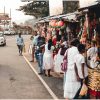
Sri Lanka Faces Major Challenges on UN’s 2030 Development Agenda
On the road to sustainable development, Sri Lanka provides an interesting case study. Having overcome a three-decade domestic conflict, Sri Lanka has begun its transformation towards a sustainable and resilient society. The extreme poverty rate ($1.90 a day) dropped to 0.8 per cent in 2016. The unemployment rate is below 5 per cent since 2010.
Animal Welfare: Where Does India Stand?
We have the potential to lead the world in animal welfare, but the tendency to look at the issue in a vacuum has prevented this movement from being taken seriously.« Previous Page — Next Page »


The Week with IPS

NEXT STOP - SDGs
Tracking global progress towards a sustainable world
Tracking global progress towards a sustainable world
