Languages
Wednesday, November 18, 2026



News and Views from the Global South
Global

Forests, Food & Farming Next Frontier in Climate Emergency
The special report by the Intergovernmental Panel on Climate Change (IPCC) on climate and land, launched last week, makes it clear that without drastic changes in land use, agriculture and human diets, we will fall significantly short of targets to hold global temperature rise below 1.5°C.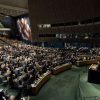
Will Sanctions Undermine 1947 US Treaty with UN?
When Yassir Arafat was denied a US visa to visit New York to address the United Nations back in 1988, the General Assembly defied the United States by temporarily moving the UN’s highest policy making body to Geneva-- perhaps for the first time in UN history-- providing a less-hostile political environment for the leader of the Palestine Liberation Organisation (PLO).
Are Jair Messias Bolsonaro and Donald John Trump a Menace to the Planet?
We live in different worlds. The ones of friends, family and work colleagues. Worlds which are overshadowed by other, much bigger ones. Global spheres of international finance, politics, climate change, etc., contexts that might threaten our smaller circle of relationships; our family, our income, our general wellbeing, in short – our entire existence. However, even at those levels there exist small circles of acquaintances and associates able to make decisions that affect the entire humankind. Let me take one example – the regimes of U.S. President Donald J. Trump and Brazilian President Jair Messias Bolsonaro, which are menacing our global natural habitat.
Five Million Palestinians Deserve Better!
An old adage passed on by veteran U.N. staff to younger recruits is, “Do nothing whenever possible. It’s safer.” For a junior officer that might indeed be career-enhancing.
‘Beggar Thy Neighbour’ Policy Advice
The harmful effects of falling corporate tax rates have been acknowledged in a recent International Monetary Fund (IMF) research paper. This trend, since the early 1980s, has been especially detrimental for developing countries, which rely on direct taxation much more than developed economies.
Is India on Track to Beat the Perfect Storm?
“The Perfect Storm” was a dire prediction that by 2030 food shortages, scarce water and insufficient energy resources together with climate change would threaten to unleash public unrest, cross-border conflicts and mass migration from worst-affected regions.
Desertification a Frontline Against Climate Change: IPCC
A new United Nations report has described farming, land degradation and desertification as critical frontlines in the battle to keep the global rise in temperatures below the benchmark figure of 2 degrees Celsius.
Global Geodetic Framework Helps Monitor Natural Disasters & Rising Sea Levels
There are several initiatives in place to foster sustainable development-- and the Global Geodetic Reference governance frame is one that has proved effective.
The Nairobi Summit – Towards a Watershed Moment
In 2019 a female scientist created an algorithm that gave the world the first ever images of a black hole. Working with a team of astronomers, physicists, mathematicians and engineers, a young woman led the development of a computer program that in her own words enabled them to “achieve something once thought impossible.”
The Moral Responsibility for Arms Trade
“I don’t want to see a single war millionaire created in the United States as a result of this world disaster.” 1 These were the words of US President Franklin D. Roosevelt on 22 May 1940 when he learned of individuals profiting because of the booming arms trade industry during the Second World War. Seven decades down the line, President Roosevelt’s warning against the rise of the military-industrial complex and war profiteers is more relevant than ever and a telling testimony that for many in safe places war means profit. But, should the pursuit of economic profit be allowed to supplant ethical considerations, especially when weapons often end up in the hands of terrorists, human rights violators and criminal governments?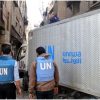
Will Palestinian Refugees Pay a Heavy Price for UNRWA Bungling?
A crisis that has threatened to undermine the future of the UN Relief and Works Agency (UNRWA) is expected to have a devastating impact—not only on the credibility of the United Nations-- but also on the lives of over five million Palestinian refugees whose very survival depends on the humanitarian services provided by the beleaguered UN agency based in Amman and Gaza.
Domestic Violence and the Role of Education
Trying to teach and inspire youngsters is a daunting task. Many teachers tend to suffer from a harrowing, bad conscience, obliged as they are to follow routines, rules, and regulations set down by their employers while knowing that these are difficult to apply and provide with desired results. Worst is a nagging feeling of inability to reach out to the students. Most teachers want their pupils to be good learners, critically thinking individuals who feel gratified and keen to change things for the better.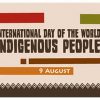
Your Life or Your Freedom? The Ultimate Price to Defend the Environment
For the family of indigenous Guatemalan activist Jorge Juc, the announcement last week by US President Donald Trump of an agreement declaring Guatemala a “safe third country” could not be more bitterly ironic.
International Day of the World’s Indigenous Peoples 2019
 There are an estimated 370 million indigenous people in the world, living across 90 countries. They live in all geographic regions and represent 5000 different cultures. These people are inheritors and practitioners of unique cultures and ways of relating to others yet are being forced to give up their ways of life.

Bretton Woods Institutions: Enforcers, Not Saviours?
According to their own internal evaluations, both the World Bank (WB) and the International Monetary Fund (IMF) have huge credibility deficits due to the policy conditionalities and advice they have dispensed to developing countries in recent decades.
Canada Effectively Addresses Children in Armed Conflict
More than 24,000 violations have been committed against children across the globe, including recruitment into armed forces, abduction, sexual violence, deprivation of basic needs, attacks on schools and hospitals-- and even murder.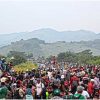
Environmental Migration a Global Challenge
The Atlas of Environmental Migration, which gives examples dating as far back as 45,000 years ago, shows that environmental changes and natural disasters have played a role in how the population is distributed on our planet throughout history.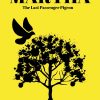
What a Little Pigeon Could Teach Our World
Over 100 years ago a little brown passenger pigeon named Martha died in the Cincinnati Zoo. She was the last of her breed. Just like that, in an instant, a bird species that had once numbered in the billions was wiped out forever.
Saudi Arabia Easing Male Guardianship: But More is Needed
It comes as welcome news that authorities in Saudi Arabia have taken important steps towards dismantling the repressive male guardianship system, which treats women in the country as minors.
Extreme Weather Events are Just the Tip of Rapidly Melting Icebergs
First August. It is the middle of summer in the northern hemisphere. We are witnessing not only record global warming but global political tensions are also heating up.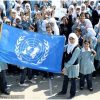
UNRWA Faces Donor Backlash Amidst Charges of Sexual Misconduct & Nepotism
The UN Relief and Works Agency (UNRWA), which has been undermined by a sharp cut in US contributions, has been embroiled in a scandal that threatens to jeopardize its very future.« Previous Page — Next Page »


The Week with IPS

NEXT STOP - SDGs
Tracking global progress towards a sustainable world
Tracking global progress towards a sustainable world


