Languages
Friday, November 20, 2026



News and Views from the Global South
Global

Uruguay’s Victory over Philip Morris: a Win for Tobacco Control and Public Health
In a landmark decision that has been hailed as a victory of public health measures against narrow commercial interests, an international tribunal has dismissed a claim by tobacco giant company Philip Morris that the Uruguay government violated its rights by instituting tobacco control measures.
The Time is Ripe to Act against Drought
Let us start with some good news. Sort of. The strongest El Niño in 35 years is coming to an end. [1]
Olympic Games – More Media Show than Sports Event
Brazil’s first gold medal of the Rio de Janeiro Olympics gave it a new multipurpose heroine, Rafaela Silva, whose defeat of the favourites in judo has made her a strong voice against racism and homophobia. Not only is she black and poor, but she just came out as gay.
Humanitarian Crises: Business Called to Take a Lead
With more than 65 million people forced to flee their homes due to violence and armed conflicts, this year’s Wold Humanitarian Day on August 19 will call on all governments and social sectors to work together to tackle this unprecedented human crisis.
TPPA could be discarded due to US political dynamics
No country was more active in pushing for the Trans Pacific Partnership (TPP). In the five years of negotiations, the United States cajoled, persuaded and pressurised its trade partners take on board its issues and positions.
One Humanity? Millions of Children Tortured, Smuggled, Abused, Enslaved
Children are being smuggled, sexually abused, maimed, killed for their vital organs, recruited as soldiers or otherwise enslaved. Not only: 69 million children under five will die from mostly preventable causes, 167 million will live in poverty, and 263 million are out of school. And 750 million women will have been married as children by 2030.
Youth Key to the Success of the SDGs in Kenya
Consider this: in 1956 Sweden and Kenya’s population was roughly at 7 million. Today Sweden has about 9.8 million, while there are about 44 million Kenyans. Fertility levels are declining gradually and Kenyans are living longer. It is estimated that there will be 85 million people in Kenya by 2050, with three quarters of these being below 35 years. While Kenya’s median age is 19, Sweden’s is 42.
Youth Employment: Turning Workplace Partnerships into Opportunity
Many of us can remember the difficulties of getting our first job – the searching, the frustration of rejection, the nervous wait for an interview or the first day of work. Today’s staggering unemployment rates in many countries make it an especially difficult time for young job-seekers.Expansionary fiscal consolidation myth
The debt crisis in Europe continues to drag on. Drastic measures to cut government debts and deficits, including by replacing democratically elected governments with ‘technocrats’, have only made things worse. The more recent drastic expenditure cuts in Europe to quickly reduce public finance deficits have not only adversely impacted the lives of millions as unemployment soared. The actions also seem to have killed the goose that lay the golden egg of economic growth, resulting in a ‘low growth’ debt trap.
False Promises: Avoid ‘Miracle’ Rice and Just Eat a Carrot
Norman Borlaug, father of the Green Revolution, died on September 9, 2009. Alfred G. Gilman died on December 23, 2015. Both were Nobel laureates and now both dead. Gilman was a signatory to a recent letter condemning Greenpeace and its opposition to genetic engineering.
The Wild Cards
The Rio Olympics began with the signature fanfare that accompanies the Games every four years. However, unlike every year, the nature and size of the spectacle, the synchronised dancers, over-the-top fireworks and the millions spent brought a new set of disappointments with them.
The UN Steps up Efforts to End Child Marriage
Barely 17 years old and from the Gajapati district in Odisha, India, Susmita has never gone to school. She rears the few animals her family owns, and this is her primary duty besides attending to household chores.
Don’t Bash the Games
There have been few moments in my life as memorable as competing in the 1984 Olympic Games in Los Angeles. The chance to represent my country was a distinct honor, as was being part of the community of the Olympics — an event with the rare power to unite the world in the common spirit of competition and athletic excellence.
Turkey’s Syria Headache
Five years into the 'oust Assad' campaign, Turkey finds itself isolated in the region and beyond. After a narrow escape from a failed coup attempt, President Erdogan may finally be rethinking his Syria policy. Because the arming of rebels that included hard-line Islamists has not only contributed to the killing of some 280,000 innocents, it also brought upon Turkey the problem of millions of cross-border refugees and failed to put a dent against the Kurdish Workers' Party, i.e. PKK. The overly ambitious foreign policy of the Turkish government where Erdogan found himself at odds with Egypt, Libya and of course Syria, has done little to raise his profile in the region. That the Syrian engagement is a foolhardy experiment where the rebels cannot bring down Assad is now all the more evident with Russia's entry into the conflict.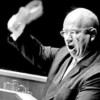
The Day a Soviet Leader Banged His Shoe at the UN
During the height of the Cold War between the United States and the Soviet Union, and particularly in the 1960s, the United Nations was the ideological battle ground where the Americans and the Soviets pummeled each other– metaphorically speaking — either on the floor of the cavernous General Assembly hall or at the horse-shoe table of the Security Council.
Blame It on Cronyism, Not the Free Market
The current condition of global economic inequality should be of concern to all. An Oxfam report published this year titled, An economy for the 1%, revealed that “the richest 1% now have more wealth than the rest of the world combined.” It also said that "62 of the richest people now own more wealth than the bottom half of the world's population. In 2015 it was the 80 richest, in 2014 it was 85 and in 2010, only six years back, it was 388 richest that owned similar wealth”, showing that inequality is actually growing at an increasing rate. This is also made evident by the fact that “the wealth of the poorest half of the world's population has fallen by a trillion dollars since 2010, a drop of 38 percent" while “the wealth of the richest 62 has increased [during the same period] by more than half a trillion dollars to $1.76 trillion.”
Team Refugees: Pivotal Moment in Olympic History
For the first time ever, a team of displaced athletes will have their chance to demonstrate their relentless determination and integrity in a bid to leave their own distinct mark on Olympic history.
The Historic Reversal of Populations
It first happened in Italy in 1995. Five years later it happened in six additional countries, Bulgaria, Germany, Greece, Japan, Portugal and Spain. Today the total number of countries where it has occurred stands at 30, including most members of the European Union. In fifteen years that number is expected to nearly double and include Australia, Canada, China, Russia, South Korea and the United States (Table 1).Pope Refuses to Equate Islam with Violence, Terrorism
He spoke with much apparent deliberation when Pope Francis last Sunday, on his return trip from Poland, said to reporters, “I don’t think it is right to equate Islam with violence.”
Threat Perceptions
Here — in alphabetical order — are six countries that have considerable involvement in Pakistan: Afghanistan, India, Saudi Arabia, the United Arab Emirates, the United Kingdom and the United States.
Poverty, Vulnerability and Social Protection
According to the World Bank, the MDG target of halving the share of the poor was achieved by 2008, well in advance of 2015, the target year. However, increased unemployment and lower incomes in recent times remind us that poverty is not an unchanging attribute of a shrinking group, but rather, a condition that billions of vulnerable persons risk experiencing.« Previous Page — Next Page »


The Week with IPS

NEXT STOP - SDGs
Tracking global progress towards a sustainable world
Tracking global progress towards a sustainable world
