Languages
Saturday, November 21, 2026



News and Views from the Global South
Global
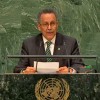
Q&A: ‘We Need to do Development Differently in the Post-2015 Era’
The Sustainable Development Goals (SDGs), adopted at a summit meeting of world leaders at the U.N. headquarters in New York on Sep. 25, reflect the five strategic domains the ACP Group is gearing to focus on, as it repositions itself as a more effective organisation in the global arena, says the 79-nation bloc’s head Dr Patrick Gomes.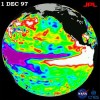
10 Million at Risk of Hunger Due to Climate Change and El Niño, Oxfam Warns
At least ten million of the poorest people face food insecurity in 2015 and 2016 due to extreme weather conditions and the onset of El Niño, Oxfam has reported.
U.N. Continues Condemnation of Civilian Casualties in Yemen
The Saudi coalition, which continues its air strikes against rebels in strife-torn Yemen, is fast gaining notoriety as “the gang that couldn’t shoot straight” – largely because of its misses than its hits.
Palestine President Abbas Warns of ‘Grave Dangers’ in Jerusalem
“I come before you today…compelled to sound the alarm about the grave dangers of what is happening in Jerusalem,” said Palestine President Mahmoud Abbas in his remarks to the United Nations General Assembly on Sep. 30.
As the Mediterranean Refugee Crisis Endures, International Morality Ebbs
As the world suffers its biggest upheaval of human mobility, with 60 million people forced to desert their homes or countries due to persecution, armed conflicts, starvation and hunger that are a veritable danger to their lives, the response from the international community has been rather laggard.
Italy and Uganda Bag Right Livelihood Awards Fist Time Ever
The 2015 Right Livelihood Awards were announced today in Stockholm at the Swedish Foreign Office International Press Centre by Ole von Uexkull, Executive Director, and Dr Monika Griefahn, Chair of the Board of the Right Livelihood Award Foundation.
U.S. 100th Member State to Join Nuke Terrorism Treaty
A 1997 movie titled “The Peacemaker” –partly shot outside the United Nations – dramatised the story of a Yugoslav terrorist who acquires a backpack-sized nuclear weapon, gone missing after a train wreck in rural Russia, and brings it to New York to detonate it outside U.N. headquarters.
Opinion: Renewed Optimism or Higgledy-Piggledy Vision?
The 17 sustainable development goals (SDGs) and the whopping 169 targets were adopted in the largest ever United Nations Summit, attended by Prime Ministers, Presidents and the Pope, among other luminaries, in New York. These goals encompass world peace, the environment, gender equality, elimination of poverty and hunger and much, much more.
Anti-gay Sentiment Arises During the U.N. General Assembly
Secretary-General Ban Ki-moon emphasized the importance of lesbian, gay, bisexual, transgender and intersex (LGBTI) rights during a High-Level Core Group event on Sep. 29, noting his experiences in working with governments to eliminate LGBTI-discriminatory policies.
Opinion: The Party’s Over for U.N.’s Sustainable Development Goals
The Pope has left the U.N. and the traffic in Manhattan is back to normal. The hoard of government delegations, NGOs and civil society representatives are packing up and the press is moving on. The party’s over for the Sustainable Development Goals.
Africa Must Depend Less on Development Aid, Says New Study
As the U.N.’s Millennium Development Goals (MDGs) reach their targeted date by the end of December, one of the lingering questions has long remained unanswered – at least, until now.
Opinion: We Can Overcome Poverty and Hunger by 2030
Over three quarters of the extreme poor in the world live in the countryside. Reducing rural poverty will therefore require significantly higher rural incomes. Since most rural incomes are related to agriculture, raising agricultural productivity can help raise rural incomes all round.
Opinion: Multilateral Treaty Framework – An Abiding Achievement of the U.N.
As it celebrates its 70th birthday, a proud achievement of the United Nations over its lifetime, is the framework of multilateral treaties that it has been instrumental in putting in place.
Iran’s nuclear deal and the regional countries
Although some regional countries initially opposed the nuclear deal between Iran and the P5+1 (the United States, Russia, China, United Kingdom, France and Germany), once the Joint Comprehensive Plan of Action (JCPOA) was signed by the two sides in July 2015, practically all regional countries welcomed it. After the initial agreement in Lausanne, U.S. President Barack Obama invited all the Gulf Cooperation Council (GCC) leaders to a Camp David summit in May and all of them expressed support for the deal.
‘Why is it Easier to Find Money to Destroy People than Protect Them?’ Asks U.N. Chief
Speaking at the opening session of the high-level debate of the U.N. General Assembly Monday, Secretary-General Ban Ki-moon said a politically troubled world is suffering from a lack of empathy.
Opinion: India, Where Have All the Women Gone?
Women account for less than half of India’s population but their participation in the workforce is way below that of men. They account for 27 per cent of the workforce. If – and it is a big if – their number were to increase to the same level as men in the workforce, the country’s output of good and services would expand by 27 per cent, argues Christine Lagarde, managing director of the Internatgional Monetary Fund.
Opinion: U.N.’s Mixed Messages on Nepal’s Constitution
After a decade of violent insurgency, followed by another decade of chaotic transition, Nepal promulgated its new constitution on Sept. 20, 2015. Immediately afterwards, the U.N. issued a rather terse statement attributed to Secretary-General Ban Ki-moon that merely “acknowledged” the adoption of the constitution, without any congratulatory warmth.
U.N.’s New Development Goals Need Funds, Political Commitment for Success
The U.N.’s much-ballyhooed Sustainable Development Goals (SDGs), unanimously adopted by over 150 world leaders at a three-day summit meeting, which concluded Sep. 27, has been touted as the biggest single contribution to humanity since the invention of sliced bread.
Israel’s Opposition to the Nuclear Treaty with Iran
Relations between Iran and Israel go back almost to the foundation of the State of Israel in 1948. Iran was the second Muslim-majority country to recognize Israel as a sovereign state, following Turkey, and the two countries had very close diplomatic and even military cooperation for many decades.
Pope’s Outspoken Views Rattle U.S. Conservatives but Not U.N.
Pope Francis’ outspoken views on some of the politically-charged hot button issues – including refugees, migration, human rights, climate change, Iran’s nuclear deal, U.S.-Cuban relations and the global arms trade – have touched a raw nerve in the United States.
Opinion: Secret Trade Negotiations Threaten Sustainable Development Goals
World leaders and Pope Francis met in New York Friday to announce 'a plan to transform our world', the Sustainable Development Goals.« Previous Page — Next Page »


The Week with IPS

NEXT STOP - SDGs
Tracking global progress towards a sustainable world
Tracking global progress towards a sustainable world
