Languages
Wednesday, October 14, 2026



News and Views from the Global South
Global

Living Longer at Age 80
Upon reaching the age of 80, men and women are living longer than ever before. These gains in longevity among octogenarians represent a remarkable demographic achievement. The additional years of life provide new opportunities for older adults and their families while also presenting important social, economic, and healthcare challenges for societies.
Palestinian Children Deserve Education, not Ethnic Cleansing
World News are more or less currently fully occupied with the U.S. – Iran debacle and to a lesser degree the Gaza genocide, the on-going war in Ukraine, and to an even lesser degree the one in Sudan.
The World’s Aid Workers Must Be Protected
This summer, an ambush on a marked humanitarian convoy in Duk County, South Sudan, left 17 dead and five injured. While the UN called for an immediate investigation, history suggests the victims’ families will wait indefinitely for answers.
US Arms Stockpiles Hit by Iran War
The highly- unpredictable five-month-old US-Iran war has been plagued by on-again, off-again peace agreements -- with such monotonous regularity-- the conflict seems never ending. But according to several news reports, the US faces a new threat-- it may soon run out of key weapons systems.
The Year of Pastoralists Must Be More Than Symbolic
This is supposed to be the year the world finally sees and recognizes pastoralists. The United Nations has designated 2026 as the International Year of Rangelands and Pastoralists, bringing long-overdue attention to communities who have sustained some of the world’s most fragile and important landscapes for generations.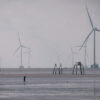
Green transition: Pay the Least, Benefit the Most
Inaction and maintaining the status quo of fossil fuel dependence carry significant costs. The recent closure of the Strait of Hormuz, for instance, caused enormous losses to the global economy, with many Asia-Pacific countries bearing disproportionately larger adverse impacts. Had these economies had a more diversified energy mix, they would have benefited from such resilience under current circumstances.
After Restoring Stability, Argentina Needs to Turn Hard-Won Gains into Lasting Prosperity
My first meeting in Buenos Aires began with an unexpected gift. Economy Minister Luis Caputo presented me with an Argentine national team jersey bearing my name and the number 10—Lionel Messi's iconic number.
Trade Liberalisation Never Lifted All Boats
President Trump has blamed trade liberalisation advocated by globalists for US deindustrialisation. Instead, his own weaponisation of economic policies, instruments and institutions purport to ‘make America great again’ (MAGA).
“Kingston’s Disappointment Should Not Extinguish Our Hope for the Deep Ocean”
Earlier this year, I called publicly for a precautionary pause on deep-sea mining, arguing that it is not a rejection of progress, but a commitment to sound science.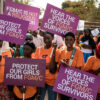
Female Genital Mutilation: Winning the Argument, Losing the Funding
Last August, a one-month-old girl in The Gambia bled to death after being subjected to female genital mutilation (FGM), a practice that had been illegal in the country since 2015. FGM is a human rights violation, whatever the appeals to faith or tradition made in its defence, but now the Gambian Supreme Court is being asked to strike the country’s ban down. This is the second attempt in two years to make FGM legal again.
Who picks up the tab for AI’s unbridled genius?
For the last few years, Artificial intelligence has been making increasingly intrusive demands for our attention. It burst onto the scene like a child prodigy, enthralling us with feats of brilliance. With consummate ease, it removed drudgery from our tasks and began helping us achieve our personal and workplace objectives.
Rohingya Repatriation: A Roadmap Without a Road
The Rohingya crisis remains one of the most enduring humanitarian and political failures in South and Southeast Asia. Since the 2017 mass expulsion from Myanmar’s Rakhine State, Bangladesh has hosted more than one million refugees in Cox’s Bazar and Bhasan Char, while Myanmar has failed to create conditions for safe return. What began as an emergency response has hardened into protracted displacement marked by statelessness, insecurity, aid dependency, and diplomatic fatigue. Repatriation is repeatedly presented as the preferred durable solution, yet every major attempt has failed because the core political question remains unresolved: the Rohingya cannot safely return to a state that denies them citizenship, protection, and equal belonging.
Financing Africa’s Digital Future: Institutions Push for Smarter, Coordinated Funding
Africa’s digital revolution is gathering pace, but the financing needed to sustain it remains uneven, fragmented, and often out of reach.
Preparing Agriculture for a New Era of Extreme Weather
Recently, the Food and Agriculture Organization of the United Nations put out an alert, warning countries around the world about an impending new El Niño phase that is expected to significantly increase the likelihood of drought, heat waves, storms, and flooding and pose major risks to agriculture across multiple regions.
A New Wave of “Communist” Hysteria is Threatening to Spread Across US Politics
Senator Joseph R. McCarthy (Republican of Kansas) rose to public attention in the 1950s with his allegations that hundreds of “Communists” had infiltrated the State Department and other federal agencies.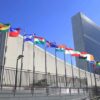
The United Nations in a Time of Opportunity & Uncertainty: a Time to Choose
On 15 September 1953, Vijaya Lakshmi Pandit of India was elected the eighth president of the UN General Assembly — the first woman to hold the UN's second-highest position. Since then, only four women have followed her. Since its founding, the UN has had nine Secretaries-General. All men. Now, 81 years after the UN's founding, we have a historic opportunity to correct that record. It is time to entrust the UN leadership to a woman of the Global South who shapes a more inclusive, effective and forward-looking UN.
The Americas have the Tools to Eliminate HIV, but Gaps in Access & Coverage remain, says PAHO
The Region of the Americas has more tools than ever before to prevent, diagnose, and treat HIV, yet many of them are still not reaching everyone who needs them, Pan American Health Organization (PAHO) Director Jarbas Barbosa said during the opening session of the International AIDS Conference (AIDS 2026).
World Hunger Is Falling – We Know How To Keep It That Way
Here is a fact that should interrupt the world’s drumbeat of bad news: Hunger fell again in 2025.
UNHCR: 75 years on, the Refugee Convention Remains a Lifeline for Millions
Seventy-five years after the Refugee Convention was opened for signature on 28 July 1951, it remains the foundation of the international refugee protection system and one of the most consequential international legal instruments ever adopted.
From Castel Gandolfo to Campidoglio: Call for Human Dignity to Be at the Heart of the AI Revolution
After two days of debate at an international conference devoted to the challenges of artificial intelligence (AI), nuclear war and global security, Nobel laureates, former heads of state and government, scientists, human rights defenders, religious leaders and representatives of civil society adopted a joint declaration, calling for it to be based on human dignity.
What Development Looks like in Myanmar Today
When asked what development looks like today, a community leader in Kalaw township points to these fields. Once destroyed by a typhoon, they are now productive again. What began as emergency food assistance in the first month was followed by UNDP support in the community—seeds, training, debris removal, support to microbusinesses and small infrastructure—backed by the Republic of Korea, Norway and Switzerland. One year on, the fields sustain three annual production cycles—rice and flowers—with more resilient practices and higher yields. “This is what development looks like to us,” he says.« Previous Page — Next Page »





The Week with IPS

NEXT STOP - SDGs
Tracking global progress towards a sustainable world
Tracking global progress towards a sustainable world
