Languages
Saturday, October 17, 2026



News and Views from the Global South
Global

The Americas have the Tools to Eliminate HIV, but Gaps in Access & Coverage remain, says PAHO
The Region of the Americas has more tools than ever before to prevent, diagnose, and treat HIV, yet many of them are still not reaching everyone who needs them, Pan American Health Organization (PAHO) Director Jarbas Barbosa said during the opening session of the International AIDS Conference (AIDS 2026).
World Hunger Is Falling – We Know How To Keep It That Way
Here is a fact that should interrupt the world’s drumbeat of bad news: Hunger fell again in 2025.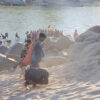
UNHCR: 75 years on, the Refugee Convention Remains a Lifeline for Millions
Seventy-five years after the Refugee Convention was opened for signature on 28 July 1951, it remains the foundation of the international refugee protection system and one of the most consequential international legal instruments ever adopted.
From Castel Gandolfo to Campidoglio: Call for Human Dignity to Be at the Heart of the AI Revolution
After two days of debate at an international conference devoted to the challenges of artificial intelligence (AI), nuclear war and global security, Nobel laureates, former heads of state and government, scientists, human rights defenders, religious leaders and representatives of civil society adopted a joint declaration, calling for it to be based on human dignity.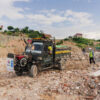
What Development Looks like in Myanmar Today
When asked what development looks like today, a community leader in Kalaw township points to these fields. Once destroyed by a typhoon, they are now productive again. What began as emergency food assistance in the first month was followed by UNDP support in the community—seeds, training, debris removal, support to microbusinesses and small infrastructure—backed by the Republic of Korea, Norway and Switzerland. One year on, the fields sustain three annual production cycles—rice and flowers—with more resilient practices and higher yields. “This is what development looks like to us,” he says.
Human-Caused Climate Change, Not El Niño, Drives Most Coral Bleaching Events – Research
Every morning, as the Indian Ocean retreats from the reef off Zanzibar's Jambiani village, Chiku Chande steps into the knee-deep lagoon carrying bundles of seaweed seedlings. Years of farming these waters have taught her about every channel and coral outcrop. But lately, the corals that once glowed in brown and gold have become chalky white.
Trump’s Authoritarian Gambit to Muzzle the Foreign Press
Under a new rule proposed by the Department of Homeland Security, the duration of “I visas” for foreign media will be slashed from renewable multi year periods—often up to five years—to a maximum of 240 days, and just 90 days for Chinese journalists. Renewals would no longer be a routine administrative step tied to continued employment and compliance with the law, but a discretionary privilege the government can grant or withhold at will.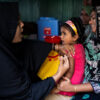
Children in Conflict Zones and Remote Areas Bear the Brunt of Global Immunization Gaps
Despite growing up and working in vastly different geographic regions and environments — one shaped by decades of armed conflict and political instability, and the other by remote, hard-to-reach areas — both Sagal and Johao encounter children daily who have never been vaccinated. Sagal and Johao are members of UNICEF’s Global Youth Health Advisory Group, where they advance children’s health by shaping UNICEF’s strategies, policies, and campaigns, while working directly in their own countries to connect community realities to global conversations about children's health.
US Plans to Restrict Visas to Foreign Journalists Come Under Fire
A proposal to restrict US visas to foreign journalists assigned to cover the US has triggered a strong protest from the New York-based Foreign Press Association (FPA).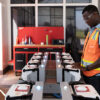
Africa Can Grow Faster With AI—If It Moves Now
A farmer in Kenya gets weather and planting advice on a basic phone. A teacher in Nigeria uses a chatbot to help students catch up in math. South Africa’s revenue authority uses data analytics to better target tax audits. These are not futuristic examples from Silicon Valley. They are early signs of the broader transformation that artificial intelligence (AI) could bring to sub-Saharan Africa.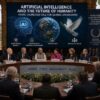
Artificial Intelligence and the Future of Humanity: Nobel Laureates Call for Global Safeguards
"I’m sorry, Dave. I’m afraid I can’t do that.” By bringing the supercomputer HAL 9000 to life in his 1968 film 2001: A Space Odyssey, American director Stanley Kubrick created one of the most powerful symbols of the fear of artificial intelligence (AI) escaping human control.
Global Value Chain Trade Reaches Historic Highs, Despite Push for Reshoring
Despite rising geopolitical tensions, trade restrictions and calls to bring production back to domestic shores, the global economy remains more interconnected than it may appear. Trade through global value chains (GVCs) reached historic levels in 2024, according to a new report from the Organisation for Economic Co-operation and Development (OECD).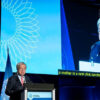
Global AI Governance Cannot Wait As the Digital Divide Widens
Throughout July 2026, various United Nations (UN) bodies and global experts have underscored the need for increased comprehensive artificial intelligence (AI) governance. Although AI yields significant potential gains for global development, persistent structural barriers continue to impede equitable access and deepen the digital divide.
Changing Age Distributions of Populations
In many countries, older adults (aged 65 and above) now outnumber younger individuals (under the age of 18), reflecting a significant demographic transformation known as demographic ageing.
Efficiency Becomes the World’s ‘First Fuel’ as Leaders at IEA Conference Chart Course for Cleaner, More Secure Energy Future
As geopolitical tensions, rising electricity demand and climate pressures reshape the global energy landscape, more than 600 energy ministers, chief executives, financial leaders and policy experts gathered in Montreal, deliberating upon how to deliver at an unprecedented scale.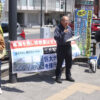
Communities vs. Datacentres
Few things unite Donald Trump’s most ardent supporters with the Democratic Party’s progressive wing, but datacentres are one of them. Across the USA, communities are joining forces across the political divide to oppose developments few want but governments seem determined to impose.
Palestine Must Not Disappear
We have just concluded a visit to the West Bank, Israel, Jordan and Lebanon. From all that we have witnessed and heard, our inescapable conclusion is that the government of Prime Minister Netanyahu, and in particular Ministers Smotrich and Ben-Gvir, aim to make Palestine disappear physically, economically, culturally and politically. Yet other governments either are choosing not to see this or lack the will to take meaningful concerted action.
The Oil Market Absorbed the War Shock, but Buffers Are Running Low
The largest disruption to the global oil market in decades should have sent prices soaring. But after spiking at the start of the war in the Middle East, crude prices soon settled in a range of $90 to $100 per barrel, much lower than many had feared. Why didn’t prices climb higher? The answer is that a combination of factors helped cushion the initial blow. But much of that room has now been used up.
As Gold Prices Soar, Communities Pay the Price in Poisoned Rivers, Vanishing Forests and Organized Crime
The sweltering heat inside a London conference hall did not deter Indigenous leader Jackeline Mendoza Díaz from condemning the sheer destruction of the Peruvian Amazon. Her voice occasionally trembled with emotion but delivered a strong message — painting a picture far removed from the glittering gold bars traded in the world’s financial capitals.
Autonomous Weapons: The Wave of the Future in Military Conflicts Worldwide
As the international community continues to weigh the good, the bad and the deadly in artificial intelligence (AI), which is spreading far and wide with apparently no guardrails, the United Nations is taking a closer look at the impact, both positive and negative, of AI.
WHO: Urgent Action Needed for the Future of Cancer Care
One in five people will be diagnosed with cancer in their lifetime, and when the emotional and physical toll on close family members is factored in, an estimated 92 percent of people globally will be affected by cancer at least once in their lifetime. This staggering statistic is the centerpiece of the World Health Organization (WHO)’s latest global report on cancer.« Previous Page — Next Page »





The Week with IPS

NEXT STOP - SDGs
Tracking global progress towards a sustainable world
Tracking global progress towards a sustainable world
