Languages
Friday, October 23, 2026



News and Views from the Global South
Global
The Troubling Truth of Mpox
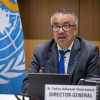
On August 15th, the Deputy Spokesperson for the Secretary-General, Farhan Haq, stated at a press briefing at the United Nations Headquarters that the Mpox epidemic continues to surge in the Democratic Republic of Congo and spreads throughout Africa. The alarming frequency of these cases constitutes a global health concern. Mpox, formerly known as monkeypox, is an epidemic that has grown exponentially in severity over the past two years. Originating in Central Africa in 1970, rates of infection have risen significantly since late 2023, with a new variant of the infection, known as clade 1 Mpox, infecting over 17,000 people in the Democratic Republic of Congo. These cases have generated increasing alarm, so much so that the World Health Organization has declared Mpox to be a worldwide public health emergency. Shortly after this declaration, the first case of clade 1 Mpox was reported in Sweden which greatly elevated global concern of a worldwide epidemic.
Kazakhstan Takes Lead in Global Push for Nuclear Disarmament Amid Heightened Tensions
In a world increasingly shadowed by the threat of nuclear conflict, Kazakhstan is stepping up its efforts in the global disarmament movement. On August 27-28, 2024, in collaboration with the United Nations Office for Disarmament Affairs (UNODA), Kazakhstan will host a critical workshop in Astana. This gathering, the first of its kind in five years, is set to reinvigorate the five existing Nuclear-Weapon-Free Zones (NWFZs) and enhance cooperation and consultation among them.
Ensuring a Healthier Future By Sustaining the Fight Against NTDs
Over the last ten years, I have been privileged to witness incredible progress in the fight against neglected tropical diseases (NTDs) – a journey marked by unwavering dedication, resilience, and hope.
Handling Financial Crises in the South
When history repeats itself, the first time is a tragedy; the next is a farce. If we fail to learn from past financial crises, we risk making avoidable errors, often with irreversible, even tragic consequences.
Digital Trade & the Sustainable Development Goals: A Dynamic Agenda
The rapid growth of digitalization has fundamentally altered commerce, impacting production and facilitating the movement of goods. The 2023 Asia-Pacific Trade and Investment Report (APTIR), has pointed out that although digital trade revenues of Asia and the Pacific account for a significant share of global trade, this growth is uneven, with trade concentrated in a few areas, leading to disparities across the region.
Invest in Research to Protect Crops from Future Flooding
Tropical Storm Debby has resulted in record-setting rain and flooding events across several States, including Florida, South Carolina, North Carolina and parts of Georgia and left a trail of damage including leaving Florida crops flooded.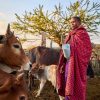
Indigenous Peoples — An Antidote in a World of Crisis
This year’s Equator Prize winners are the antidote we need in a world of crisis. Earlier this year, the World Economic Forum released its annual Risk Report. The key findings highlighted the inescapable trend over the past decade that we are facing a global polycrisis, in which problems of biodiversity loss, climate change, inequality, water scarcity and conflict are increasingly indivisible, simultaneous, and systemic.
Will the New Cybercrime Treaty be Used as a Tool for Government Repression?
A new UN Cybercrime Treaty, which is expected to be adopted by the UN General Assembly later this year, is being denounced by over 100 human rights activists and civil society organizations (CSOs) as a potential tool for government repression. The treaty is expected to be adopted by a UN Ad Hoc Committee later this week and move to the 193-member General Assembly for final approval.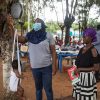
Improving Childhood Health and Development Need Not Be an Olympian Effort
From 11-year-old Chinese skateboarder Zheng Haohao to 16-year-old American gymnast Hezly Rivera, several children have reached the pinnacle of world sport at the Paris 2024 Olympic Games.
Pivotal Shift at Seabed Authority: Nations Rally for Deep-Sea Mining Moratorium
The International Seabed Authority (ISA) Assembly meeting concluded last week with no mining authorized, an unprecedented number of States calling for a moratorium or precautionary pause and a new Secretary-General elected.
What Potential Do Gender Bonds Have For Increasing Financing For Gender Equality?
Iceland’s gender bond last month caused great excitement in the capital markets community. While gender bonds have been increasing in popularity within the private sector, Iceland is the first country to issue a sovereign gender bond. Many in the development community are however asking, are gender bonds the solution to financing for gender equality?
G20 Leaders Must Listen To Their People and Agree To Tax the Ultra-Rich
We are living in a world of multiple crises of inequality, climate breakdown and conflict. Billions of people globally are facing huge hardship. Whole governments, too, are virtually bankrupt, with extremely high debt levels forcing them to implement brutal and deeply unpopular cuts and tax rises for ordinary people. 3.3 billion people live in countries that spend more on debt interest payments than on either education or health.
UN’s Summit of the Future
Preparations are ongoing for the upcoming Summit of the Future, probably the most consequential initiative of UN Secretary General Antonio Guterres so far.
Activists Challenge Pharma Company Gilead Over HIV Medication
Campaigners and experts have demanded a breakthrough HIV intervention hailed as “the closest thing to an HIV vaccine” must be made available as soon and as cheaply as possible to all who need it as its manufacturer faces protests over its pricing. Activists led a massive protest during the 25th International AIDS Conference (AIDS2024) in Munich last week as a study was presented showing lenacapavir—a drug currently sold by pharmaceutical firm Gilead for more than USD 40,000 per year as an HIV treatment—could be sold for USD 40 per year as a form of pre-exposure prophylaxis (PrEP) to help prevent HIV infection.
79 Years After Hiroshima & Nagasaki: A Grim Reminder of Nuclear Annihilation
The upcoming 79th anniversary of the atomic bombings of Hiroshima and Nagasaki, which took place on August 6 and 9, 1945, remains a grim reminder of the destructive consequences of nuclear weapons. The US bombings killed an estimated 90,000 to 210,000, with roughly half of the deaths occurring on the first day in Hiroshima.
Intl. AIDS Conference: Trans Man Asks Governments to Pressure Uganda to Repeal Punitive Anti LGBT+ Law
Jay Mulucha, Executive Director of FEM Alliance Uganda, gave an impassioned plea to governments around the world to push lawmakers in his home country to reverse punitive new legislation criminalizing the LGBT+ community.
The Price Women Pay for Climate Change
Global warming, widely believed to be a universal crisis, will actually impact girls and women far more than boys and men. It is already known that we live in a patriarchal world, one in which men are afforded far greater opportunities for success while women generally hold less societal power and have access to fewer resources. This especially pertains to developing countries in which agriculture related work, usually delegated to females, depends on a variety of environmental factors and subsequently, significantly hurts their livelihoods.
Harris Is Best-Positioned to Lead the Way
Within the Democratic field, no potential candidate for president is better-positioned, at this juncture, to defeat Trump more skillfully and pointedly than Kamala Harris. She is writing a new chapter in American history that will chart a new national course impacting future generations.
SUMMIT OF THE FUTURE: ‘The UN Secretary-General Underestimated the Difficulty of Reaching Consensus’
CIVICUS discusses the upcoming Summit of the Future with Renzo Pomi, who represents Amnesty International at the United Nations (UN) in New York.

UN: Extreme Heat a Global Issue With an Unequal Impact
“The world must rise to the challenge of rising temperatures," says the UN Secretary-General as he launches a call to action on extreme heat and its impact on society and the environment.
Achieving the 10-10-10 HIV Targets by 2025
Around the world countries are taking powerful steps to protect people’s rights, dignity, and health. Dominica and Namibia became the most recent to decriminalize same-sex relations. South Africa made strides towards decriminalizing sex work.« Previous Page — Next Page »





The Week with IPS

NEXT STOP - SDGs
Tracking global progress towards a sustainable world
Tracking global progress towards a sustainable world
