Languages
Wednesday, September 9, 2026



News and Views from the Global South
Latin America & the Caribbean

Brazilians Decide on a Shift to the Right at Any Cost
Voters in Brazil ignored threats to democracy and opted for radical political change, with a shift to the extreme right, with ties to the military, as is always the case in this South American country.
Youth in Latin America Learn About Paths to Clean Energy
Young Peruvians plan to take advantage of the knowledge acquired in Brazil's semi-arid Northeast to bring water to segments of the population who suffer from shortages, after sharing experiences in that ecoregion on the multiple uses of renewable energies in communities affected by climatic phenomena.
Trump and Bolsonaro: Alarming Similarities
Observing recent political developments in the United States and Brazil, there are clearly similarities between the phenomena of 'Trumpism' and 'Bolsonarism' that do not seem to be a mere coincidence.
Buenos Aires Shantytowns, Caught Between Exclusion and Hope
"We are the people who are excluded from the system," says Rafael Rivero, sitting in his apartment in a new social housing complex next to one of the largest slums in Buenos Aires. The contrast sums up the complexity of the social reality in the Argentine capital.
Barbados Looks Beyond its Traditional Sugar and Banana Industries into the Deep Blue
Allan Bradshaw grew up close to the beach and always knew he wanted to become a fisherman. Now 43 years old, he has been living his childhood dream for 25 years. But in recent years Bradshaw says he has noticed a dramatic decline in the number of flying fish around his hometown of Consett Bay, Barbados.
Honduran Migrant Caravan Moves Northwards, Defying all Obstacles
A long chain of people is winding its way along the highways of Chiapas, the southernmost Mexican state. It is moving fast, despite the fact that one-third of its ranks are made up of children, and it has managed to avoid the multiple obstacles that the governments of Honduras, Guatemala and now Mexico, under pressure from the United States, have thrown up in a vain effort to stop it.
Cuban Women, Vulnerable to Climate Change, in the Forefront of the Struggle
When people ask marine biologist Angela Corvea why the symbol of her environmental project Acualina, which has transcended the borders of Cuba, is a little girl, she answers without hesitation: "Because life, care, attachment, the creative force of life lie are contained in the feminine world."
Caribbean Nations Pay Steep Price for Climate Change Caused by Others
Although their contribution to global warming is negligible, Caribbean nations are bearing the brunt of its impact. Climate phenomena are so devastating that countries are beginning to prepare not so much to adapt to the new reality, but to get their economies back on their feet periodically.
Latin America Backslides in Struggle to Reach Zero Hunger Goal
For the third consecutive year, South America slid backwards in the global struggle to achieve zero hunger by 2030, with 39 million people living with hunger and five million children suffering from malnutrition.
Latin American Rural Women Call for Recognition and Policies
Rural women in Latin America play a key role with respect to attaining goals such as sustainable development in the countryside, food security and the reduction of hunger in the region. But they remain invisible and vulnerable and require recognition and public policies to overcome this neglect.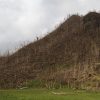
The Caribbean Reiterates “1.5 Degrees Celsius to Stay Alive”
If there is one lesson that Dominican Reginald Austrie has learnt from the devastation Hurricane Maria brought to his country last September, it is the need for “resilience, resilience, resilience”. And it is not just because he is his country’s minister of agriculture.
Farmers Generate Their Own Electricity in El Salvador
 In Lilian Gómez’s house, nestled in the mountains of eastern El Salvador, the darkness of the night was barely relieved by the faint, trembling flames of a pair of candles, just like in the houses of her neighbours. Until now.
New Agreement with Canada and U.S. Is Win-Lose for Mexico
Following the fanfare of the countries' leaders and the relief of the export and investment sectors, experts are analysing the renewed trilateral agreement with Canada and the United States, where Mexico made concessions in sectors such as e-commerce, biotechnology, automotive and agriculture.
As Amazon Warms, Tropical Butterflies and Lizards Seek the Shade
Recent research at a centre in Guyana shows that some types of butterflies and lizards in the Amazon have been seeking shelter from the heat as Amazonian temperatures rise.
Farmers Generate Their Own Electricity in El Salvador
In Lilian Gómez’s house, nestled in the mountains of eastern El Salvador, the darkness of the night was barely relieved by the faint, trembling flames of a pair of candles, just like in the houses of her neighbours. Until now.
Caribbean-American Artist Blazes in New Show
When Jean-Michel Basquiat’s paintings were shown in France a few years ago, a visitor overheard a teenager remarking that the artwork seemed to have come from “a very angry little boy”.
Climate Change Response Must Be Accompanied By a Renewed Approach to Economic Development
In the face of the many challenges posed by climate change, Panos Caribbean, a global network of institutes working to give a voice to poor and marginalised communities, says the Caribbean must raise its voice to demand and support the global temperature target of 1.5 °C.
Saving the Kindergarten of Sharks
Every winter dozens of bull sharks come to Mexico’s Mayan Riviera to breed.
A single bull shark can give birth to up to 15 young. They are the only species of shark that can live in both fresh and salt water. 
Venezuela’s Surname Is Diaspora
They sell their houses, cars, motorcycles, household goods, clothes and ornaments - if they have any - even at derisory prices, save up a few dollars, take a bus and, in many cases, for the first time ever travel outside their country: they are the migrants who are fleeing Venezuela by the hundreds of thousands.
In Argentina, Agriculture Ignores the Right to Food
In front of one of the busiest railway stations in the capital of Argentina, there are long lines to buy vegetables, which farmers themselves offer directly to consumers, at prices several times lower than those seen in stores.
Countries On the Frontline of Climate Change Impact Call for Stronger Mitigation Commitments
Caribbean leaders want larger countries to pick up the pace at which they are working to meet the climate change challenge and keep global warming from devastating whole countries, including the most vulnerable ones like those in the Caribbean.« Previous Page — Next Page » *#*



The Week with IPS

NEXT STOP - SDGs
Tracking global progress towards a sustainable world
Tracking global progress towards a sustainable world

