Languages
Monday, November 16, 2026



News and Views from the Global South
Regional Categories

North Ignores ‘Perfect Storm’ in Global South
A gathering ‘perfect storm’ – due to various developments, several quite deliberate – now threatens much devastation in the global South, likely to most hurt the poorest and most vulnerable.
World Social Forum Seeks to Reemerge as an Influential Gathering of Diversity
The World Social Forum (WSF) is today "more necessary than ever," according to Oded Grajew, promoter and co-founder of the global civil society meeting - a festival of diversity that has not yet succeeded in fomenting or designing the "other possible world" that it predicted when it was created and adopted that motto.
Nepal Farmers Face Another Year of ‘Agricultural Drought’, Threatening Food Security
Najboon Khatun looks up at the sky every day, searching for the possibility of rain. Clouds come and go without a drop of water. “Winter crops like wheat and vegetables need water, but like last year, there has been no rainfall yet,” says 65-year-old Khatun, expressing her anguish. In her village in Dhanusha, one of the agricultural hubs in the southern plains of Nepal, farmers mostly depend on rain as a source of irrigation. However, they are facing yet another year of drought, affecting winter crops, including wheat, mustard, lentils, and vegetables.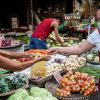
History’s Inflation Lessons
In the early 1970s, conflict in the Middle East set off a spike in oil prices that left central banks around the world scrambling to control inflation. After a year or so, oil prices stabilized and inflation started to retreat. Many countries believed they had restored price stability and loosened policy to revive their recession-hit economies only to see inflation return. Could history repeat?
What Is It Like to Live in Ecuador, One of the Most Violent Countries?
"For a couple of years now we've been seeing the violence growing so fast," said José, who asked not to give his last name for fear of reprisals he may face in Monte Sinai, a low-income neighborhood in Ecuador's most populous city, Guayaquil.
State of the World’s Migratory Species Report ‘Alarming’ Threats, Global Action Urged
A groundbreaking State of the World’s Migratory Species report is calling for accelerated global conservation measures to counter the threat of extinction faced by 1 in 5 of all migratory species.
Climate Change Is Amplifying Households’ Food Insecurity, Putting More Pressure on Women’s Mental Health
Studies have long shown that some women’s lower status in Nepali households could mean that they eat last and less and as a result lack nutrition. Experts are now looking into how this could affect their mental health, and if the growing impacts of climate change might amplify the process.
Polycrises are Pushing More Women into Poverty: How can we Help Halt that Trend?
Let’s call her Anita. Four years ago, her life took an unexpected turn when the COVID-19 pandemic disrupted everything she knew. As businesses closed and economic uncertainty loomed, Anita, like countless others, found herself forced out of work. Providing for her three young children became a daily struggle, prompting her to seek informal work as a subsistence agricultural worker to ease the financial burden.
Yangon—A Junta-Ruled Bubble in a Fragmenting Myanmar
Landing in Rangoon nearly 100 years ago, a young Chilean poet described “a city of blood, dreams, and gold” with “leprous streets”. The flourishing capital of then British-ruled Burma and its major port were a must-see staging post on an Asian tour.
From Memory to Policy
A bloodbath is taking place in the Middle East, and yet, the world is embroiled in absurd debates. One is tempted to say, paraphrasing Marx: here the tragedy, there the farce. The German-speaking world – and Germany in particular – takes a decidedly pro-Israeli stance, while in other societies, an equally dubious anti-Israeli position prevails.
Africa’s Absence as Permanent Member a “Flagrant Injustice,” says UN Chief
As the UN continues its never-ending saga on the reform of the Security Council (UNSC), one of the political anomalies that keeps cropping up is the absence of Africa, among the five permanent members (P5)—a privilege bestowed only on the US, UK, France, China and the Russian Federation.
Proven Vector Control Interventions Needed to Stem Malaria Infections in Africa
Experts recommend that the current prevention of malaria in highly endemic countries in Africa should integrate "locally appropriate" control measures to cope with the highest burden of mosquito-borne disease on the continent.
Revolutionist Returnees: Fulfilling Dreams, Finding Freedom
In 1977, a record-breaking mini-series carved its place in the milestone of US history. Based on Alex Haley’s Pulitzer Prize-winning novel, Roots: The Saga of an American Family, the small-screen adaptation exposed the atrocities of the transatlantic slave trade and its impact on generations thereafter.
Is Anti-Woke a Grass-Root Movement?
“Woke” was for a century, especially among black people in the US, an inspirational concept. However, almost overnight it turned into a pejorative. Like using the term “politically correct” as an insult, calling someone “woke” came to imply that the referred person’s views are excessively ridiculous, or even despicable. Being “anti-woke” has become an indication that you do not belong to an assumed group of “do-gooders”, who at the expense of right-minded “ordinary” citizens assert the demands of interest groups, which declare themselves to be discriminated against due to their ethnicity/race, gender, sexual preference, and/or physical or psychological disabilities.
Embodying the Spirit of the Dragon
The Year of the Dragon is upon us. UN Secretary-General António Guterres said in his message for this Lunar New Year, “The dragon symbolizes energy, wisdom, protection and good luck. We need these qualities to rise to today’s global challenges.”
Drought Narrows the Panama Canal, Delays Shipping
At the bar that Sandra manages in Panama City's central financial district, the variety offered on the menu has shrunk due to delays in ship traffic through the Panama Canal, one of the world's major shipping routes.
Hit by Climate Change, Authorities Seek to Improve Saffron Yields in Kashmir
Saffron, the expensive spice from the Kashmir Himalayas, has been facing challenges for years, mostly related to yields and inadequate irrigation compounded by the climate crisis.
White House Still Denies Mideast Turmoil Linked to Gaza
The Biden administration continues to deny any connections between the war in Gaza and the ongoing conflicts involving U.S. forces in Iraq, Syria, and Yemen.
Neocolonial ISDS, Abused, Biased, Costly, and Grossly Unfair
Investor-State Dispute Settlement (ISDS) provisions in international trade and investment agreements – long abused by opportunists with means – are slowly being rejected by cautious governments.
Landlocked Developing Countries Conference to Address Development
Landlocked developing countries need greater support from the international community so that they are no longer left behind when it comes to progressing with the SDGs, says the UN High Representative of the Least Developed Countries.
Female Genital Mutilation and Cutting in Asia Remain a Neglected Problem
Significant advances have been made in Africa towards ending female genital mutilation/cutting (FGM/C). Unfortunately, the same cannot be said for Asia, where FGM/C occurs in at least ten countries, but governments across the region are failing to take effective action. Women’s rights organizations are calling for states to introduce much-needed laws to criminalize FGM, provide national data on the extent and nature of the practice, and adequately fund efforts to tackle this regionally neglected problem.« Previous Page — Next Page »


The Week with IPS

NEXT STOP - SDGs
Tracking global progress towards a sustainable world
Tracking global progress towards a sustainable world
