Languages
Sunday, November 22, 2026



News and Views from the Global South
Regional Categories

At 75, is the UN Still Fit for Purpose?
This September, New Yorkers will be a lot less annoyed. They’ve been spared the annual disruptions from road closures, sirens and movement of security forces accompanying world leaders who attend the UN General Assembly. By largely moving online due to COVID-19, the world’s most significant gathering will be missing some of its excitement even as the UN celebrates an important 75th anniversary in 2020.
State-Owned Companies Are Key to Climate Success in Developing Countries, but Are Often Overlooked in the International Dialogue
Later this month, government officials and climate stakeholders will once again converge on New York City (this time virtually) for Climate Week and the United Nations meetings. And while there will be much discussion about the important role that actors such as private businesses, civil society and cities will need to play in the climate change effort, there will once again be relatively little discussion about one key cohort: government-owned companies.
Syria’s Children Remain at Immense Threat of Rape and Recruitment by Army: Report
Children in Syria are facing the brutal brunt of the ongoing civil war in the country, now rendered further paralysed owing to the COVID-19 pandemic and United States sanctions. At the Sept. 15 launch of the report investigating human rights violations in Syria by the Commission of Inquiry on Syria, experts warned that in addition to the already ongoing conflict, “newer forms of violence” was on the rise.
Protecting Nature is Entirely Within Humanity’s Reach: The Work Must Start Now
We have known for a long time that biodiversity, and the services it provides, have been in decline. It is on this background that ten years ago, the international community adopted the Strategic Plan for Biodiversity 2011-2020.
COVID-19 Worsens Mozambique’s Hunger
Like many Mozambicans in the agricultural sector, 39-year-old Fatima Matavele, a commercial farmer in the district of Chokwe, some 213 kilometres north of the capital, Maputo, has had a tough year. Although the last few years have been hard, 2020 has proven to be the most difficult of all.
Myths of Soft Budget Constraints
In recent decades, many contemporary macroeconomic and financial problems have been blamed on ‘soft budget constraints’ (SBCs), with the term becoming quite popular in the economics lexicon, financial media and political discourse.
Maritime Security in Asia-Pacific Region Under Threat
Maritime security in Asia Pacific is often viewed through a traditional security lens, where the main responsibility falls on maritime law enforcement agencies to protect maritime borders and territorial sovereignty.Rebbilib Episode 2
Come to the table, with a willingness to share and be vulnerable: This video is the second in a 3 part series hearing directly from Monitoring Evaluation and Learning practitioners within the Pacific region and their experience of using Pacific approaches in their work. In this video we hear from Associate Professor Cresantia Frances Koya – Vaka’uta who works with the University of the South Pacific, the regionally owned provider of tertiary education in the Pacific region and an international centre of excellence for teaching, research consulting and training on all aspects of Pacific culture, environment and human resource development needs.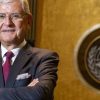
INTERVIEW: the top diplomat shepherding the General Assembly through its 75th year
The Turkish diplomat elected to be the president of the 75th session of the UN General Assembly, Volkan Bozkir, is taking on the role as the Organization grapples with an unprecedented pandemic, and questions surrounding the future direction it should take.
The Exploitative System that Traps Nigerian Women as Slaves in Lebanon
“I need help, right now I cannot walk properly,” trafficking victim Nkiru Obasi pleaded from her hospital bed in a video she posted online. The young Nigerian woman had been injured in the Aug. 4 Beirut blast, which ripped through the Lebanese capital, killing 190 people injuring a further 6,500 and damaging 40 percent of the city. However, it’s not her injuries keeping her in Lebanon but a restrictive and abusive system of migrant laws.
Nepal’s Glacial Lakes in Danger of Bursting
A new report out this week warns that hundreds of glacial lakes in the Himalaya are in danger of bursting because global heating is melting the ice on the world’s highest mountains. However, on only two of them have there been mitigation measures to reduce water levels.
Mapping Nature to Create a Global Biodiversity Framework
The year 2020 was considered a “Super Year” for biodiversity. A string of interconnected events offered a unique opportunity to build a global coalition and international policy framework that recognized the central role of nature to all life on Earth.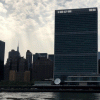
Will Trump Threaten to Pullout or De-fund the United Nations?
Back in 1998, Senator Jesse Helms, a rightwing Republican from the US state of North Carolina, carried out a virulent one-man hate-campaign against the UN-- and its very presence in New York.
The Debt the Government Does Not Want to Recognize
The national occupation and employment survey prepared by INEGI, with figures updated to July 2020, shows an improvement that has occurred in the last two months. However, the employment situation, compared with the data existing before the pandemic still shows serious problems:
Q&A: Land Restoration can Help Restore Post-COVID-19 Economy
Investing in sustainable land management and land restoration will help build economies post-COVID-19 and help poor people increase their incomes as the destruction of global food chains by the pandemic provides a chance for ensuring diversity in production through ensuring the inclusion of local producers.
No ‘Business as Usual’ for Children Post-COVID-19, say Laureates & Leaders
Addressing delegates at the end of the virtual 3rd Fair Share for Children Summit, 2014 Nobel Peace Laureate Kailash Satyarthi told global citizens that “business as usual” in dealing with COVID-19 is not going to be tolerated. “We’re not going to accept the miseries of child labour and trafficking to continue to be normal,” he said.
A Marathon, Not a Sprint: Peru Needs Fiscal Reforms to Quell High COVID-19 Death Rate
“It’s a major paradox, no?” asks Hugo Ñopo, a researcher at the Peruvian think tank Group for the Analysis of Development (GRADE). Since the beginning of the pandemic, Peru has presented itself as an example for the region: it quickly implemented drastic prevention measures, followed scientific recommendations and prepared an economic support plan for the most vulnerable segments of the population.
A New Social Contract Needed for Children on the Move
Forced to flee wars and disasters, sometimes without family, and struggling to survive in the worst of circumstances, children on the move have long led very precarious lives. Be they refugees, internally displaced or asylum seekers, vulnerable and marginalised, they lose years of childhood. They are exposed to the worst forms of abuse, such as commercial exploitation and violence. Today, their situation is dire as they remain at the very bottom of the list to receive emergency measures to protect them from the impacts of COVID-19.
Save 70 million Lives Through #FairShare of COVID-19 Response Fund, Youth Urge Governments
Young people have added their voice in calling on world leaders to allocate at least 20 percent of the COVID-19 stimulus package to the marginalised children and youth.Rebbilib Episode 1
It is important to understand the needs of the Vanua, the culture, tradition and its’ protocols: This video is the first in a 3 part series hearing directly from Monitoring Evaluation and Learning practitioners within the Pacific region and their experience of using Pacific approaches in their work. In this video we hear from Mr. Eroni Wavu, the MEL Officer with the Ministry of i-Taukei Affairs in Fiji who are responsible for developing, implementing and monitoring government programs focussed on the governance and wellbeing of the iTaukei people.
Preserving Food Security in Africa’s Urban Areas
In Torit State, southern South Sudan, Margaret Itto is one of the farmers in Africa’s youngest country who have invested heavily in agriculture. But she is not able to access the lucrative market for her produce in the capital Juba simply because of poor roads.« Previous Page — Next Page »


The Week with IPS

NEXT STOP - SDGs
Tracking global progress towards a sustainable world
Tracking global progress towards a sustainable world
