Languages
Sunday, November 22, 2026



News and Views from the Global South
Regional Categories

Google’s $10 Billion Investment in India Should be Inclusive of Persons with Disabilities
Over the next seven years, Google will invest a whopping $10 billion in India to improve technology, health and education, according to CEO Sundar Pichai. This is unprecedented and could be a game changer that could improve health, education and economic empowerment.
Sierra Leone – Why Everyone is Not Celebrating the New Media Law
Last week, Sierra Leone’s parliament voted to repeal the country’s 55-year-old libel law, which criminalised the publication of information that was deemed defamatory or seditious, and which had been used by successive governments to target and imprison media practitioners and silence dissenting views. But not everyone is convinced it was in the best interest of media freedom.
Only Governments Can Prevent Covid-19 Recessions Becoming Depressions
Covid-19 threatens economic life the world over. The most urgent and important need is for governments, businesses and families to survive. Governments must revive economies and livelihoods to prevent Covid-19 recessions from becoming protracted depressions. The Covid-19 crisis is clearly a ‘black swan event’, threatening both public health and livelihoods. Both the pandemic and containment efforts are not due to business operations and decisions, but nonetheless have compelling consequences for them.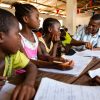
Last Mile Teachers
“It has gotten really tough for us,” says James, a father in rural Liberia, of COVID-19 lockdown and school closures. “My son is trying but he is missing his friends and teachers. Children want to be in school.”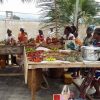
Food Security Threats: Now a Warning and Later May Be Too Late
Recent world reports confirm that the goals set by the international community to end poverty and hunger, and create a more balanced, sustainable and fair world by 2030, are currently in danger. If effective and rapid global action is not taken, the goals will not be met and the results in just 10 years may be very negative for all of us.
Statue Smashing – Heroes, Values and Racism
On Friday the 24th of June, President Trump announced he was skipping a weekend at his New Jersey golf resort to ”ensure law and order in Washington”, tweeting:- I just had the privilege of signing a very strong Executive Order protecting American Monuments, Memorials, and Statues – and combatting recent Criminal Violence. Long prison terms for these lawless acts against our Great Country!

Coronavirus – Urban Areas Face the Brunt of the Pandemic
The effect of the coronavirus pandemic and its subsequent global lockdown might have a graver effect on cities and urban areas than on rural areas, possibly making women more susceptible to violence.
Reflections on the Charter of the United Nations on its 75th Anniversary
This year we celebrate the 75th anniversary of the Charter of the United Nations, written and signed during a period of great global change. Today, the world is again shifting beneath our feet. Yet, the Charter remains a firm foundation for our joint efforts.
Ride-Hailing App Delivers Contraceptives to Users’ Doorsteps
When Betty Nagadya walks through the trading centre on her way home, she sings a song in the local Luganda language: “SafeBoda, SafeBoda, who needs a helmet?” she sings. “For those who feel cold, I have a coat for you.” But her song is not about clothing – it’s about condoms.
Solar Energy Expands in Brazil Despite the Pandemic
Solar energy has continued to expand in Brazil during the COVID-19 pandemic and should contribute to the economic recovery in the wake of the health crisis.
Neglected, Sacrificed: Older Persons During the COVID19 Pandemic
Failing to help those in most need COVID19 is devastating on older persons. The numbers are staggering, more than 80 percent of the fatalities due to coronavirus in the US and East Asia occurred among adults aged 65 and over. In Europe and Australia, the figures are even higher, 94 and 97 per cent of the deaths were persons aged 60 and over.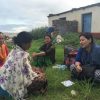
Include Indigenous People in COVID-19 Response
In Nepal the COVID-19 crisis has been especially hard on indigenous peoples. We had to learn a new vocabulary and use words like quarantine, self-isolation, hand sanitizers and social distancing.
Myanmar’s Protection Bill falls Short of Addressing Violence against Women
A legislation that aims to protect women against violence in Myanmar, while long overdue, is raising concern among human rights advocates about its inadequate definition of rape, vague definition for “consent”, and anti-lesbian, gay, bisexual, and transgender rhetoric.
COVID-19 Means Development Setbacks for Mongolia
Mongolia has recorded very few cases of COVID-19, less than 300 as on date, despite its more than 4,000 kilometre porous border with China. However, the country faces a major economic impact from the pandemic.
Fight Pandemic, Not Windmills of the Mind
With uneven progress in containing contagion, worsened by the breakdown in multilateral cooperation due to mounting US-China tensions, recovery from the Covid-19 recessions of the first half of 2020 is now expected to be more gradual than previously forecast. Pandemic response measures In the face of the Covid-19 pandemic, many governments, especially of Organization for Economic Cooperation and Development (OECD) economies, have introduced massive fiscal and monetary packages for contagion containment, relief and recovery.
Securing Property and Land Rights in India
Secure property rights are fundamental to the economic and social development of any country. However, in India, we are faced with a curious conundrum where more than 70 percent of a household’s assets are held in land and housing, yet there is insufficient data and research on people’s property rights.
The Charter of the United Nations After 75 Years: Personal Reflections
The Charter of the United Nations is not only the constituent instrument of the United Nations as an organization. It is a multilateral legal manifesto encompassing a set of basic principles and norms aimed at ensuring peace, freedom, development, equality and human rights throughout the world. These principles and norms reflect the shared values proclaimed in the preamble on behalf of the “Peoples of the United Nations”. As such, it is the most innovative and trailblazing multilateral treaty ever concluded among States. Today, it is a universal instrument by which all States have solemnly accepted to be bound in their international relations.
COVID-19: Smarter Response & Recovery Measures Can Help Preserve Human Rights in Africa
As COVID-19 cases continue to rise in Africa, countries are simultaneously dealing with the health and socio-economic impacts of the pandemic, and how and when to ease lockdowns and curfews imposed to stop the disease spreading and get onto the path of recovery.
A Determined Path to the SDGs in 2030 Despite the COVID-19 Pandemic
As lockdowns ease in countries across Asia and the Pacific in the wake of the COVID-19 pandemic, one thing is clear—a return to business as usual is unimaginable in a region that was already off track to meet the Sustainable Development Goals (SDGs). The virtual High-Level Political Forum on Sustainable Development recently convened governments and stakeholders across the globe to focus on the imperative to build back better while keeping an eye on the Global Goals.
Gender Inequality and Oppression of Women: A Survivor’s Story
“What do you think happens to kerosene when it is poured on your head?” Surya stumbles as she speaks to IPS. “It goes down, it goes trickling down.” When someone speaks to a burn victim, one naturally feels shocked, sad, and sympathetic. But in talking to Surya, who has the major part of her body burned, the feelings were of hope and inspiration. How is it possible to survive this trauma and still have so much love and joy to share?
If UN is Working “Full Throttle” While Locked Down, Shouldn’t Most Staffers Work from Home –Permanently?
When the coronavirus pandemic delivered a mortal blow to the United States, grounding the country to a virtual standstill and throwing its economy into a deep recession, hundreds and thousands were forced to work “remotely” while offices remained shuttered, beginning late March.« Previous Page — Next Page »


The Week with IPS

NEXT STOP - SDGs
Tracking global progress towards a sustainable world
Tracking global progress towards a sustainable world
