Languages
Monday, November 23, 2026



News and Views from the Global South
Regional Categories
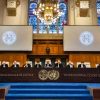
Top UN Court Orders Myanmar to Protect Rohingya from Genocide
Myanmar must take steps to protect its minority Rohingya population, the top UN court unanimously ruled on Thursday.
Blue Innovation in the Commonwealth
With 95 per cent of the ocean still unexplored by humans, we are only just beginning to understand its profound influence on life on earth, including its effect on global climate and ecosystems.
Leprosy Re-emerges as a Global Health Challenge
Fifteen years ago, Sattamma – a daily labourer in the Rangareddy district of southern India’s Telangana state – was abandoned by her husband after she was diagnosed with Hansen’s Disease.
Tipping Point on Menstrual Banishment in Nepal
It is easy to be cynical about recent reports of actions taken to end chhaupadi, the traditional practice in parts of western Nepal of segregating menstruating women.
UN Plans to Launch a “Decade of Action” to Deliver Development Goals by 2030
2020 marks the 75th anniversary of the United Nations. I draw tremendous strength from all that we represent and all that we have achieved together.
Global Inequality Continues to Grow: UNDESA Report
More than 70 percent of the global population is currently living in parts of the world where income inequality has grown, according to a World Social Report 2020 launched by United Nations Department of Economic and Social Affairs (DESA).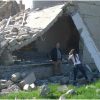
Mosul, an Epicentre of the ISIS Conflict, is a Devastated Iraqi City
As Iraq this month faces the threat of new conflicts – including a proxy war between the US and Iran – the shadow of the last conflict runs long.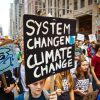
Will 2020 World Economic Forum Deliver on Combating Climate Change?
For the first time, the world’s elites meeting this year at Davos have listed environmental issues as their top concerns about the next decade.
UN Chief & Staff Union Predict Another Cash Crisis in 2020—if Member States Don’t Pay Up
UN Secretary-General Antonio Guterres declared last week that the United Nations just “managed to survive its deepest financial crisis in a decade.”
Bridging Africa’s Great Gender-Financing Divide
What stands between Soi Cate Chelang and her dream of turning her small pallet-making business into a major enterprise is capital.
UN Report: Rising Inequality Affects More Than 70% of the Globe
Inequality is growing for more than 70 per cent of the global population, exacerbating the risks of divisions and hampering economic and social development. But the rise is far from inevitable and can be tackled at a national and international level, says a flagship study released by the UN on Tuesday.
Why the Coronavirus Should Worry Us All
The coronavirus outbreak -- which began in Wuhan, China, and causes a pneumonia-like illness -- is raging across Asia, infecting close to 300 people and killing four. It was initially known to be transmitted from animals to human, and was just confirmed to be transmitted from human to human.
“For Generations, We Have Been Nominating Men Just Because They are Men”
Marlène Schiappa, Minister of State for Gender Equality and the Fight against Discrimination in France, attended the 25th year Regional Review Meeting of the Beijing Platform for Action for the UN Economic Commission for Europe (UNECE) Region last month. She highlighted why this meeting is key for advancing the gender equality agenda and the priorities for the Generation Equality Forum in 2020, a global gathering for gender equality, convened by UN Women and co-chaired by France and Mexico.
Ending Bullying and Humiliation over Menstruation as Girls and Boys in Conservative Eswatini are Educated about Reproductive Health
When 14-year-old Nomcebo Mkhaliphi first noticed the blood discharged from her vagina, she was shocked. Confused, she turned to her older sisters for advice. “My sisters told me that they were experiencing the same every month and that they used fabric, toilet paper and newspapers as sanitary wear,” recalls the now 45-year-old Mkhaliphi. She had to follow suit and use these materials because she had no money to buy sanitary pads.
School Lunch Programmes for Progress
If well planned, coordinated and implemented, a government funded school feeding programme for all primary school children can be progressively transformative. Such a programme, involving government departments and agencies working together, can benefit schoolchildren, their families, farmers and public health, now and in the future.
From Digital Diplomacy to Data Diplomacy
The digital revolution arrived late at the heart of ministries of foreign affairs across the Western world. Ministries latched on to social media around the time of Tahrir Square and Iran’s 2009 Green Revolution, beguiled by a vision of the technology engendering a networked evolution toward more liberal societies.
Geneva Staff Battles UN Chief over Unequal Pay & Illegal Salary Cuts
As the United Nations commemorates its 75th anniversary this year, the financially-crippled Organization is also saddled with a rash of administrative problems, plus an ongoing cash crisis, perhaps one of the worst in history.
UN Special Rapporteur Offers Assistance to Indian Supreme Court in Case of Rohingya Deportation
University of California professor E. Tendayi Achiume, who is a United Nations Special Rapporteur, has recently offered her assistance to the Indian Supreme Court in a long hearing about India deporting Rohingya refugees to Myanmar.
Slovak Journalist’s Trial a Fundamental Moment to Prove if Country can Punish Crimes Designed to Silence Journalists
As four people appear in court in Slovakia over the murder of journalist Jan Kuciak and his fiancée Martina Kusnirova, both 27, the trial is being seen by many as a historic moment for not just press freedom in the country but public faith in its justice system.
Empowering Women in Poor Communities & Building Resilience Against Climate Pressure
As global temperatures continue to rise, vulnerable populations around the world are facing increasingly complex climate risks – with ongoing droughts in Zimbabwe and floods devastating Indonesia's capital, Jakarta.
Women Activists Escalate Demand for “Bodily Autonomy” as 19 Nations Dissent
The United States and 18 other UN member states have come under fire for denying a woman’s legitimate right to “bodily autonomy”—the right to self-governance over one’s own body without coercion or external pressure.« Previous Page — Next Page »


The Week with IPS

NEXT STOP - SDGs
Tracking global progress towards a sustainable world
