Languages
Tuesday, November 24, 2026



News and Views from the Global South
Regional Categories
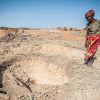
Heatwaves are a ‘New Normal’, Says Red Cross
It is barely the middle of the month, but the verdict is in: July has been hot.
How Skills Can Change Lives of World’s Youth
When the United Nations commemorated World Youth Skills Day, there was one stark reality that emerged out of the event: the world’s youth account for over a third of the global population of more than 7.7 billion people, and they also account for over a third of those unemployed across the globe.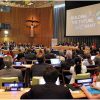
UN Report Shows Mixed Results in Meeting SDGs
The United Nations launched its 2019 report on Sustainable Development Goals (SDGs), showing inadequate progress in the fourth year into the sustainable development agenda and highlighting the need for imminent global action.
Desperation and Fear on the Mexican Border
On the 2,000-mile journey from San Pedro Sula, Honduras, to the US-Mexico border, the 20-year-old asylum seeker and her 16-year-old brother took turns sleeping every time they managed to catch a ride or get on a bus. She told me they kept each other safe that way.
The Road to Zero Hunger
Over 820 million people across the globe are currently undernourished, according to a new report released here.
Growing African Agriculture One Byte at a Time
Ella Mazani is a mobile phone farmer. “My mobile phone is part of my farming. It supports my farming and my family’s welfare through the services I get via the phone,” the smallholder maize farmer from Shurugwi in central Zimbabwe quips.
US Defunds UNFPA for Third Consecutive Year– on Misconceived Assumptions
The Trump administration, in its continued hostility towards the United Nations-- and as part of its policy aimed at undermining multilateral institutions and international commitments-- has withheld its annual contributions to the UN Population Fund (UNFPA) – for the third consecutive year.
The Long Struggle Against the Stigma Surrounding Hansen’s Disease
 At the age of 80, Yohei Sasakawa continues to travel around the world to promote solutions for some of the challenges facing humanity, such as Hansen's Disease or leprosy, wars and disabilities, factors of stigma and exclusion.

Africa on Track Towards Information Black Hole
It is an image of resistance that went viral across the world. Alaa Salah, a young Sudanese student, dressed in a traditional white thobe standing atop a car with an enthralled crowd surrounding her as she and they boldly chanted Al-Thawra—Arabic for revolution.
How Governments Still Allow Violence Against Children
Despite what you might have heard, things are getting better, every year. We are making amazing progress on fighting diseases, reducing the preventable deaths of children, and investing huge amounts to advance medicine and knowledge and to create better living conditions.
Crime Against Humanity and Individual Guilt
On 8 July, Bosco Ntaganda was by the International Criminal Court (ICC) found guilty of crimes against humanity. The 41-year-old rebel leader, nicknamed The Terminator, had ordered his fighters to "target and kill civilians", kidnap children to be brought up as soldiers and girls to become sex slaves, while personally partaking in the crimes. The Court had gathered evidence from 2,000 survivors from the rampage that Ntaganda and his army ran through the north-eastern Congolese region of Ituri, where beginning in 1999, 60,000 people have been murdered by warring rebel armies. Eighty witnesses testified directly during the court proceedings, thirteen were "experts" and the rest victims.
U.N.’s Islamic State Probe Unit Kicks into Gear
A United Nations-backed probe into atrocities committed by the so-called Islamic State (IS) group in Iraq has frequently been criticised for making slow progress during its first two years of operations. Lately, that could be changing.
Spirit of Olympics & UN’s Development Agenda
As I reflect on the varied views and perspectives that emerged during the Human Rights Council’s Social Forum 2018--- where the theme of Olympic ideal and inclusive sports and their contribution to the promotion of the human rights, peace and development through sports were extensively deliberated on-- I observed an immediate connect with the preparations that are currently underway for the hosting of the Olympics 2024 in France.
Facebook and Friends Threaten to Libralize the World
On 17 June, a Facebook white paper proposed a new global digital currency it plans to launch in the first half of 2020. The Libra will be managed by a ‘not for profit’ Swiss-based Facebook-led consortium of ‘for profit corporations’, with Uber, eBay, Lyft, Mastercard and PayPal among its founding members.
Pompeo’s New “Human Rights” Commission Is Up To No Good
The Trump administration appears to be trying to find moral footing for the president’s discriminatory policies. Last week, Secretary of State Mike Pompeo formally announced the creation of a “Commission on Unalienable Rights.”
Early Detection is the Solution for Hansen’s Disease
On Jun. 27, Faustino Pinto was in Geneva, Switzerland, where he spoke to people at the United Nations about the fight against Hansen's Disease and the stigma surrounding it, at a meeting during the 41st session of the Human Rights Council. 
Rwanda Prepares the Foundations for Climate-Resilient Cities
How do you plan a resilient city? A city that can withstand climate change impacts, and the natural disasters that it produces at increased frequencies. And how do you protect the city, its individuals and communities, its business and institutions from either the increased flooding or prolonged droughts that result? It’s a complex question with an even more complex solution, but one that the central African nation of Rwanda is looking to answer.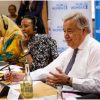
Women Are Pivotal in the War on Terror
On 10 July 2019 I was honored to moderate a meeting with women’s groups for the UN Secretary General Mr. Antonio Guterres, whose aim was to better diagnose the role of women in the prevention or instigation of violent extremism.
A Relentless Battle Against Poverty & Hunger in World’s Most Populous Region
The world’s two most populous nations-– China and India—have been making steady progress in eradicating extreme poverty, but have fallen short in their attempts to eliminate extreme hunger, according to the Bangkok-based UN Economic and Social Commission for Asia and the Pacific (ESCAP).
How NGOs in Rich Countries Control their Counterparts in Poor Countries..and Why they Refuse to Resolve it
Many NGOs around the world are fighting inequality between the rich and the poor, between the policies that make rich countries richer, and poor countries poorer. So while Civil Society Organizations claim to be equal and are are fighting together to secure space for engagement and to work, the bigger NGOs should also ask themselves why they are unwilling to let others who are less resourced take up the space where their voice can be heard. Why are they unwilling to fight policies that keep rich NGOs richer?
The Fight to End Violence Against Women in the Asia-Pacific Region
Parliamentarians met in Laos last week to discuss violence against women and girls. The meeting was organized by the Asian Population and Development Association (APDA) and hosted by the National Assembly of Laos.« Previous Page — Next Page »


The Week with IPS

NEXT STOP - SDGs
Tracking global progress towards a sustainable world
