Languages
Saturday, November 28, 2026



News and Views from the Global South
Regional Categories

Africa: Drought and Jobless, Hopeless Youth, Fertile Grounds for Extremism
Ignoring the plight of jobless young people in sub-Saharan Africa is a recipe for political instability and global insecurity, warned a high-level symposium of Africa’s interior, environment and foreign affairs ministers in Ouagadougou, Burkina Faso.
Safeguarding Precious Crop Genes in Trust for Humanity
A genetic resource centre run by the Nigeria-based International Institute for Tropical Agriculture (IITA) has banked thousands of crop varieties for disaster relief and research, holds the world’s largest and most diverse collection of cowpeas, and contains some of Africa’s rarest insect species.
Latin America’s Rural Exodus Undermines Food Security
In Latin America and the Caribbean, which account for 12 per cent of the planet’s arable land, and one-third of its fresh water reserves, a number of factors contribute to soil degradation and to a rural exodus that compromises food security in a not-so-unlikely future.
Africa Could Help Feed the World – If Its Fertile Land Doesn’t Vanish
The 23rd World Day to Combat Desertification was celebrated in Burkina Faso’s capital of Ouagadougou on June 15 with a call to create two million jobs and restore 10 million hectares of degraded land.
Housing Refugees of the Middle East Conflicts: Where Will They Go?
Prolonged conflicts in the Middle East have led to a deadly humanitarian crisis, with as many as 17.5 million people displaced in Syria, Iraq and Yemen.
BRICS to Lead World’s Efforts to Eradicate Hunger, Poverty by 2030
With the clock ticking toward the 2030 deadline for meeting the international goals to eradicate hunger and poverty, five of the world's most important emerging economies are well positioned to take a leading role in helping to achieve these objectives, according to the United Nations.
IFAD’s President Houngbo Calls for Investment in Climate-Smart Agriculture for Poverty-Free Future
Implementing climate-smart agriculture is critical to reduce hunger and poverty, according to International Fund for Agricultural Development’s (IFAD) new president Gilbert Houngbo.
Men Who Commit Femicide Lose Rights Over Their Children in Argentina
In January 2008, Rosana Galliano was shot to death in Exaltación de la Cruz, a rural municipality 80 km from Argentina’s capital, Buenos Aires. Her ex-husband, José Arce, who was sentenced to life in prison, had hired hitmen to kill her.
Women, Still Major Victims of Sharp Disparities at Workplaces
Reducing gender disparities at workplaces by 25 per cent by 2025 could inject nearly 5.8 trillion dollars into the global economy and boost tax revenues, according to a United Nations report, ahead of the UN Labour Organization’s Summit on "A better future for women at work" on June 15.
Negotiations in Miami Must not Treat Central American Asylum Seekers as Bargaining Chips
Today in Miami, the governments of US and Mexico are putting aside their well-publicized tensions of recent months and co-hosting a conference on security and governance in Central America´s Northern Triangle of El Salvador, Guatemala and Honduras, from where thousands of people flee extreme violence to seek asylum in the US and Mexico.
Drought Pushes 1 in 3 Somalis to a Hunger Knife-Edge
Another famine in former European colonies in Africa and another time in its Eastern region, with Ethiopia and Somalia among the major victims of drought and made-made climate disasters mainly caused by US and European multinational business.
Migrant Workers Pour Trillions into World Economy
A new report by the International Fund for Agricultural Development (IFAD) says the flow of money from migrants—commonly located in developed countries—to their families in lower income countries has doubled over the last decade.
The High Price of Desertification: 23 Hectares of Land a Minute
Urban farmer Margaret Gauti Mpofu would do anything to protect the productivity of her land. Healthy soil means she is assured of harvest and enough food and income to look after her family.
Global Coalition Calls for Withdrawal of SDGs Progress Report
A report on the Sustainable Development Goals (SDGs) fails to capture the the true picture of water challenges and the UN must withdraw it, said a global civil society coalition.
VIDEO: World Day to Combat Desertification
 Today’s world is facing an unprecedented level of human mobility and migration is high on the political agenda all over the world.

East Asian Miracle Myth Making
Even before the term ‘Washington Consensus’ (WC) was popularized, it was already coming under great criticism despite the ‘counter-revolutions’ against ‘development economics’ and Keynesian economics associated with Thatcherism and Reaganomics. At the World Bank, the Japanese Executive Director argued that the WC menu of policy advice and conditionalities had resulted in the 1980s’ ‘lost decade’ in Latin America and Africa. In contrast, the East Asian region had seen rapid growth and industrialization.
Digitization Can Improve Financial Inclusion for Smallholder Farmers
Mathew Khaemba, a smallholder farmer in western Kenya, remembers a time when his children were failing in school because they were too hungry to concentrate on their lessons.
New Alert: Refugee Numbers Outpace Resettlement Spots
Against the backdrop of increasing refugee numbers around the globe, fuelled by crisis and insecurity, and an ever-widening gap in places to resettle them, the top United Nations official dealing with refugee issues has called on governments to “step up” and deliver places for refugees in line with the commitments they have made.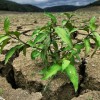
Mideast: Drought to Turn People into Eternal Migrants, Prey to Extremism?
Worldwide, land degradation, severe droughts and advancing desertification are set to force populations to flee their homes and migrate. In the specific case of the Middle East and North of Africa (MENA), such an obliged choice implies the additional risk to turn peoples into easy prey to extremist, terrorist groups.
Child Labor in the Arab Region Does Not Belong to the 21st Century
Today marks the 2017 World Day against Child Labor to reaffirm the goal to eliminate all forms of child labor. This year’s annual theme highlights a subject that is often neglected, namely the importance of addressing child labor in conflict areas and in disaster settings.
Overfed and Underfed: Global Food Extremes
Global food extremes of chronic undernourishment and obesity have brought about a bipolar world of hundreds of millions of underfed and overfed people. Of the world’s population of 7.5 billion the proportions suffering from chronic undernourishment and those afflicted by obesity are similar, approximately 11 percent or together about 1.6 billion people. However, as with most global averages, the levels of both chronic undernourishment and obesity vary enormously among regions and across and within countries.« Previous Page — Next Page »


The Week with IPS

NEXT STOP - SDGs
Tracking global progress towards a sustainable world
