Languages
Saturday, October 3, 2026



News and Views from the Global South
Sustainability

Generation Equality: Women’s Leadership as a Catalyst for Change, Say 49 UN Women Envoys
March, women’s history month, closes with the Generation Equality Forum in Mexico and against the background of significant setbacks on the empowerment of women caused by the COVID-19 pandemic.
Farming-Specific Loans Help Tanzania’s Smallholders Increase Productivity
Small agricultural loans, disbursed through mobile phones and targeting specific farming activities at different phases of production, have more than doubled food productivity among thousands of smallholder farmers in southern and central parts of Tanzania over the past three years, improving their livelihoods.
Covid19 a Wake-up Call to Address Development Fault Lines in Asia and the Pacific
The world is emerging from the biggest social and economic shock in living memory, but it will be a long time before the deep scars of the COVID-19 pandemic on human well-being fully heal. In the Asia-Pacific region, where 60 per cent of the world lives, the pandemic revealed chronic development fault lines through its excessively harmful impact on the most vulnerable. The United Nations Economic and Social Commission for Asia and the Pacific (ESCAP) estimates that 89 million more people in the region have been pushed back into extreme poverty at the $1.90 per day threshold, erasing years of development gains. The economic and educational shutdowns are likely to have severely harmed human capital formation and productivity, exacerbating poverty and inequality.
Arab Region Counts Cost of Devastating COVID-19 Pandemic
More than eight million people moved onto the poverty line in the Arab region, a conference of Arab and Asian parliamentarians heard. The hybrid conference, held simultaneously in Beirut, Lebanon, and via video conferencing to delegates in Asia and the Arab region, was a follow up on earlier discussions on the regions' ICPD25 Commitments.
Sustainable Development Goals Can Guide Asia-Pacific to Build Back Better
The COVID-19 crisis poses an unprecedented threat to development in the Asia-Pacific region that could reverse much of the hard-earned progress made in recent years. The good news is we know how to tackle this challenge. Recovery from the pandemic and our global efforts to deliver the United Nations Sustainable Development Goals (SDGs) by 2030 must go hand-in-hand. The Goals provide a compass to navigate this crisis, faster and greener, everywhere and for everyone.
COP26 and India’s NDCs
Climate change is one of the most pressing issues that the world is collectively facing at the moment. It is contended that strengthening the global response is pertinent to combat the threat of climate change.
Policy Inconsistencies and Poor Research Slow Young Farmers in Africa
It is not everyday that a young farmer registers success in his enterprise and vows this is what he will do for the rest of his life. Yet this is the story of Lihle Moyo, a 27-year-old farmer from Gwanda, about 160km south of Bulawayo, Zimbabwe's second-largest city.
International Women’s Day, 2021
Gender Equality is The Roadmap We Need to Overcome Our Most Pressing Global Challenges
In 2020, progress on gender equality stalled or regressed in many countries in large part because of the far-reaching impacts of the COVID-19 pandemic. According to a recent analysis, by 2021, around 435 million girls and women will be living on less than $1.90 a day, including 47 million pushed into poverty as a result of the pandemic. Global lockdowns contributed to a surge of gender-based violence worldwide, and estimates show that sexual and reproductive health and rights (SRHR), the bedrock of gender equality, have been severely disrupted, resulting in an additional 49 million women at risk of experiencing an unmet need for modern contraception. Our most pressing global issues have seldom been so daunting, and fault lines in existing social, political, and economic systems have never been so deep.

End Inequality and Achieve Sustainable Development for All
Back in the 1990s, the discovery of antiretrovirals offered a ray of hope to save people’s lives from the HIV epidemic. Over this decade, people living with HIV benefited from the scientific advances and began to have longer, healthier and more productive lives. However, almost all the beneficiaries were from rich countries in the global north. As a result, about nine million people died by the year 2000 due to the inequality in accessing these life-saving medicines.
Sustainable Energy Key to COVID-19 Recovery in Asia and the Pacific
The past year is one that few of us will forget. While the impacts of the COVID-19 pandemic have played out unevenly across Asia and the Pacific, the region has been spared many of the worst effects seen in other parts of the world. The pandemic has reminded us that a reliable and uninterrupted energy supply is critical to managing this crisis.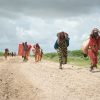
Corporate Reporting on SDGs: Challenges and Opportunities
Since the launch of the Sustainable Development Goals (SDGs) in 2016, the role of the private sector in fulfilling the 2030 Agenda has been widely acknowledged, as set out under SDG 12. Yet to assess how companies are actually contributing towards these Global Goals, we need greater transparency on their impacts.
Successful Crop Innovation Is Mitigating Climate Crisis Impact in Africa
17 February - African smallholder farmers have no choice but to adapt to climate change: 2020 was the second hottest year on record, while prolonged droughts and explosive floods are directly threatening the livelihoods of millions. By the 2030s, lack of rainfall and rising temperatures could render 40 percent of Africa’s maize-growing area unsuitable for climate-vulnerable varieties grown by farmers, while maize remains the preferred and affordable staple food for millions of Africans who survive on less than a few dollars of income a day.
We are Facing a Climate Emergency, Warns UN Chief
We begin this year with a heightened awareness of the importance of resilience. The COVID-19 pandemic has reminded us that we cannot afford to ignore known risks.
Renewable Energy Transition Key to Addressing Climate Change Challenge
2021 is going to be critical, not only for curbing the rapidly spreading COVID-19 pandemic, but also for meeting the climate challenge. But as Dr Fatih Birol, Executive Director of the International Energy Agency (IEA) was clear to point out, the climate challenge is essentially an energy challenge. And as large polluters continue to commit to targets of net zero emissions by 2050, the world could -- in theory -- potentially address the climate challenge.
For Heavily Indebted Small Islands, Resilience-Building is the Best Antidote
In December 2020, Fiji was pounded by Pacific Cyclone Yasa, the years’ second category 5 storm which destroyed hundreds of buildings and caused about $1.4 billion in damage to health facilities, homes, schools, agriculture and infrastructure.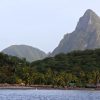
Facing their Failure to meet 2020 Biodiversity Targets, World Leaders Pledge Action & Funds
French President Emmanuel Macron convened the 4th edition of the One Planet Summit for Biodiversity with a concession – that after a decade, the world has failed to take the action needed to stem global biodiversity loss. The Jan. 10 event, hosted virtually by France, the United Nations and the World Bank, focused on four areas for urgent action; protecting land and maritime species, promoting agroecology, mobilising finance for biodiversity and protecting tropical forests, species and human health.
‘We Might Have a Covid-21 or Covid-22 Coming Our Way’
Cristián Samper is working for the Wildlife Conservation Society, an organization that concerns itself with the health of wildlife all over the globe. And he warned --even before the Covid-19 pandemic – about the dangers of a viral pandemic.
Indigenous Leaders want Traditional Knowledge to be Centrepiece of New Global Biodiversity Framework
The picturesque Mahuat River in Dominica is one of 8 communities that make up the Kalinago Territory – a 3,700-acre area on the Caribbean island’s east coast that is home to the Kalinago people, the largest indigenous group in the Eastern Caribbean. It is where 19-year-old Whitney Melinard calls home. Melinard is among a rising group of Dominica’s Kalinago youth, using their voices and platforms to speak out on issues affecting their people.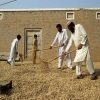
A Pakistani Farmer is Using Technology to Stop Agricultural Exploitation
Anas Shaikh is a Pakistani farmer on a mission to bring solutions to the many difficulties small and medium-scale farmer’s face in making a sustainable living.
Reclaim Your Rights: Defend Indigenous People’s Lands
Rights are earned through hard-fought struggles. And for Indigenous Peoples (IP), its fulfillment comes from the collective and continuous defense of ancestral land and territory, and assertion of their ways of life and the right to self-determination.
Can Conservation and Development Be Balanced in Sri Lanka?
The Sri Lankan government recently cancelled three circulars that protected 700,000 hectares of forests, labelled Other State Forests (OSFs), which are not classified as protected areas but account for five percent of the island nation’s remaining 16.5 percent of forest cover.« Previous Page — Next Page »


The Week with IPS

NEXT STOP - SDGs
Tracking global progress towards a sustainable world
Tracking global progress towards a sustainable world
