Languages
Tuesday, November 17, 2026



News and Views from the Global South


Pakistan Floods: Need for Tackling Development from a Different Perspective
Last year’s devastating floods in Pakistan cost the country more than US$30 billion, about 6.4 trillion rupees. The entire Public Sector Development Programme (PSDP) for 2021-2022 was valued at 900 billion rupees. This means that the floods wiped out development gains worth more than six PSDPs. This disproportionately affects the vulnerable segments of society, especially women, girls, the elderly and persons with disabilities.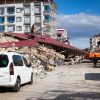
Humanitarian Aid to Earthquake Victims Hindered by Politics– & Limited Access
As the toll in last week’s earthquakes in Turkey and Syria exceeds a staggering 28,000 people dead and more than 78,000 injured--and counting-- the United Nations is in an emergency-footing struggling to provide humanitarian aid, along with several international humanitarian organizations.
Salvadoran President’s Secrecy about New Mega-Prison – a Harbinger of Corruption
The construction of a mega-prison, in which the government of El Salvador intends to imprison some 40,000 gang members, is in line with President Nayib Bukele’s tendency to hide public information on public projects, classifying them as "reserved."
Expanding E-bus Networks in Latin America Can Further Decarbonization Goals
Latin America’s (LATAM) transportation sector produces the largest share of regional emissions and is a large source of air pollution, making transforming transportation technology systems key to energy transition and decarbonization. In particular, electrifying public transportation systems across the region through a transition to electric bus (e-bus) fleets will reduce fossil fuel demand and greenhouse gas (GHG) emissions.
Food Industry Exposes Five Billion People to Toxic Chemicals that Kill
The food industry continues to intensively use toxic chemicals in their products, some of them provoking heart diseases and death. Trans fat is just one of them, adding to contaminating fertilisers, pesticides, microplastics and a long etcetera.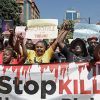
Eswatini: Democracy a Matter of Life and Death
Thulani Maseko knew speaking out in Eswatini was a risky business. An activist and well-known human rights lawyer, he’d previously spent 14 months in jail for criticising the country’s lack of judicial independence. Now he’s dead, shot in his home by unknown assailants.
The Opioid Addiction Crisis & U.S. National Security
The opioid addiction crisis in the United States is an acute public health emergency and a profound threat to national security – which is caused by the over-prescription, misuse, illegal production, and criminal trafficking and sale of opioid pharmaceutical drugs to Americans. It is estimated that over 130 people die every day from opioid overdoses in the U.S.
New Approach to Atrocities Needed, Say Ukraine War Crimes Investigators
As plans are announced to set up an international centre in The Hague to prosecute war crimes committed in Ukraine, groups involved in documenting them say there must be a fundamental change in how the world reacts to war atrocities. Since Russia’s full-scale invasion of Ukraine almost one year ago, there have been allegations of tens of thousands of war crimes committed by invading forces.
Mental Health Must Be Addressed in Medical Facilities and in Communities
Patients who visit public clinics in Abu Dhabi, United Arab Emirates, are asked mental health questions to detect signs of stress and depression early. The process starts with a basic checklist, with patients referred to a nurse, doctor, or specialist. Asking these questions at primary care not only can identify issues early on, but it also helps decrease the stigma often associated with mental health while maintaining anonymity.
Zimbabwe Political Violence Casts Spotlight on Free and Fair Polls
With political violence escalating in Zimbabwe, national elections slated for later this year face questions about whether the polls will meet free and fair international benchmarks.
Making the Energy Transition a Reality in the Pacific
The last three years have seen the Pacific impacted negatively due to the COVID-19 pandemic. The tourism industry, a key source of national revenue and jobs creation, received a severe blow due to closure of borders and reduced travel.
Work in Teams and Win the Race: A Hub-centered Strategy to Unleash Latin America’s Hydrogen Potential
Latin America has the potential to become the world’s dominant exporter of hydrocarbon. According to the IEA, Latin America could produce 25 percent of the 12 Million tons (Mt) of low-carbon hydrogen exports expected by 2030.
Solar-powered UN House Lights Way for Greener & More Efficient Timor-Leste
Access to energy remains a concerning challenge for many in Timor-Leste. The centralised nature of the local electricity supply chain has traditionally kept consumers reliant on the national grid to overcome chronic energy shortages.
Rigidity and Tolerance within the Vatican
When the Pope Emeritus Benedict XIV/Ratzinger died on the last day of 2022 it did not cause much of a stir in the global newsfeed. Maybe a sign that religion has ceased to play a decisive role in modern society Nevertheless, religious hierarchies are still highly influential, not least for the world’s 1, 4 billion baptized Catholics, and a pope’s policies have a bearing not only on morals, but also on political and economic issues. By contrast, there are more Muslims in the world, 1.9 billion, though adherents are not so centrally controlled and supervised as Catholics and hierarchies do not have a comparable influence on global affairs.
How Covid-19 Proved an Opportunity for Youth in Small-Town India
While a 2017 study by the Confederation of Indian Industry Jones Lang LaSalle India and WeWork noted the potential in India’s co-working segment, it took COVID-19 for people to transition to co-working spaces close to home.
Bhutan’s Civil Servants are Building a Digital Government System — Here’s How
New UNCTAD software does to digital government what IKEA did to furniture, allowing Bhutan’s government employees to create their own user-friendly services for citizens online.
NGOs Campaign for a Torture-Free UN Trade Treaty
Hinting at “Western hypocrisy”, a senior UN official once told a group of reporters, perhaps half-jokingly: “When you go on one of those sight-seeing tours in Europe, they will show you their palaces and castles-- but never their medieval prisons or torture chambers.”
Pact Protecting Environmentalists Suffers Threats in Mexico
In the municipality of Papantla, in the southeastern Mexican state of Veracruz, the non-governmental Regional Coordinator of Solidarity Action in Defense of the Huasteca-Totonacapan Territory (Corason) works with local communities on empowering organizations, advocacy capacity in policies and litigation strategies.
Video: Roraima in Search of Safe and Sustainable Energy Autonomy
 Roraima, the northernmost state of Brazil, on the border with Guyana and Venezuela, is undergoing an energy transition that points to the dilemmas and possible solutions for a safe and sustainable supply of electricity in the Amazon rainforest.

Australia Leads Against Large Multinational Corporations’ Tax Dodging
Australia is set to become the first country or jurisdiction to require large multinational corporations (MNCs), with a global consolidated income of at least AU$1 billion, to publicly report country-by-country (CbC) tax information. The new Labor Government announced on 25 October, 2022 in its budget paper that MNC’s public CbC tax reporting will begin from 1 July, 2023. Australia’s public CbC reporting rules will apply to all companies headquartered in Australia and companies headquartered elsewhere with sufficient nexus in the country.
Sleepwalking into Escalation
The decision of Germany and other NATO states to supply modern battle tanks and other armoured infantry vehicles to Ukraine takes the West’s involvement in the war to a new level.« Previous Page — Next Page »


Want to keep up with the latest news and views from the Global South? Sign up for IPS Daily News Report for daily emails with our top stories about international development, climate change, gender and more. (Formerly IPS TerraViva since 1993).

The Week with IPS

NEXT STOP - SDGs
Tracking global progress towards a sustainable world
Tracking global progress towards a sustainable world
