Languages
Saturday, November 21, 2026



News and Views from the Global South

Green Recovery in Mexico – A Citizen’s Plea
The alarms warning against climate inaction have sounded for years. Almost a year into the hardest pandemic and maybe the worst economic recession my generation has seen, expert voices everywhere are claiming this to be the golden opportunity to do something to right our course and even find a silver lining in this unfortunate situation, by funding the economic recovery of COVID-19 with a green stimulus package.
US Presidential Election Part II: A Campaign of Insults and Lies
The 2020 election has revealed a deeply divided nation, perhaps at its most divided since the Civil War. Many Americans are still uncertain about how the transition to the new administration will be achieved with a minimum of disruption and perhaps even violence. However, the split between pro and anti-Trump voters is not based on two sets of facts, but on facts and “alternative facts” or falsehoods.
From Political Prisoner to Champion of Human Rights – The Wai Wai Nu Story
Instead of being cowed by her seven-year imprisonment, Wai Wai Nu, emerged stronger and more determined to fight for the rights of all people, including the Rohingya in her native Myanmar.
Could the Finance Sector Hold the Key to Ending Deforestation?
At the beginning of 2020, there were hopes that this would be a ’super year for nature’. It has not turned out that way. Tropical forests, so crucial for biodiversity, the climate and the indigenous communities who live in them, have continued to be destroyed at alarming rates. In fact, despite the shutdown of large parts of the global economy, rates of deforestation globally have increased since last year.
Farmers Will (Again) Feed the World
Wealthier countries struggling to contain the widening COVID-19 pandemic amid protests over lockdowns and restrictions risk ignoring an even greater danger out there – a looming global food emergency.
Japan Should Lead Charge for Equitable Access to COVID-19 Vaccines
Japan should step up and play a role as a global facilitator for equitable access to COVID-19 vaccines, Dr Daisaku Higashi said at a recent Japan Parliamentarians Federation for Population (JPFP) study meeting.
A Potential Weapon Kills Over 1.5 Million Worldwide –Without a Single Shot Being Fired
The world’s major military powers exercise their dominance largely because of their massive weapons arsenals, including sophisticated fighter planes, drones, ballistic missiles, warships, battle tanks, heavy artillery—and nuclear weapons of mass destruction (WMDs).
Tobacco Industry Capitalizes on Pandemic to Increase Influence in Low- and Middle-Income Countries
While the COVID-19 pandemic has elevated public health to a top priority in every country in the world, it has left many poorly resourced governments receptive to any and all aid that can provide immediate assistance to help their people.
Racial Discrimination Ages Black Americans Faster, According to a 25-Year-Long Study of Families
I’m part of a research team that has been following more than 800 Black American families for almost 25 years. We found that people who had reported experiencing high levels of racial discrimination when they were young teenagers had significantly higher levels of depression in their 20s than those who hadn’t. This elevated depression, in turn, showed up in their blood samples, which revealed accelerated aging on a cellular level.
My Voice, Our Equal Future! Joining the Chorus of Girls Who Are Speaking up for Change
Girls are change makers and world shapers! When girls speak up, they are a powerful force to be reckoned with.
Youth Demand a ‘Fair Share’ from World Leaders Ahead of G20 Summit
Heads of youth movements and student unions are challenging the world’s richest nations to correct an ‘incredibly unequal’ global response to COVID-19, by considering the plight of the world’s most vulnerable children and young people.
Vietnam and Cambodia: Leveraging Support to Enhance Climate Ambition
The COVID-19 pandemic has disrupted nearly every facet of our lives and delayed what was slated to be a landmark Conference of the Parties (COP26). This pivotal year marks the first due date for countries to submit revised national climate plans per the five-year cycle required by the Paris Agreement. Remarkably, countries are still moving forward with renewed urgency. And many countries are integrating green recovery into their COVID-19 responses, further contributing to climate action. While many countries have positive stories to tell, both of our nations, Vietnam and Cambodia, are sterling examples of nations taking strong, decisive action, particularly with support through the NDC Partnership. Just last month, the people of Vietnam submitted their updated national climate plan and, in short order, the people of Cambodia will do likewise.
The Importance of Investing in Volunteerism
The International Volunteer Day will approach soon and the 5th of December will become a day to celebrate the actions of millions of volunteers from all over the world, in the south as well in the north of the world.
The Unprecedented US Presidential Election and its Consequences
American democracy has survived a dangerous virus, and it has even come off the ventilator, but whether it will be restored to full health or will suffer for a long time (like a long Covid) from the negative effects of the virus of personality cult, chauvinism, populism, racism, militarism and, yes let’s say it, fascism, remains to be seen.
Mexican’s Labor Rights Closely Watched… by the US
As many have observed worldwide, the outcome of the US presidential elections has been, as expected - full of hope and fear. Many people had the bad feeling that if Trump were to be re-elected, the uncertainty, already enormous due to the pandemic and its effects, would jeopardize the economic recovery worldwide. The triumph of Democrat Biden does not guarantee great solutions, but at the least offers a little more of transparency, certainty, and stability.
Bringing Clean Water On Tap To Rural Villages In Polynesian Island Nation Of Tuvalu
Rural communities on one of the nine islands that make up the Polynesian nation of Tuvalu are anticipating how life will change when they are connected to piped clean water for the first time.
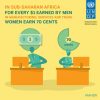
African Employers for Gender Equality
Africa has over 700 companies with an annual revenue of more than $500 million, including 400 with revenue above $1 billion. The ability of these companies to thrive rests on building and retaining talented women and men.
On the Back of the Pandemic, the Militarisation of Latin America is Gathering Momentum, Analysts Warn
During the Covid-19 pandemic, armed forces in Latin America have been taking on essential tasks: manufacturing protective equipment, delivering food and treating civilians in hospitals. In at least a dozen countries, soldiers have been deployed to enforce containment measures, often using brute force, on populations made up of largely poor informal workers.
Eswatini makes Progress on NDCs thanks to Crucial Partnership Support
Barry de Maine, the director of Green Cross Pharmacy, lost about $ 7,675 worth of stock when The Mall, the largest shopping centre in Mbabane, was flooded back in 2003. But when the flash floods hit again this year, he had already installed a flange to stop water from coming in. “This is the best I could do under the circumstances,” De Maine told IPS, adding: “Otherwise since we started experiencing floods at The Mall (17 years ago) nothing has been done.”
Our Development Priorities Have Shifted to the Immediate Task of Saving Lives & Livelihoods.
We have come to the point in the agenda where we must take a ‘deep-dive’ in reviewing the lessons learnt so far in our response to the COVID-19 pandemic, in order to chart a way for the future. But the future, by its very definition, must be relative. Flexibility and change will define policy making and the scope of action needed for development.
COVID-19 Compounding Inequalities
The United Nations’ renamed World Social Report 2020 (WSR 2020) argued that income inequality is rising in most developed countries, and some middle-income countries, including China, the world’s fastest growing economy in recent decades. Inequality dimensions While overall inter-country inequalities may have declined owing to the rapid growth of economies like China, India and East Asia, national inequalities have been growing for much of the world’s population, generating resentment.« Previous Page — Next Page »


Want to keep up with the latest news and views from the Global South? Sign up for IPS Daily News Report for daily emails with our top stories about international development, climate change, gender and more. (Formerly IPS TerraViva since 1993).

The Week with IPS

NEXT STOP - SDGs
Tracking global progress towards a sustainable world
Tracking global progress towards a sustainable world
