Languages
Monday, November 23, 2026



News and Views from the Global South


Industrial Policy Still Relevant
Industrial policy refers to the promotion of new investments and technology by governments to encourage the growth and development of specific economic sectors. However, scepticism persists about the feasibility and desirability of using industrial policy, especially of the ability to ‘pick winners’, often accused of leading to ‘propping-up failing industries’.
Nepal and Colombia Struggle With Mental Health Burden of Conflict
Children sit in a circle experimenting with different colours on palettes at a shelter in Godavari one morning this week. Some design flowers in bright colours, others draw homes nestled below mountains. Many of the children are survivors of rape or domestic violence, from rural parts of Nepal. The one thing they have in common is mental trauma.
India has a Groundwater Problem
A majority of India’s water problems are those relating to groundwater—water that is found beneath the earth’s surface. This is because we are the largest user of groundwater in the world, and therefore highly dependent on it.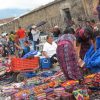
More Women in Latin America are Working, but Gender Gap Persists, New UN Figures Show
More women are entering the workforce across Latin America, with an increase in 11 per cent in the last 30 years, putting the region ahead of the curve when it comes to growth in female labour force participation, according to new data published by the United Nations on Monday.
Climate Change to Further Escalate Violence in Western Africa
Nearly 50 million people in west Africa rely on agriculture and livestock for their livelihood but the land available for pastoral use has been rapidly shrinking.
Beyond the Headlines: the Development Story Behind Irregular Migration
Last week, a too-familiar human tragedy captured news headlines. 39 people were found dead inside a shipping container on an industrial estate in Essex in Southeast England; 31 men and 8 women whose individual identities, for now, remain anonymous, as authorities begin to investigate one of Europe’s worst people-trafficking cases.
Governments Must Short Circuit Tobacco Industry’s Pervasive Tactics
The tobacco industry’s new rhetoric that smoking is harmful and that its so-called less risky products will reduce the global tobacco epidemic, should see the industry stop opposing or fighting government efforts to reduce tobacco use. However, this is not the case.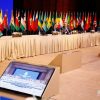
Sustainable Development and Education – Is the Non-Aligned Movement Still Relevant?
By the time of publication, representatives, senior officials, and Heads of State and Government of 120 countries from around the world will have converged on Baku in Azerbaijan for the XVIIIth Summit of the Non-Aligned Movement (NAM).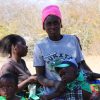
Nutrition – the Best Investment for a Developing Africa
There is evident correlation between countries with high levels of children under five years of age who are stunted or wasted and the existence of political instability and/or frequent exposure to natural calamities, experts say. But current food systems in Africa are not addressing nutrition because of the combination of poor investment in the agriculture value chain, inadequate policies and lack of accountability in addressing malnutrition.
World Closer Than Ever to Seeing Polio Disappear for Good
In a “historic achievement for humanity”, two of three wild poliovirus strains have been eliminated worldwide, the World Health Organization (WHO) announced on Thursday, following the conclusion by a group of experts that WPV3, type three of the disease, has been eradicated completely.
Solar Tubewells Suck Water out of Sindh Desert
At the southern end of Pakistan’s Sindh-Balochistan border near the Kirthar mountain range, Sindh’s Kachho desert has witnessed an unprecedented surge in the use of solar-powered tubewells for groundwater extraction in agriculture.
World’s Spreading Humanitarian Crises Leave Millions of Children Without Schools or Education
As massive protests escalated worldwide last month, millions of children walked out of schools to demonstrate against the lackadaisical response – primarily from world leaders --to the ongoing climate emergency resulting in floods, droughts, typhoons, heat waves and wildfires devastating human lives.
Fearless Young Women and Insensitive Men
On October 11, the Norwegian Nobel Prize Committee announced that this year´s Peace Prize is awarded to Ethiopia´s prime minister Abiy Ahmed: “For his efforts to achieve peace and international cooperation, and in particular for his decisive initiative to resolve the border conflict with neighbouring Eritrea.”1 Let us hope that Abiy remains a worthy Peace Prize winner and that warfare and human suffering on the Horn of Africa will finally come to an end.
Nigerian Military Targeted Journalists’ Phones, Computers with “forensic search” for Sources
Hamza Idris, an editor with the Nigerian Daily Trust, was at the newspaper’s central office on January 6 when the military arrived looking for him.
Insurance Scheme Offers Hope for Drought-stricken African Farmers
A partnership between United Nations and African Union (AU) agencies will help African economies insure themselves against the droughts and other extreme weather events that plague the continent, organisers say.
Bangladesh’s Climate Change Victims Safeguard the Sundarbans’ Endangered Dolphins
Israfil Boyati lives along the shoreline of the Bay of Bengal. In the past he used to catch fish in the canals and rivers of Bangladesh’s Sundarbans mangrove forest — one of the world’s largest and habitat to many endangered species, including the Bengal tigers and freshwater dolphins.
Governments & Internet Companies Fail to meet Challenges of Online Hate
The prevalence of online hate poses challenges to everyone, first and foremost the marginalised individuals who are its principal targets. Unfortunately, States and companies are failing to prevent ‘hate speech’ from becoming the next ‘fake news’, an ambiguous and politicised term subject to governmental abuse and company discretion.
Swiftly Ending Tobacco Epidemic Requires Government Action, Not Empty Promises
New information published in the Morbidity and Mortality Weekly Report shows that action taken by just 11 countries – most of them low- or middle-income – has resulted in 20 million fewer adult tobacco users in 2017 compared with 2008. Seventy percent of the world’s tobacco users live in low- and middle-income countries.
Europe Should Rethink Assumptions about African Migrants: UN
Sub-Saharan African migrants who risk perilous sea crossings to Europe are often assumed to be illiterate, jobless chancers in desperate bids to flee stagnation and rampant corruption in their home countries. But a survey of some 2,000 irregular African migrants in Europe found them to be more educated than expected, while many of them were leaving behind jobs back home that paid better-than-average wages.
The Neoliberal Fuel to the Anti-Gender Movement
The number of newly elected Members of the European Parliament (MEPs) who oppose women’s reproductive rights, gender equality, sexuality education, same sex marriage and the Council of Europe Convention on Violence Against Women (Istanbul Convention) stands at around 30 per cent.
Development Banks Needed to Finance Sustainable Development
Public or state development banking will be vital to achieving the Sustainable Development Goals, argues UNCTAD’s Trade and Development Report 2019 (TDR 2019). Ongoing World Bank led efforts seek to leverage private finance via shadow banking by using public money to guarantee handsome returns managed by giant investment houses. Such financialization introduce new costs and risks to financing investments for sustainable development, decent work and renewable energy.« Previous Page — Next Page »


Want to keep up with the latest news and views from the Global South? Sign up for IPS Daily News Report for daily emails with our top stories about international development, climate change, gender and more. (Formerly IPS TerraViva since 1993).

The Week with IPS

NEXT STOP - SDGs
Tracking global progress towards a sustainable world
