Languages
Monday, November 23, 2026



News and Views from the Global South


13 Commitments to Tackle Hate Speech
In June 2019, the Secretary-General of the UN, António Guterres, launched the UN Strategy and Plan of Action on Hate Speech. Respect for human rights, without any form of discrimination is one of the core fundamentals of this strategy.
Solar Energy Transforms Villages in Argentina’s Puna Highlands
"On moonless nights it was very difficult to walk around this town," says Celia Vilte, a teacher from San Francisco, a highlands village of just 54 people in the extreme northwest of Argentina whose centre is not a town square but 40 solar panels, which provide one hundred percent of its electricity.
Wielding The Magic Wand
I met late professor T.N. Srinivasan (popularly known as TN) a couple of months before he passed away in November 2018. Despite his original contributions to trade theory, ¬development economics, inequality and poverty, he never won the Nobel in economics. His colleague at Yale had once ¬remarked that TN would get not one but two Nobels. I was too much in awe of TN to ask this question but my friend asked him directly if he could think of an Indian economist who might win the Nobel for economics in the near future. He said, “Abhijit but not so soon”. He was right but not entirely.
Private Finance and Agenda 2030: Way Off-Track
Four years ago, UN member states proclaimed their ambitions for development in a document named “Transforming Our World”, also known as Agenda 2030. Today, according to several assessments including of the UN’s inter-agency task force on financing for development (FfD) transformation has fallen off-track. It has received too little money, political commitment and action to change the workings of the global economy. Agenda 2030 spells out the Sustainable Development Goals (SDGs) needed to ‘transform our world’.
Q&A: How Europe has Moved Away from Being a Sanctuary for Journalists
Rising populism, anti-media rhetoric from politicians, cyber-harassment of journalists and physical attacks are among the reasons why press freedom in Europe is on the decline, according to the global media watchdog Reporters Without Borders (RSF).
More than 90 per cent of Africa Migrants Would Make Perilous Europe Journey Again, Despite the Risks
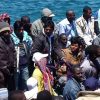
A landmark UN migration study published on Monday shows that 93 per cent of Africans making the journey to European countries along irregular routes, would do it again, despite facing often life-threatening danger.
Agro-tech Offers Answers for African Farmers at Iowa Meet
Experts vaunted new strains of seeds, drone aircraft and other technological breakthroughs as solutions-in-the-making for farmers in Africa, where hunger, drought and food price hikes are continent-wide problems.
Trump Poised to Withdraw from Open Skies Treaty
The Trump administration is reportedly on the verge of withdrawing from the 1992 Open Skies Treaty, according to lawmakers and media reports. Rep. Eliot Engel (D-N.Y.), chairman of the House Foreign Affairs Committee, first sounded the public alarm in an Oct. 7 letter to National Security Advisor Robert C. O’Brien.
Religious Leaders’ Plea to Member States: Honour Your Commitment to the UN
On the 8th of October, the United Nations Secretary General Antonio Guterres warned that the organisation is running out of money by the end of October - "member States have paid only 70 percent of the total amount needed for [our] regular budget”.
Africa’s Investment Drive Gathers Pace
Headwinds are blowing amid IMF warnings of a “synchronised slowdown” in global economic growth, yet Africa’s investment drive is still gathering pace, supported by intense international competition in development finance.
Displaced by the Desert: An expanding Sahara leaves Broken Families and Violence in its Wake
Abdoulaye Maiga proudly displays an album showing photos of him and his family during happier times when they all lived together in their home in northern Mali. Today, these memories seem distant and painful.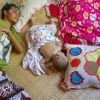
Tuberculosis Infections Declining, But Not Fast Enough Among Poor, Marginalised: UN Health Agency
A staggering 1.5 million people died from tuberculosis (TB) last year, the UN health agency said on Thursday, in an appeal for far greater funding and political support to eradicate the curable and preventable disease.
Governments, Donors and Investors Must Put Their Money Where Their Mouths are on Gender and Climate Change
Climate change has a disproportionate impact on women and girls. This is clear when it comes to water, for instance. The Global Commission on Adaptation Report launched at the United Nations General Assembly last week states that the number of people who may lack sufficient water, at least one month per year, will soar from 3.6 billion today to more than 5 billion by 2050.
Beaten and Tortured for a Ransom, Lured by the Promise of a Livelihood
After his father passed away two years ago, the burden of caring for a six-member family rested on the shoulders of the now 19-year-old Farhad Hossain. He had no clue how he would support his family and pay for the education of his four younger siblings.
UN’s 75th Anniversary Shadowed by Right-Wing Nationalism, Widespread Authoritarianism & Budgetary Cuts
When the six much-ballyhooed high-level UN meetings concluded late September, there were mixed feelings about the final outcomes. And civil society organizations (CSOs), who were mostly disappointed with the results, are now gearing themselves for two upcoming key climate summit meetings: COP25 in Santiago, Chile in December and COP26 in Glasgow, UK in late 2020, along with the 25th anniversary of the Beijing Women’s Conference scheduled to take place in September 2020 in New York.
Ghana’s Grains and Groundnuts Face Increasing Contamination Amid Increasing Temperatures
Adwoa Frimpomaah, a smallholder farmer from Dandwa, a farming community in Nkoranza, in Ghana's Bono East Region, and her two children have been consuming insect-infested and discoloured grains produced from their three-acre farm.
Holding Transnational Corporations Accountable for Human Rights Abuses
In Geneva this week, a treaty process is underway that promises to usher in a new era for human rights around the globe. The process—the intergovernmental working group on the binding treaty on transnational corporations and human rights—could mean that for the first time, human rights would be prioritized above corporate profits.
Let Plants be Thy Medicine – You Are What You Eat
United Nations World Food Day is celebrated around the world on October 16 under the theme: “Our Actions ARE Our Future. Healthy Diets for a Zero Hunger World”. This theme is timely, especially, because across Africa and around the world, there has been a gradual rise in malnutrition and diet-related non communicable diseases, as highlighted in The Lancet study and a United Nations Report published earlier this year.
Election Death Toll Underscores Afghanistan’s Fragile Democracy
A wave of bloody Taliban attacks aimed at derailing Afghanistan’s recent elections killed and maimed hundreds of people, including children, the United Nations mission to the country said on Tuesday.
Global Challenges for the ‘NextGen’
Success has many parents – so the saying goes. In the case of the massive successes of international agricultural research, no one person can claim parentage. There are heroes along the way such as Norman Borlaug and his early cereal breeding, and the team that eliminated the cattle disease Rinderpest from the world – smallpox is the only other disease that has been totally eradicated. Another is the founder of The Crawford Fund, Derek Tribe, who was also instrumental in the creation of what is now the International Livestock Research Institute (ILRI), which I chair. However, it would be more correct to highlight the thousands of scientists who have contributed to the world’s greatest feat of feeding an extra three billion people when pundits said it was impossible.
A Major Step Forward in Reducing Food Loss and Waste is Critical to Achieve the SDGs
A new FAO report launched today by the UN Food and Agriculture Organization provides insights into how much food is lost - as well as where and why - at different stages of the food supply chain, calls for informed decisions for an effective reduction and offers new ways to measure progress.« Previous Page — Next Page »


Want to keep up with the latest news and views from the Global South? Sign up for IPS Daily News Report for daily emails with our top stories about international development, climate change, gender and more. (Formerly IPS TerraViva since 1993).

The Week with IPS

NEXT STOP - SDGs
Tracking global progress towards a sustainable world
