Languages
Thursday, November 26, 2026



News and Views from the Global South


Has Globalization Enhanced Development Cooperation?
Protracted economic stagnation in rich countries continues to threaten the development prospects of poorer countries. Globalization and economic liberalization over the last few decades have integrated developing countries into the world economy, but now that very integration is becoming a threat as developing countries are shackled by the knock-on effects of the rich world’s troubles.
Mixed Signals as Guyana Develops its Green Economy Strategy
Guyana is forging ahead with plans to exploit vast offshore reserves of oil and gas, even while speaking eloquently of its leadership in transitioning to a green economy at a recent political party congress addressed by the country's president.
The Gender of Law: What the Mapping of Family Laws Reveals
Recent developments around the world give support to the idea of the #MeToo movement’s transformative potential. A postmodernist claim was that the feminist movement was essentialist and that no one expression of feminism can be applicable to women of different ethnicity, cultural, or class identity. The #Me Too movement has found expression in different cultural traditions and helped to challenge this theory.
Old Age Is a Curse in India
Old age morbidity is a rapidly worsening curse in India. The swift descent of the elderly in India (60 years+) into non-communicable diseases (NCDs e.g. cardiovascular diseases, cancer, chronic respiratory diseases and diabetes) could have disastrous consequences in terms of impoverishment of families, excess mortality, lowering of investment and consequent deceleration of growth.
New Relationship Evolves Between Society and Energy in Brazil
“We want to make history," agreed the teachers at the Chiquinho Cartaxo Comprehensive Technical Citizen School. They are the first to teach adolescents about generating power from bad weather in the semi-arid Northeast region of Brazil.
Cambodia: Land rights activist Tep Vanny released from prison following royal pardon
Responding to the news that human rights defender Tep Vanny has been released from prison following a royal pardon after more than 700 days in detention, Minar Pimple, Amnesty International’s Senior Director of Global Operations, said: “After more than two years of being unjustly detained for her peaceful activism, the news that Tep Vanny is once again reunited with her family is a cause for great celebration.
Poverty-Stricken Communities in Ghana are Restoring Once-Barren Land
In the scorching Upper East Region of Ghana, the dry seasons are long and for kilometres around there is nothing but barren, dry earth. Here, in some areas, it is not uncommon for half the female population to migrate to the country’s south in search of work, often taking their young children with them.
Annan Denounced Iraqi Invasion as “Illegal” & Criticized Military Leaders Addressing UN
The Secretary-General of the United Nations, who is a creature of member states, rarely challenges or defies his creators. But Kofi Annan, who died last week at the age of 80, did both. Surprisingly, he lived to tell the tale-- but paid an unfairly heavy price after being hounded by the United States.
An Appreciation – Kofi Annan: A Great Man of Peace & Multilateralism has Left Us
I woke up on Saturday morning with the heart-breaking news that our dear Kofi is no more. The peoples of the world are unequivocal in expressing their feelings of the love, respect and recognition that they have for his qualities of head and heart.
IPS Mourns the Passing of Former United Nations Secretary-General Kofi Annan
Dear Nane Annan & Family, The IPS family would like to express our deepest condolences to you and your family on the passing of a husband, a father, a global statesman. As journalists, we find that few words can express our deep loss for a man who personalised and lived the vision and truth of a just and equal world.
Statement by the Secretary-General on the Passing of Former Secretary-General Kofi Annan
Kofi Annan was a guiding force for good. It is with profound sadness that I learned of his passing. In many ways, Kofi Annan was the United Nations. He rose through the ranks to lead the organization into the new millennium with matchless dignity and determination.
SLIDESHOW: Planet Earth, The Only Home We Have
 Climate change is on us. Parts of the planet are burning up. Heatwaves across the northern hemisphere have dried vegetation and withered crops. Forests are ablaze in North America, Europe and Asia – even as far north as the Arctic Circle. The polar ice caps are melting and sea levels are rising. Massive storms and floods have devastated communities. Deserts continue relentlessly to encroach. And the extraordinarily hot spells this summer followed on from the extraordinarily cold spells of last winter. In 2018, extreme weather is the order of the day.

UN Agencies, Government Distribute LPG Stoves to Rohingya Refugees, Bangladeshi Villagers to Save Remaining Forests
A major environmental project to provide around 250,000 families with liquid petroleum gas (LPG) stoves and gas cylinders has been launched by UN agencies and the government in Cox’s Bazar, Bangladesh, to help prevent further deforestation linked to the Rohingya refugee crisis.
Take Charge of Your Food: Your Health is Your Business
The minimum we expect from the government is to differentiate between right and wrong. But when it comes to regulating our food, it’s like asking for too much. Our latest investigation vouches for this. The Centre for Science and Environment (CSE)’s pollution monitoring laboratory tested 65 samples of processed food for presence of genetically modified (GM) ingredients.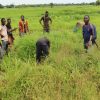
How Ghana’s Rapid Population Growth Could Become an Emergency and Outpace Both Food Production and Economic Growth
Paul Ayormah and his fellow farmers make their way home after hours spent manually weeding a friend’s one-acre maize farm in Ghana’s Eastern Region. “Tomorrow it will be the turn of my maize farm,” he tells IPS.
A Detained Migrant, Nurse and Humanitarian: IOM Staff takes Inspiration from a Migrant he meets in Libyan Detention Centre
It has been two years since I started working with IOM and I would not even call it ‘work’. These have been two of the best years of my life – building great experiences and relationships with colleagues and migrants from many different cultures and backgrounds.
Music: Nigeria’s New Cultural Export
It is a cold evening in Antwerp, Belgium’s second-largest city, famous for diamonds, beer, art and high-end fashion. Inside a small restaurant, a mix of the latest American pop and rap—clearly enjoyed by diners—is playing on a radio. Nigerians Olalekan Adetiran and Adaobi Okereke, enjoying a kebab dinner, are startled when the radio begins playing the unmistakable “Ma Lo”—a catchy, midtempo and bass-laden song by popular Nigerian artistes Tiwa Savage and Wizkid.
Joint Action Needed to Reform our Food System
While participating in this year’s High-level Political Forum (HLPF), one thing became crystal clear to me. Come 2030, we will not have healthy and affordable food if we continue with business as usual. But no one institution can single handedly change the course of our food system. The key to ensuring a sustainable food system is involving a diverse group of actors – from smallholder farmers to government – to generate ideas for change, together.
Stopping Ebola in its Tracks with Point of Entry Screening
The mighty Congo River both connects Kinshasa with Equateur Province where an Ebola epidemic began in May 2018 and separates the Democratic Republic of the Congo (DRC) from Congo-Brazzaville, hidden in the haze on the other bank.
Palestinian Children, the True Victims of the Conflict
Over 500 to 700 West Bank children are arrested and prosecuted each year by Israeli military forces. Palestinian child rights organisation, Defense for Children International Palestine (DCIP), says that between 2012 and 2017 the organisation represented more than 700 children, some 72 percent of whom endured violence after their arrest.
Mediterranean Migrant Arrivals Reach 61,517 in 2018; Deaths Reach 1,524
IOM, the UN Migration Agency, reports that 61,517 migrants and refugees entered Europe by sea in 2018 through 12 August. This compares with 118,436 arrivals across the region through the same period last year, and 265,640 in 2016.« Previous Page — Next Page »


Want to keep up with the latest news and views from the Global South? Sign up for IPS Daily News Report for daily emails with our top stories about international development, climate change, gender and more. (Formerly IPS TerraViva since 1993).

The Week with IPS

NEXT STOP - SDGs
Tracking global progress towards a sustainable world
