Languages
Sunday, August 16, 2026



News and Views from the Global South


Science Under Threat: How Researchers Can Fight Back
Scientists like me across the U.S. are distressed following the many policy changes, funding elimination, and firings that have happened since President Trump took office. More than ever, scientists must unite in solidarity and share the negative impact these extreme measures will have on science, U.S. science funding agencies and people’s lives. Speaking up can take many forms, from posting your thoughts on social media to writing opinion pieces or op-eds.
Social Media in the Global South Needs More Protections
In the western world, numerous studies over the past two decades have shown that the rise of social media in popularity has been linked to negative mental health symptoms, especially among young people. Platforms such as Instagram, Facebook, X (formerly known as Twitter), and TikTok have been criticized for fostering competitive and toxic environments, which contribute to higher rates of anxiety, cyber-bullying, depression, disordered eating, and low self-esteem. While the use of social media in the Global South has skyrocketed in the late 2010s, the ramifications on people in those regions has received much less coverage in mainstream media.
The Arab States Must Stop Trump– and Netanyahu– in Their Tracks
When the Arab states convene an emergency session in Egypt to address Trump’s/Netanyahu’s plans to take over Gaza and exile the Palestinians, they must warn Trump that acting on this plan will usher in a catastrophic conflagration that could engulf the entire Middle East.
Food, Water, Crime, Climate Change: CARICOM Leaders Begin 48th Conference with Commitment to Joint Action on Critical, Common Concerns
Leaders of the Caribbean Community (CARICOM) are meeting in Bridgetown from Feb. 19-21, as the world grapples with multiple crises, including escalating geopolitical conflicts, climate change and rising food insecurity.
Trump’s War on Global Governance: Lessons from the Past on How to Fight Back
US president Donald Trump’s recent actions seem designed to reassert American power and demonstrate that it is still the dominant global power and is capable of bullying weaker nations into following America’s lead.
Trump’s Proposed Gaza Takeover Denounced as “Mad Ethnic Cleansing Plan”
President Trump—whose rash and ill-conceived proposals continue unabated—has threatened to “seize Gaza,” turn it into a “Riviera of the Middle East,” and move Palestinians to Egypt and Jordan, two longstanding American allies who depend heavily on US support for their survival. The US President has also hinted that both countries would suffer either cutbacks or elimination of billions of dollars in economic and military aid —if they refuse to cooperate with him.
“Ukraine Peace Plan” that Involves Meeting Kremlin Demands Is a Trap, Not a Way Out
U.S. President Donald Trump and his special envoy for Ukraine and Russia, Keith Kellogg, have recently expressed confidence and optimism about the prospect of “ending” the war in Ukraine. No details have been made public; however, according to the new administration's vision, both sides must make concessions to achieve peace. Yet it remains unclear not only what the proposed concessions are but also how exactly the US intends to persuade the parties to compromise.
Shaping AI Rules Through Trade Agreements
The inclusion of AI provisions in preferential trade agreements (PTAs) has been steadily rising. Since 2019, when the China-Mauritius Free Trade Agreement first mentioned AI, PTAs have progressively evolved to include elements addressing the broader implications of emerging technologies.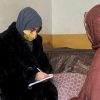
Fatima’s Story: The Struggles of Afghan Women Under Taliban Rule
Fatima Mohammadi was a manager in a government office in Afghanistan’s Parwan province before the Taliban came to power. But having been forced out of her job she is back home unemployed.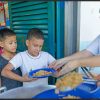
Only Political Will Can End World Hunger: Food Isn’t Scarce, but Many People Can’t Access It
History has shown us again and again that, so long as inequality goes unchecked, no amount of technology can ensure people are well fed.
World’s Largest Religious Gathering Becomes Trans-Inclusive Despite Controversies
Despite a blazing sun and growing heat, Pavitra Nandagiri sits on a cot smiling. Clad in a saffron robe and headgear with her forehead painted with turmeric and vermillion, Nandagiri is a Mahamandaleshwar—one of the highest-ranking monks of the Kinnar Akhada (Transgender Arena) at the Maha Kumbh, the world’s largest religious gathering currently underway in northern India.
A Full Implementation of the Israel-Hamas Ceasefire is Uncertain
On January 19, Israel and Hamas implemented a ceasefire agreement that would end the fighting in Israel and Palestine, see the return of hostages and prisoners, and begin a period of recovery and reconstruction for Palestine. Although the past several weeks have seen a relatively smooth transition and a cessation of hostilities, the prospect of a long-term implementation of the ceasefire remains fragile and there is significant risk of a return to warfare and heightened instability across the Middle East. With the humanitarian situation in Gaza improving for the first time in 16 months, it is imperative that the ceasefire remains in effect.
The Land of Immigration: America’s Demographic Past, Present and Future
Of the approximately 280 million immigrants in the world, the country hosting the largest number is America, the land of immigration. One-fifth of the world’s international migrants reside in the US, with those migrants arriving from nearly every country in the world.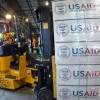
Human Rights, Healthcare Disrupted in Eastern Europe With USAID Funding Freeze
As the full effects of the US decision to freeze foreign aid funding begin to be felt across the world, organizations in Eastern Europe and Central Asia (EECA) are warning years of work in everything from delivering life-saving healthcare to defending human rights and strengthening democracy could be undone.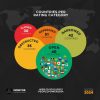
A Global Retreat from Solidarity
The world is witnessing a dangerous retreat from international solidarity by Global Minority countries. From Washington to Brussels, governments are slashing funds that sustain human rights, democracy, and humanitarian initiatives.
Why a Global Tech Fund for the Poorest Countries is a Smart Investment
The 4th International Conference on Financing for Development could catalyse coordinated action to close the financing gap and set the stage for a STI-driven transformation in the world’s poorest countries.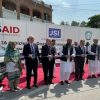
Afghan Refugees, Among Others, Feel the Impact of USAID Funding Freeze
“I was shocked when told by a security guard that the clinic has been closed down. I, along with my relatives, used to visit the clinic for free checkups,” Jamila Begum, 22, an Afghan woman, told IPS.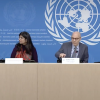
Bangladesh: UN Human Rights Denounces Former Government’s Violations Against Protestors
A new report from the UN Human Rights Office confirms that Bangladesh’s former government coordinated and committed human rights violations against its civilians to suppress the protest movement in July last year, with the high commissioner calling for justice and serious reform to end the cycle of violence and retribution.
Development Effectiveness & the Quality of Financing: Towards a More Holistic Approach at Seville
When world leaders gather in Seville for the 4th International Conference on Financing for Development (FfD4) in June, they will be meeting at a pivotal moment: one defined by mounting systemic risks, a multiplication of crises, and proliferation and fragmentation of development co-operation actors and funds.
US Pullout Gives Upper Hand to Human Rights Abusers Worldwide
When some of the world’s “authoritarian and repressive regimes” were elected as members of the UN Human Rights Council (HRC) --including Cuba, China, Russia, Kazakhstan and the Democratic Republic of Congo (DRC) -- a US Congressman Dana Rohrabacher infamously remarked: “The inmates have taken over the asylum, I don’t plan to give the lunatics any more American tax dollars to play with.”
Human Insecurity from Climate Change on Vanuatu and Guam
The climate crisis is severely endangering human well-being. While the climate security nexus is omnipresent in national security strategies and on international institutions’ agendas, political responses remain insufficient and are often problematic. Among other issues, related policies often struggle with siloization or a focus on symptoms instead of root causes.
« Previous Page — Next Page »


Want to keep up with the latest news and views from the Global South? Sign up for IPS Daily News Report for daily emails with our top stories about international development, climate change, gender and more. (Formerly IPS TerraViva since 1993).

The Week with IPS

NEXT STOP - SDGs
Tracking global progress towards a sustainable world
Tracking global progress towards a sustainable world
