Languages
Friday, November 20, 2026



News and Views from the Global South
Africa
RIGHTS: Police Force HIV Tests for Sex Workers
It was, Malawian police say, a routine sweep for criminals at one of the country’s busiest border posts. They were looking for criminals.SOUTHERN AFRICA: Lack of Clean Groundwater a Health Threat
As the rainy season approaches, and sewage from pit latrines seep further into the Zimbabwe's groundwater, Irene Ngubeni will be at risk as the country faces another possible cholera outbreak.SIERRA LEONE: Journalists at War with Highest Court
Umaru Fofana looks dishevelled. His hair is overgrown and people who do not know him could be mistaken for thinking he just joined an Afro band. And his hanging beard will surely solicit suspicious glances.
AGRICULTURE-NIGERIA: Bagging Beans Against Beetles
Cowpeas are of vital importance to the diets and livelihood of millions of people in West and Central Africa. But the crop is notoriously difficult to store - beetles and other pests can destroy an entire granary full of cowpeas within 12 months.EDUCATION-ZIMBABWE: Students Quit Classes – and Country – As Crisis Deepens
Schooling is increasingly becoming a privilege of the rich, , Zimbabwean parents and teachers' unions complain.HEALTH: Criminalisation of Abortion 'The Wrong Concept'
One hundred African women and girls die unnecessarily from unsafe abortions every day because they have to rely on unqualified medical practitioners or self-induce abortion by ingesting poisonous substances or inserting tools into their uterus.POLITICS-GUINEA: Uncertainty Prevails Under Increasingly Isolated Junta
Under growing pressure ten days after a violent crackdown, killed 157 civilians, Guinean junta leader Moussa Dadis Camara has announced an independent committee of inquiry into the deaths.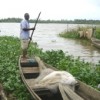
NIGERIA: Fish Could Play Greater Role In Food Security
The smell of roasting fish fills the air as one approaches the bungalow a few metres from the shore of the lagoon. Like most families in the village schoolteacher John Sewanu and his family of seven depend on the sea for food and income.HEALTH-NAMIBIA: Illegal Abortions Common Despite Risks
Ten years ago, a move to legalise abortion in Namibia failed. The number of unwanted pregnancies remains high, with many people unwilling or unable to use contraception. Despite the risks, illegal abortions remain common.ENVIRONMENT-SOUTH AFRICA: Opportunities Spring From e-Waste
There was an audible gasp when Kirsten McIntyre told the audience that e-waste is the third fastest growing waste stream in the world, with between 40 and 50 million tons of computers, TVs and washing machines being "thrown away" each year.
HEALTH-AFRICA: If Men Were Dying En Masse…
Maternal mortality rates in Africa constitute a "monumental tragedy" that requires urgent attention by African governments, health experts say.
SOUTH AFRICA: We Have Land Rights but No Water Rights – Farmers
Thandi Sihadi stands next to a dry tap. As a maize and dairy farmer in one of South Africa’s driest districts, the lack of running water is nothing new to her.SOUTH AFRICA: New Regulations "Good and Bad" for Black Empowerment
The first decade of South Africa’s black economic empowerment (BEE) policies saw the creation of a predictable list of politically connected beneficiaries, featuring names such as Patrice Motsepe, Cyril Ramaphosa and Tokyo Sexwale. Now new regulations may see other companies – including white-owned business – enter the BEE stage.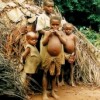
CAMEROON: ‘Our Lives Are Defined By This Forest’
Pauline Siembe, a Baka pygmy in South East Cameroon, comes out of her smoky hut licking her fingers after a meal of pounded yam and bush meat soup.
ZAMBIA: Orphans Learn Life Skills Through Soccer
For 70 minutes, the girls in the distinctive gold-and-green jersey of Brazil shut out the attacks by the visiting team. The bare feet of chubby-faced left back Njavwa Silungwe are lively in defence.SOUTHERN AFRICA: Too Much Water and Not Enough to Drink
Mmankosana Letsoela has been queuing since 5am to collect water. You would think that arriving so early at the bore-hole water pump; she would be the first in line.
CAMEROON: Gearing Up for Copenhagen
"Developed countries have failed to respect the Kyoto Protocol which compelled them to reduce latest 2008 emissions of greenhouse gases by five percent. There is therefore need for new engagements to be taken at the Copenhagen Summit." Decisive words from Cameroon's minister for the environment, Pierre Hele.
TRADE: “We Won’t be Frogmarched Towards a Doha Conclusion”
In a rare meeting of minds, a parliamentarian, a civil servant and a trade unionist, all three from Africa, agreed that the current course of the World Trade Organisation’s Doha Round of trade talks is detrimental to the interests of African countries.SENEGAL: Scrambling to Keep Up With Education For All
In Diohine, a village of some 3,000 inhabitants in the Fatick region of central Senegal, real progress has been made towards educating all children, in spite of a lack of infrastructure.
TRADE-SOUTHERN AFRICA: Effort Afoot to Save Rickety Customs Union
Southern African countries have buried the hatchet in an effort to preserve the Southern African Customs Union (SACU), one of the few building blocks of regional integration. Its chiefs vehemently denied reports that Pretoria wants to pull out of the customs union.
SANITATION-ZAMBIA: Back Policy With Funding
Water- and sanitation-related diseases cost communities dearly, particularly in rural Zambia.« Previous Page — Next Page »


The Week with IPS

NEXT STOP - SDGs
Tracking global progress towards a sustainable world
Tracking global progress towards a sustainable world
