Languages
Friday, November 20, 2026



News and Views from the Global South
Africa

TRADE: Middle-aged Women Keeping Zimbabwean Economy Afloat
Her small tattered book is full of lists of orders for goods such as beer, maize-meal and chemicals. On another page are addresses and phone numbers of store managers while, on another, a list of names has been jotted down along with corresponding amounts.
POLITICS: Malawi’s Women Challenge For Top Posts
Sitting side by side, clothed in bright traditional outfits complete with headgear, they looked like any of the women who always dance and ululate for politicians at rallies.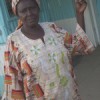
Q&A: ‘ We Were Told To Go To The Mortuary’
Two understaffed and ill-equipped public clinics serving 600,000 people: it is in neighbourhoods like Dandora that the battle to reduce maternal mortality is won or lost.TRANSPORT-SOUTH SUDAN: Going Nowhere, Fast
Motorcycle Juba style: sit as far back on the seat of the bike as possible. Hold handlebars only loosely when riding but rev frequently whenever stationary.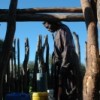
WATER-NAMIBIA: ‘Decentralisation’: Code for Recovering Costs From the Poor
What if a well-intended programme to democratise water management is really a poverty trap? This is a question a soon to be published study on Namibian rural water supply poses to decision makers.HEALTH-ZIMBABWE: Doctors Fear High Risk of Drug-Resistant TB
Zimbabwe’s crumbling health system makes it almost impossible to detect and treat tuberculosis (TB), doctors say. As a result, they suspect the country has large numbers of unidentified cases of multi-drug resistant (MDR) as well as extensively drug resistant (XDR) TB.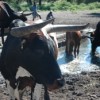
WATER-NAMIBIA: Policy to Create a Water Scarcity?
Several 20 litre buckets of water are crammed inside the small enclosure around the only tap in Epingiro, a small gathering of kraals in the Kavango woodlands in northern Namibia.TRANSPORT-ZIMBABWE: Your Money And Your Life
Despite the crater-sized potholes that fill Bulawayo roads, Desmond Hikwa is not slowed down as he speeds across this city of more than two million transporting commuters from sunrise to sunset.
MINING-LIBERIA: Steel Town Blues For Yekepa
Three exhausted railroad workers sip beer and talk on the back porch of a makeshift bar in Liberia's rural Nimba County, concealed by nightfall and the deafening din of motorcycles and a generator nearby.
MINING-WEST AFRICA: Ending the Race to the Bottom
Resource extraction in West Africa has often coincided with environmental degradation and brutal conflict. Activists further charge that the agreements between governments and transnational mining companies do little to benefit local communities.BOTSWANA: Media Laws Stir Dissent Within Ruling Party
There is growing dissent in the ruling Botswana Democratic Party (BDP) over laws that enable the government to regulate the media. Member of parliament, Keletso Rakhudu, broke ranks with his party by publicly criticising the Media Practitioner’s Act as an "assault" on the "fundamentals" and "undermining" free and independent media. He claims a number of his colleagues shared his dismay but were fearful of speaking out.
DEVELOPMENT: Mauritians Also Competing For Land in Africa
Soaring food prices and lack of land have forced Mauritius, a net food importing country, to launch an ambitious initiative. The island state is starting to grow its food in other African states where land is lying fallow and labour is cheap.ECONOMY: Africa Is of ‘‘Strategic Importance’’ to Gulf States
According to a recent article in the Harvard Business Review, the average annual return on investment in Africa is between 65 and 70 percent higher than in any other country, including China.UGANDA: In Search of Peace and Justice
Alice Anywar lives in the Pagak resettlement camp in Gulu and at 39 is a multiple victim of the over 20 year-old Lords Resistance Army (LRA) insurgency in northern Uganda. The rebels first attacked her home in Kilak village in 1987 killing both her parents and abducting her 12-year old brother. In 2002 they murdered her husband whom she had met in a refugee camp.
SOUTH SUDAN: Now Cattle Threaten Hard-Won Peace
"The liberation struggle is over. Why are we still killing ourselves?" South Sudan's President Salva Kiir asked a meeting of chiefs, exasperation clear in his usually even-toned voice.MADAGASCAR: Closed-Door Talks Over Political Impasse
Both parties agreed not to release any details after a second direct meeting between President Marc Ravalomanana and his principal opponent, Andry Rajoelina, the deposed mayor of Madagascar’s capital Antananarivo, on Feb. 23 with no official being issued.ZIMBABWE: New Cabinet Ignores Quota for Women
Women’s rights activists in Zimbabwe are outraged by the low representation of female politicians in the new unity government. Only four women are part of the 35-member cabinet, laughably short of the equal representation of women in decision-making that Zimbabwe signed onto at a regional summit in September 2008.BOTSWANA: High Profile Trial Could Open Can of Worms
The high profile trial of former Debswana Managing Director, Louis Goodwill Nchindo, could open a can of worms about the shady activities of senior government officials in Botswana, officially Africa's least corrupt country.
ECONOMY: Using the Rand Makes Zimbabwe ‘South Africa’s Province’
Zimbabwe may soon become part of the South African rand monetary union when the troubled southern African country officially assumes the use of the rand as part of a raft of economic initiatives aimed at kick-starting its comatose economy.POLITICS: Two Kenyas, Two Dreams: Which Do We Want?
Kenya's civil society has rebuffed efforts by its embattled government to restore its tattered image in the wake of waning public confidence in the state. Their major grievance is that the country's problems, including high level graft, are the result of a culture of impunity that has engulfed the nation's top officials and politicians.ECONOMY-BOTSWANA: Job Losses Show ‘‘Diamonds Are Not Forever’’
‘‘The situation is now very bad, very bad for workers. It is no longer about the workers alone, it is about the government, the companies, everyone. We need to talk. Dialogue is the only solution.’’« Previous Page — Next Page »


The Week with IPS

NEXT STOP - SDGs
Tracking global progress towards a sustainable world
Tracking global progress towards a sustainable world
