Languages
Thursday, November 12, 2026



News and Views from the Global South
Global
Biodiversity, GMOs, Gene Drives and the Militarised Mind
A recent report from the National Academy of Science of The United States, titled Gene Drives on the Horizon : Advancing Science, Navigating Uncertainty, and Aligning Research with Public Values”, warns:
What can Development Banks do to Protect Human Rights?
In a petition signed by 150 NGOs, the Coalition for Human Rights in Development have called for development banks to make sure that human rights are respected by their beneficiaries.
Focus on the Supply Side of Terrorism
Clearly, this is a tipping point in our understanding of and approach to ideological terrorism so far as Bangladesh is concerned. Since we have been visited by a series of 'firsts' in so-called jihadi manifestations, perhaps a review is in order.
Displaced Youth: Selling Souls to Sex and Drugs
Omar’s striking blue eyes and well-built physique are accentuated by his fashionable, tight-fitting apparel. At first glance, one would regard him as a carefree young man, blessed with the gifts of intellect and beauty. However, appearances can be deceptive. The traumas of war, displacement and isolation hang over Omar like an ominous shadow.
UN Staffers Protest Plans to Privatise $53 Billion Pension Fund
The Coordinating Committee for International Staff Unions and Associations of the UN system (CCISUA), which represents over 60,000 staffers worldwide, has expressed serious concern over the future of the UN Joint Staff Pension Fund (UJSPF) which guarantees the economic survival of retirees.
Is Sustainable Development Hindering Economic Recovery?
The global economic and employment situation is alarmingly protracted, with recovery not expected any time soon. In October 2012, then IMF chief economist Olivier Blanchard indicated he did not see a global economic recovery before 2016.
US Elections Cry Out for Reform!
As many observers around the world have pointed out, the United States is no longer a true democracy. It is an oligarchy. The US government ignores the safety, wishes and needs of the majority of its citizens, and instead makes decisions which will bring profit to enormous corporations, or satisfy the wishes of powerful lobbies.
The Global South’s Untold Human Rights Legacy
While human rights are often viewed as a Western creation, pushed against the will of developing countries, the origins of the international human rights system may prove otherwise, according to a forum held at the the International Peace Institute (IPI) here Wednesday.
Civil Society Organizations Worried About Declining Involvement
Less than a year after the adoption of the global Sustainable Development Goals (SDGs), non-government organizations (NGOs) are concerned about declining possibilities for participation, both at the UN and in national politics.
The Dark Road to Peace in South Sudan
The dark road to Peace in South Sudan began with the manner in which the Machakos Peace agreement was crafted.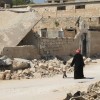
Fighting Violence Against Children as a Global Problem
One billion children experienced physical, sexual or psychological violence in the last year, according to the US Centers for Disease Control and Prevention (CDC), prompting the launch of a new global partnership to tackle the problem here Tuesday.
What Does it Really Mean to “Leave No One Behind”?
Although “leave no one behind” has become a central rallying cry around the UN's Sustainable Development Goals, more needs to be done for it to be put into practice, civil society said during a review conference of progress made on the Post-2030 agenda here this week.Global Coalition Seeks Ban on Mercury Use
A coalition of over 25 international non-governmental organizations (NGOs) has launched a global campaign to end a longstanding health and environmental hazard: the use of mercury in dentistry.
The Future of Food in Cities: Urban Agriculture
Habitat III, the UN’s conference on cities this coming October will explore urban agriculture as a solution to food security, but here in New York City, it has shown potential for much more.
The Eugenics Debate
The current debate on the re-emergence of eugenics is worrying, as most of its proponents seem to be urging for gene manipulation for higher intelligence and beauty, while only a few are concerned with its dystopian implications.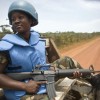
Time for tough action to stop sexual exploitation by UN peacekeepers
"Gentlemen, there are no bad soldiers, only bad officers", said Napoleon Bonaparte to his military staff after they complained that the poor quality of soldiers was inhibiting success on the battlefield. We as former Army officers, totally believe in the sage words of Napoleon.
Record High Seafood Consumption Not Sustainable, Warns UN
The UN's Food and Agricultural Organisation (FAO) warned Thursday that global fish stocks cannot keep up with record consumption, with the average person now consuming 20 kilograms of fish a year.
Closing the Gaps in Sexual Education for People with Disabilities
From forced sterilisation to sexual abuse, young women and men with disabilities are much more likely to have their sexual and reproductive health rights violated than other people.
Is Federalism Pro-poor?
Poverty, according to the United Nations, is “a denial of choices and opportunities, a violation of human dignity. It means lack of basic capacity to participate effectively in society. It means not having enough to feed and clothe a family, not having a school or clinic to go to, not having the land on which to grow one’s food or a job to earn one’s living, not having access to credit. It means insecurity, powerlessness and exclusion of individuals, households and communities. It means susceptibility to violence, and it often implies living in marginal or fragile environments, without access to clean water or sanitation.”
The UN and Global Economic Stagnation
When the financial crisis preceding the Great Recession broke out in late 2008, attention to the previously ignored UN Secretariat’s analytical work was greatly enhanced. This happened as the UN and the Bank of International Settlements (BIS) had been almost alone in warning, for some years, of the macroeconomic dangers posed by poorly regulated financial sector developments.
Crisis of the Left
Over the last few years, quite a few countries have witnessed the rise of social movements against inequality, xenophobia, and fiscal austerity. The most notable of these are the Occupy movement and Bernie Sanders’ campaign in the US, Syriza and Podemos in continental Europe, and the rise of Jeremy Corbyn and the Momentum campaign in Britain’s Labour party.« Previous Page — Next Page »





The Week with IPS

NEXT STOP - SDGs
Tracking global progress towards a sustainable world
Tracking global progress towards a sustainable world
