Languages
Tuesday, October 13, 2026



News and Views from the Global South
Global
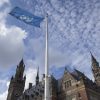
Youth-Led Landmark Climate Change Case Starts in The Hague
The intersection of law, diplomacy, and science will come under the spotlight at the International Court of Justice hearings starting today (Monday, December 2, 2024) in The Hague as the court starts its deliberations into the obligations under international law of UN member states to protect people and ecosystems from climate change.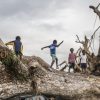
A New Compass for Climate Action
The climate crisis has become devastating across the world over the past few months: super typhoons sweeping through the Western Pacific, unprecedented superstorms in the Gulf of Mexico, raging wildfires across the Amazon rainforest, severe flooding in Central and Eastern Europe, just to mention a few. Rising seas and intensifying storms threaten to devastate communities and erase entire countries from the map.
US Envoy-in-Waiting Blasts UN as Corrupt – & Threatens Funding Cuts
John Bolton a former US ambassador to the United Nations (2005-2006) once infamously declared that if the 39-storeyed UN Secretariat building in New York “lost 10 stories, it wouldn’t make a bit of difference.” That statement triggered a sarcastic response from a New York Times columnist who said Bolton would have done better as an urban planner than a US diplomat --while another newspaper described him as “a human wrecking ball”
Equitable Ocean Prediction Systems: Bridging the North-South Divide
At their recent Leaders’ Summit in Rio de Janeiro, the G20 committed to support developing countries in responding to global crises and achieving the Sustainable Development Goals (SDGs). To meet that pledge, the world’s leading economies need to enhance global collaboration and investment in ocean prediction systems and technology.
Never Disparage a Toilet
In most Western European countries you can purchase –or rent- a 60 square-metres flat that is equipped with two toilets, one for her and one for him. Larger apartments may feature even more. For those who can afford it, such facilities are taken for granted. Yet, nearly half the global population—over 3.5 billion people—live without access to safely managed sanitation, including 419 million forced to practice open defecation.
Human Rights Protection Crucial to Meeting the 2030 AIDS Public Health Goals
Gaps in realising human rights could stop AIDS being ended as a public health threat by 2030, UNAIDS has warned in a report to mark World AIDS Day.
Explainer: Why COP29 Baku Outcome is a Bad Deal for Poor, Vulnerable Nations
The culmination of bitter, difficult, and challenging climate negotiations concluded with an announcement from the COP29 Presidency of Azerbaijan of the "agreement of the Baku Finance Goal—a new commitment to channel USD1.3 trillion of climate finance to the developing world each year by 2035." This is on top of the USD 300 billion that the developed world is to extend to developing nations annually by 2035.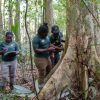
Nature, Climate, and Prosperity: Unlocking the Power of Integrated Action
As the world faces escalating challenges, from climate change to biodiversity loss and ecosystem degradation, there is now a rapidly expanding understanding that these crises are deeply interconnected.
UNiTE: Violence Against Women—A Plight That Spares No Country Across All Continents
Despite the 1,583 legislative measures in 193 countries around the world, violence against women has not been eradicated or even abated.
60 Percent of Femicides Are at the Hands of a Partner or Family
Every 10 minutes, one woman or girl is killed at the hands of their partner or other family member. This is only scratching the surface on how femicide, one of the most extreme forms of violence against women, persists at high levels around the world. UN-Women and the UN Office of Drugs and Crime (UNODC) released a joint report, Femicides in 2023: Global Estimates of Intimate Partner/Family Member Femicides, on November 25, the International Day for the Elimination of Violence against Women.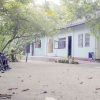
Ensuring Violence-Free Homes for Sri Lankan Women
A woman’s right to live free from violence is upheld by international agreements like the 1979 Convention on the Elimination of All Forms of Discrimination against Women and the 1993 UN Declaration on the Elimination of Violence against Women.
It’s About our Entire Planet: The Pandemic of Violence Against Women
The 16 Days of Activism to end gender-based violence, started with seeking to eliminate violence against women (VAW). This year’s theme highlights the reality that violence against women and girls is of pandemic proportions. The figures are galling.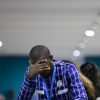
Can Pay, Won’t Pay—COP29 Outcome Far from Promised Historic Deal of a Lifetime
They say it is taboo to talk about money. But this is exactly what developing countries came for: to haggle and push for the climate finance deal of a lifetime, as the climate crisis is, for them, a matter of life and death. Wealthy nations also came for their own deal of a lifetime—to hoist the climate finance burden on the private sector as they take the bare minimum financial responsibility.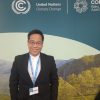
Global Climate Challenges: Perspectives from a Chinese COP29 Delegate
As COP29 draws to a close, voices from diverse regions have shed light on their contributions, challenges, and aspirations in tackling the climate crisis.
Insights From Negotiator into How COPs Move Needle Towards Healthy, Liveable Planet
Every year, the Conference of the Parties creates a global milestone for the climate movement, setting new standards and advancing action towards a net-zero planet to sustain all life on earth. COPs provide a platform for the global community to agree on what it would take to restore planet Earth and the contributions that all signatories to the Paris Agreement should make.
‘AI-powered Weapons Depersonalise the Violence, Making It Easier for the Military to Approve More Destruction’
CIVICUS discusses the dangers arising from military uses of artificial intelligence (AI) with Sophia Goodfriend, Post-Doctoral Fellow at Harvard Kennedy School’s Middle East Initiative.

Climate Change in Azerbaijan is Putting Women at Increased Risk of Gender-Based Violence
Climate change exacerbates existing gender inequalities and gender-based violence. At COP29 in Azerbaijan, governments have been urged to prioritize gender-responsive climate policies that address the specific needs of women and girls, and serious concerns have been raised about backtracking on women’s rights during these crucial negotiations on climate action.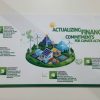
Explainer: Green Climate Fund Draft Negotiations at COP29
The Green Climate Fund (GCF) negotiations brought attention to the progress, challenges, and future strategies for enhancing its effectiveness in fostering a just and sustainable energy transition.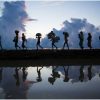
Migration Remittances: Pursuit of Greener Pastures Opens Door for Climate Financing
COP29 delegates have elaborated on how Africa’s dependency on agriculture is becoming increasingly untenable amidst alarming levels of global warming, wrecking havoc on the sector. Coastal communities, pastoralists, and those in the drylands are in the thick of the climate chaos.
Stand Up, Speak Out: A Global Call to Men on the 25th Anniversary of International Day for the Elimination of Violence Against Women
In 1960, the Rafael Trujillo regime in the Dominican Republic assassinated the Mirabal sisters— renowned and respected for their courage and activism against dictatorship. To give their senseless violent death some meaning and to preserve their legacy, in 1999, the United Nations inaugurated November 25—the day of their assassination—as the International Day for the Elimination of Violence Against Women (EVAW).
UN’s OCHA Calls to Correct the Imbalance in Climate Finance Allocation
As climate-induced disasters continue to wreak havoc worldwide, the Office for the Coordination of Humanitarian Affairs (OCHA), a UN body specializing in emergency response, has issued a clarion call for an ambitious and fair global climate finance goal at COP29. Greg Puley, Head of the Climate Team at OCHA, highlighted the pressing need for enhanced disaster risk reduction and climate resilience measures, particularly in vulnerable and conflict-affected regions.« Previous Page — Next Page »





The Week with IPS

NEXT STOP - SDGs
Tracking global progress towards a sustainable world
Tracking global progress towards a sustainable world
