Languages
Saturday, September 26, 2026



News and Views from the Global South
Global

Embodying the Spirit of the Dragon
The Year of the Dragon is upon us. UN Secretary-General António Guterres said in his message for this Lunar New Year, “The dragon symbolizes energy, wisdom, protection and good luck. We need these qualities to rise to today’s global challenges.”
Neocolonial ISDS, Abused, Biased, Costly, and Grossly Unfair
Investor-State Dispute Settlement (ISDS) provisions in international trade and investment agreements – long abused by opportunists with means – are slowly being rejected by cautious governments.
Landlocked Developing Countries Conference to Address Development
Landlocked developing countries need greater support from the international community so that they are no longer left behind when it comes to progressing with the SDGs, says the UN High Representative of the Least Developed Countries.
Girls Just Want to Have Funds!
In the bustling financial hub of Singapore, Rhea See, an early-stage fund manager, leads an accelerator platform dedicated to empowering women in technology.
Road to COP29: Highest Climate Ambitions Needed to Decarbonize World
The road to COP29 has begun in earnest in the backdrop of a global climate report indicating that not only was 2023 the warmest year in a 174-year climate record, it was the warmest by far. Record-breaking temperatures, combined with El Niño, pushed vulnerable and poor nations in the Global South to the frontlines of extreme and severe weather events.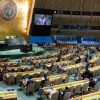
Is the Reform of the UN Security Council a Good Try in a Lost Cause?
The myriads of proposals for the reform of the much-maligned Security Council have been kicked around the United Nations for more than two decades—with no significant progress. Speaking at the General Assembly’s (GA) annual debate, GA President Dennis Francis told delegates last November that without structural reform, the Council’s performance and legitimacy will inevitably continue to suffer.
The Spectre of Migration: A conversation with Hammoud Gallego
Karl Marx’s Manifesto of the Communist Party begins with the now worn-out phrase: “A spectre is haunting Europe – the spectre of communism. All the powers of old Europe have entered into a holy alliance to exorcise this spectre”. Nowadays the word “communism” could easily be substituted by “migration”. All over Europe, politicians claim that Europe is being destroyed by migrants. In country after country, ghosts of yesterday are awakened. Parliaments include xenophobic politicians who might be considered as inheritors of demagogs who once dragged Europeans into hate and bloodbaths.
Genocide Convention @75: A Call for its Application as a ‘Living Force in World Society’
It was a notion which haunted him well before the Second World War – from the history books his mother would read him, to the following of the 1921 trial of young Armenian Soghomon Teilerian.
Discrimination, a Killer of Dreams for People Affected by Leprosy
Tuji Sode detached himself from his family and hid himself from the public, embarrassed by his condition, which in biblical times meant exclusion from society and even death. Sode, a university student in Ethiopia, has Hansen’s Disease, also commonly known as leprosy. Leprosy is a bacterial disease that, left untreated, can cause severe disability and deformity.
Prospects for Commonwealth Countries, Addressing Gaps and Shaping Expectations for COP29
The 28th Conference of Parties (COP28) to the United Nations Framework Convention on Climate Change (UNFCCC) marked a pivotal moment in the global efforts to combat climate change. Held in Dubai, United Arab Emirates (UAE) with the participation of delegates from around the world, COP28 showcased a commitment to drive genuine strides in climate action, bringing optimism and progress to the forefront. Here we explore the implications of COP28 outcomes for small and other vulnerable Commonwealth countries and identify the gaps that still need attention. Additionally, it will discuss concrete expectations for COP29, focusing on critical discussions held at COP28.
Onerous Debt Making Poorest Poorer
Contractionary economic trends since 2008 and ‘geopolitical’ conflicts subverting international cooperation have worsened world conditions, especially in the poorest countries, mainly in Africa, leaving their poor worse off.
Building a More Resilient Work Force to Meet Challenges of Tomorrow
Quadrupling in size since 1950, the working age population in Asia and the Pacific now accounts for 67.2 per cent of the total population in the region and is set to peak at 3.3 billion by the mid-2030s.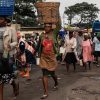
How to Ease Rising External Debt-Service Pressures in Low-Income Countries
As 2024 starts, the good news is that there haven’t been any notable requests by a low-income country for comprehensive debt relief since Ghana’s, more than a year ago. Despite this, vulnerabilities remain, with high debt servicing costs a growing challenge for low-income countries.
Ban or Restrict? Quandary Facing Governments as Vaping Entices Teens Worldwide
A hot debate on electronic smoking devices is expected to engage governments, scheduled to meet in Panama from 5-10 February for the tenth session of the Conference of Parties (COP) to the WHO Framework Convention on Tobacco Control (WHO FCTC).
Addressing the Dual Challenge of Food Waste and Food Insecurity: Here’s Some Ideas
Ten percent of Americans live in food-insecure households. At the same time, the average U.S. family of four spends $1,500 each year on food that ends up uneaten. Food is the single most common material found in landfills; and food waste is responsible for 58% of landfill methane emissions released to the atmosphere. Food insecurity and food waste create a paradox that necessitates us to creatively address these two interlinked issues.
IPS Offers Climate Change Justice Fellowship
IPS Noram and its UN Bureau is offering an exceptional opportunity for two journalists to develop their understanding of climate change justice.
PPPs’ Private Gain at Public Expense
At high cost and with dubious efficiency, public-private partnerships (PPPs) have increased private profits at the public expense. PPPs have proved costly in financing public projects.
The Birthrate Blues
Increasing numbers of countries are experiencing a spreading demographic condition, below replacement fertility, with many governments bemoaning the birthrate blues.
Death Penalty, Condemned by UN, Still in Force in US– but With a New Twist
In a bygone era, public executions of condemned prisoners were common in certain parts of the United States where the death penalty, mostly with lethal injections, is still in force now. The hangings, at the turn of the century, apparently were open to the public and the media.
The Global Femicide Epidemic
‘Per Giulia e per tutte’ (‘For Giulia and for all’) echoed through the streets of Italy in mid-November 2023. Thousands of women, activists and supporters gathered to protest and show solidarity with the 22-year-old student Giulia Cecchettin, who was killed by her ex-boyfriend on the night of 11 November 2023.
The Impact of Climate Migration on Developing Nations
As the world is still gearing up to welcome 2024, let us find a moment to reflect on some of the key trends of the past year and pursue now to embrace the path towards hope and promise for everyone, everywhere.« Previous Page — Next Page »


The Week with IPS

NEXT STOP - SDGs
Tracking global progress towards a sustainable world
Tracking global progress towards a sustainable world
