Languages
Sunday, September 27, 2026



News and Views from the Global South
Global

World Bank Enables Foreign Aid Theft
World Bank aid encourages governments to enable illicit financial outflows to offshore tax havens by reducing capital controls, thus draining precious foreign exchange and government resources.
AI Will Transform the Global Economy: Let’s Make Sure It Benefits Humanity
We are on the brink of a technological revolution that could jumpstart productivity, boost global growth and raise incomes around the world. Yet it could also replace jobs and deepen inequality.
Here’s How We Can Improve Women’s Participation in International Trade For Economic Prosperity
The World Economic Forum is hosting world leaders in Davos from January 15-19 2024. One of the key themes for the forum this year is “Creating Growth and Jobs for a New Era” with a focus on creating economic gender parity.
The World’s Richest Men Leave Women Far Behind—Amid Rising Economic Inequalities
The world’s rich are getting progressively richer while the world’s poor continue to be increasingly poorer. In a new report released January 15, Oxfam says the wealth of the world’s five richest men has doubled since 2020 –even as five billion people were made poorer in a “decade of division.”
Advanced Economies Must Let the IMF Play a Productive Role on Climate
The world faces the existential threat of a climate change crisis, and it is becoming increasingly clear that the outcome of the latest UN climate summit, COP28 — hosted as it was by the CEO of one of the world’s largest oil companies, and filled with a record number of fossil fuel lobbyists — is not going to do much to change that.
From Chemical Engineer to Climate Justice Avenger: A Journey with Yamide Dagnet
As a child on the French-Caribbean island of Guadeloupe, Yamide Dagnet dreamed of launching rockets into space. She stuck to science, discovering her path in chemical engineering. She became a scientist focused on critical reactions to solving real-world problems like improving water quality in the United Kingdom.
Martin Luther King’s Message Shook the Powerful: Vital People can Hear it Today
All through this week, leading up to January 15th, the world will commemorate Martin Luther King. In a world as wounded as ours is today, the lessons of his life’s work offer a vital opportunity for healing.
Is it Time for Palestine to be Voted UN Member State?
The atrocities against Palestinians in a ruthlessly devastated Gaza — with over 21,000 mostly civilian deaths in retaliation to the killings of 1,200 inside Israel —have resurrected a longstanding question: is it time for Palestine to be recognized as a full-fledged UN member state? The question has also been triggered by a statement by China, a veto-wielding permanent member of the UN Security Council (UNSC).
There Is No Democracy Without Gender Equality
Violence against women and girls is one of the most widespread and persistent abuses of fundamental rights at a global level that, to a certain extent, derives from what we consider "normal" in our societies. In addition to firmly condemning that every three women in the world suffer from physical or sexual violence, we must question what we are normalizing as a society for this to happen.
Amidst a Horrendous 2023, Civil Society is Fighting Back Society
The year 2023 has brought so much tragedy, with incomprehensible loss of lives, whether from wars or devastating ‘natural’ disasters, while our planet has seen yet more records broken as our climate catastrophe worsens. And so as the clock ticks towards the (mostly western) New Year, readers are traditionally subjected by media outlets like ours to the 'yearender'—usually a roundup of main events over the previous 12 months, one horror often overshadowed by the next.
The Opaque Chain of Electric Cars Assembled in Mexico
The city of Austin, Texas, on the U.S.-Mexico border, had 945,000 residents in 2021 and on average each household owned two cars, hundreds of them electric. Among the manufacturers of these electric vehicles are companies such as the US Tesla, Ford and General Motors (GM).
World Bank Enables Private Capture of Profits, Public Resources
The World Bank insists commercial finance is necessary for achieving economic recovery and the Sustainable Development Goals (SDGs), but does little to ensure profit-hungry commercial finance serves the public interest. By failing to address pressing challenges within their purview, the second-ever Bretton Woods institutions’ (BWIs) annual meetings on the African continent, in Marrakech in October 2023, set the developing world even further back.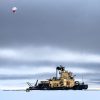
Watching the Arctic Melt, Meteorologist’s Experience on Icebreaker Oden
Conflicting emotions greet the outcomes of COP28. After 28 years of climate conferences, an agreement has, for the first time, proclaimed that fossil fuels are the biggest culprit behind the warming of our planet and stated that it would encourage all nations to “accelerating action in this critical decade so as to achieve net zero by 2050 in keeping with the science." The agreement calls for, among other things, a tripling of renewable energy by 2030, but also an increased pace in the work to develop technical solutions for the separation and storage of carbon dioxide, an extremely expensive and, so far, limited effort.
UN and Humanitarian Partners Seek USD 46 Billion for Humanitarian Assistance
Funding humanitarian programs will continue into the new year, but the funding cuts of the previous year may impact the prioritization of the most immediate and most life-threatening needs. The Office for the Coordination of Humanitarian Affairs (OCHA) released the Global Humanitarian Overview (GHO) for 2024. This annual assessment of the global humanitarian sector provides insight into the humanitarian action undertaken by the UN and its partners and reviews current and future trends in this sector.
IFAD’s Record-Breaking Pledges: Lifeline for Rural Communities Cornered by Climate, Hunger
The world is not on track to end hunger and poverty as a future of growing food insecurity and climate challenges beckon. Small-scale farmers are the backbone of food production, producing one-third of the world’s food and up to 70 percent of the food consumed in Africa and Asia, yet they are often cut off from the services they need to pull themselves out of poverty and food insecurity.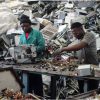
Sustainability, Human Wellbeing Depend on Rethinking, Redefining Value of Resources
While the COP28 presidency celebrated an “historic deal” to transition away from fossil fuels, we must remind ourselves that the future wellbeing of human societies in a livable planet depends on more than that.
‘Imperfect COP28’ Gives Direction For Managed, Equitable Move From Fossil Fuels
While the outcomes of COP28 are being hotly debated in both the scientific and social justice arenas, the climate conference has taken an unprecedented step forward toward a just transition, says Yamide Dagnet, Director for Climate Justice at the Open Society Foundations.
COP28: Deal to ‘Transition Away’ From Fossil Fuels Agreed
It was an extraordinary COP Summit in a year characterized by record-breaking temperatures combined with El Niño, producing a climatic carnage in Africa—deaths from fatal floods in the Democratic Republic of the Congo, Kenya, and Libya, where floods wiped out a quarter of a city. Deadly cyclones in Malawi, Madagascar, Mauritius, Mozambique, and Zimbabwe; a severe drought in Kenya, Niger, Somalia, Ethiopia, Mauritania, and Djibouti; and a months-long winter heatwave in southern African countries—the need for COP28 to deliver the highest ambition on all items.
Rich Nations, IMF Deepen World Stagnation
With the US Fed raising interest rates, the world economy is slowing as debt distress spreads across the global South, increasing poverty worldwide to pre-pandemic levels, with the poorest countries faring worst.
What Is the Cost of Phasing Out Fossil Fuels in Latin America?
One of the most heated debates at the annual climate summit coming to a conclusion in this United Arab Emirates city revolved around the phrasing of the final declaration, regarding the "phase-out" or "phase-down" of fossil fuels within a given time frame.
The Solutions to Child Poverty Must Reach the Most Vulnerable Communities
Child poverty persists even in some of the world’s richest countries, new findings from a UNICEF report reveal.« Previous Page — Next Page »


The Week with IPS

NEXT STOP - SDGs
Tracking global progress towards a sustainable world
Tracking global progress towards a sustainable world
