Languages
Tuesday, October 6, 2026



News and Views from the Global South
Global

COP15: Shift in Societal Values Needed to Address Biodiversity Loss
Policymakers were encouraged to look at the economic and social aspects with the environmental elements of biodiversity losses to meet the Global Biodiversity Framework (GBF) targets.
COP15: We are Losing Nature – Biodiversity – at the Fastest Rate in Human History
While climate change dominates the environmental headlines, quieter, startling changes are taking place in nature across the planet – whether in forests, oceans, deserts, rural landscapes, cities and other places where nature is found.
COP15: Biodiversity Conservation in the Face of Growing Economies
Dating back to the 16th Century, the face of biodiversity conservation has taken several tolls and twists- evolving from an era of preservation to conservation- down to conservation and sustainable utilisation of natural resources.
Corruption: The Most Perpetrated –and Least Prosecuted– Crime – Part I
In these times when all sorts of human rights violations have been ‘normalised,’ a crime which continues to be perpetrated everywhere but punished nowhere: corruption is also seen as a business as usual. A business, by the way, that relies on the wide complicity of official authorities.
Volunteerism: Path to Achieve UN’s Agenda 2030
The International Volunteer Day, a worldwide event commemorated every year on the 5th of December, comes at the end of a long line of special commemorations, each of them relevant and paramount to achieve the UN’s Agenda 2030.
Iconic Atlantic Bluefin Tuna in Less Troubled Waters
The Atlantic bluefin tuna is among the largest, fastest, and most beautifully colored of all the world’s fish species. They can measure more than 10 feet in length, weigh over 700 kilograms, and can live longer than 30 years. With their metallic blue coloring on top and shimmering silver-white on the bottom, the giant bony fish is a sight to behold.
Rich Nations Doubly Responsible for Greenhouse Gas Emissions
Natural flows do not respect national boundaries. The atmosphere and oceans cross international borders with little difficulty, as greenhouse gases (GHGs) and other fluids, including pollutants, easily traverse frontiers.
The Decline and Fall of Democracy Worldwide
A head of state who presided over an authoritarian regime in Southeast Asia, was once asked about rigged elections in his country. “I promised I will give you the right to vote” he said, “but I didn’t say anything about counting those votes.”
Global Risks in 2022: The Year of Colliding Consequences
As 2022 draws to a close, we are confronted with an unprecedented collision of global risks, interacting and reinforcing each other in dangerous new ways.
This Planet Is Drying Up. And these Are the Consequences
Drought is one of the ‘most destructive’ natural disasters in terms of the loss of life, arising from impacts, such as wide-scale crop failure, wildfires and water stress.
Illegal Immigration: A Mounting Global Crisis
Illegal immigration has evolved into a mounting crisis for a growing number of countries worldwide and governments appear to be at a loss on how to deal with the crisis.
COP 27: A Global COP-Out
Last year's climate COP 26 in Glasgow, Scotland, was billed as the most important conference in the history of humanity. But it failed to deliver. If anything, that failure added urgency for global climate action at COP 27 in Egypt last month.
Three Ways to End Gender-based Violence
How are the multiple shocks and crises the world is facing changing how we respond to gender-based violence? Almost three years after the COVID-19 pandemic triggered high levels of violence against women and girls, the recent Sexual Violence Research Initiative Forum 2022 (SVRI) shed some light on the best ways forward.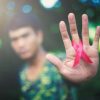
HIV Prevention: New Injection Could Boost the Fight, But Some Hurdles Remain
While the world has focused on the COVID pandemic for nearly three years, less and less attention is being paid to HIV. However, HIV is still a global problem. In 2021, according to the United Nations, 38.4 million people were living with HIV, over 650,000 died from AIDS-related illnesses, and 1.5 million became newly infected.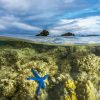
Putting Nature on a Quantifiable, Ambitious Path to Recovery
Up to 1 million species are threatened with extinction – many within decades – this includes nearly one-third of reef-forming corals, shark relatives, and marine mammals. Half of agricultural expansion occurs at the expense of forests, and 85% of wetlands that were present at the beginning of the 18th century had been lost by the year 2000, with the loss of wetlands considered to be happening three times faster, in percentage terms, than forest loss.
UN Assessed Contributions Needed to Generate Core Funding for Climate Loss & Damage
For decades, there have been non-conclusive deliberations regarding how the international community could support poor and vulnerable countries in their efforts to cope with and recover from the havoc wreaked on their territory by the ill-effects of global warming such as severe droughts, floods, storms, or rising sea levels.
Digital Human Rights Need to be Enshrined in Law
The upcoming consultation on the Global Digital Compact presents a unique opportunity to ensure that human rights in the digital world are protected in international common standards.
UN Deploys Unarmed Weapon in Humanitarian & Peacekeeping Operations
A sign outside the United Nations reads, perhaps half-seriously, that it is a “No Drone Zone”—and “launching, landing or operating Unmanned or Remote-Controlled aircraft in this area is prohibited”. The “warning” comes even as Unmanned Aerial Vehicles (UAVs) – or drones – are some of the new weapons of war deployed mostly by the US, and more recently, by Iran, Ukraine and Russia in ongoing military conflicts.
Push Forward – Act Now to End Violence Against Women and Girls
Five years ago, the global #MeToo movement brought new urgency and visibility to the extent of violence against women and girls. Millions of survivors came forward to share their experience. They forced the world to recognise a reality that shames every one of us. Their courage and voice led to a powerful collective activism and a sea-change in awareness.
Black ‘Fraud-Days’ and the Shocking Cost of Staying Fashionable
Please take a quick look at this short report before rushing to shop on a Black Friday, Christmas sales and all those long chains of big discounts and wholesales, most of them are fake, as often denounced by consumers organisations that report that the business usually inflates prices before launching such deals.
Countries Hiding Responses Sent to UN Experts Over Allegations of Human Rights Abuses
Human rights defenders are alarmed at what appears to be a new process permitting countries to keep confidential their responses to UN experts about allegations of human rights abuses.« Previous Page — Next Page »





The Week with IPS

NEXT STOP - SDGs
Tracking global progress towards a sustainable world
Tracking global progress towards a sustainable world
