Languages
Wednesday, October 7, 2026



News and Views from the Global South
Global

Countries Hiding Responses Sent to UN Experts Over Allegations of Human Rights Abuses
Human rights defenders are alarmed at what appears to be a new process permitting countries to keep confidential their responses to UN experts about allegations of human rights abuses.
The World Cup of Opportunity
The sun is shining, and the temperature sits at an idyllic 28 degrees Celsius. The Uber driver taking me to work is from Pakistan and devastated about the recent loss to England in the T20 Cricket World Cup final in Australia.
Was COP27 a Success or a Failure?
It’s finally over. After the anticipation and build-up to COP27, the biggest climate meeting of the year is now in our rear-view mirror. The crowds of delegates that thronged the Sharm el-Sheikh international convention center for two long weeks have all headed home to recover. Many will be fatigued from long hours and sleepless nights as negotiators tried to seal a deal that would move the world forwards. Did all this hard work pay off? In our opinion, COP 27 was both better and worse than we’d hoped.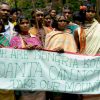
Lessons from Niyamgiri Movement’s Success to Protect an Indigenous Sacred Mountain
The Dongria Kondhs say they are the descendants of Niramraja, a mythical god-king who is believed to have created the Niyamgiri range of hills in Odisha, an eastern Indian state on the Bay of Bengal.
Ending Violence against Women: from Rhetoric to Action
Violence against women is a global crisis, prevalent in every community and society around the world. Globally, estimates published by WHO indicate that about 1 in 3 (30%) of women worldwide have been subjected to either physical and/or sexual intimate partner violence or non-partner sexual violence in their lifetime. Yet, there is limited coordination and insufficient funding to truly address the scale of the issue.
COP27: Landmark Win on Loss and Damage Fund
COP 27 delivered on what was the ‘litmus test’ for its success – consensus on the establishment of a fund on loss and damage. What seemed impossible was made possible, largely due to the unity of the G77 and China and the role of the Egyptian Presidency. Also important were efforts by civil society groups who put pressure on the United States, the main blocker to having the fund.
Crimes Against Children
An indisputable truth is that no child has ever chosen where to be born, which colour of skin to have, which ethnic community to belong to, what religion to practice and language to speak, or how safe or dangerous the context to grow up in. A child is the most innocent and defenceless human being.
US to Fight Sexual Abuse in International Organizations
The United States, which recently laid down a set of guidelines to monitor sexual exploitation and abuse (SEA) by US citizens in international organizations, including the United Nations and its agencies worldwide, has implicitly accused the UN of faltering on a high-profile case last month.
Loss and Damage Fund Saves COP27 from the Abyss
They were on the brink of shipwreck and did not leave happy, but did feel satisfied that they got the best they could. The countries of the global South achieved something decisive at COP27: the creation of a special fund to address the damage and loss caused by climate change in the most vulnerable nations.
COP27: Historic Loss and Damage Fund Takes COP27 to the Edge
After a tense impasse and many hours of negotiations, almost 200 countries struck a deal to set up a loss and damage fund to assist nations worst hit by climate change – a demand considered not-negotiable by the developing countries.
G20 Summit, a Missed Opportunity to Tackle Global Cost of Living Crisis
G20 leaders met in Indonesia in the midst of multiple crises, with 85 percent of the world population expected to face austerity measures and severe budget cuts next year that will impact the most vulnerable compounded by an insufficient response to the Covid-19 pandemic, with only 38 percent of relief funds going to social protection in global South countries.
Act on Loss and Damage Finance Now, UN Sec Gen Tells COP27 Negotiators
UN Secretary-General António Guterres told the negotiators at COP27 that time for talking about loss, and damage finance is over.
Don’t Be Fooled: Climate Disasters Are Highly Lucrative
As much as wars --or even more--, climate disaster represents a great business opportunity, so don't bother those who pour their fortunes into fueling them with talks about stopping it.
The Innovation Imperative for Small States
Small states take the path less travelled. They face challenges unfamiliar to many: scarce resources, smaller economies and the real impact of climate change.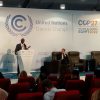
Will the Global Energy Crisis Accelerate the Energy Transition? The Big Question at COP27
COP27 is unlikely to produce new commitments to reduce emissions of climate-changing gases, but the global energy crisis will eventually prompt more action by countries to move away from fossil fuels. That is the positive feeling that many observers are taking away from the annual climate summit being held in Egypt.
The United Kingdom’s, USA’s and Russia’s Great Game: A History Lesson about War and Greed
Like most armed conflicts the Ukrainian war intends to establish hegemony over a certain area, in rivalry with other usurpers. Russian propaganda pinpoints the US and EU as Russia’s main adversaries, while Ukraine is portrayed as a pawn in these nations’ international yearnings. Such a scenario is not new.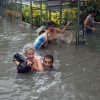
COP27: Show Me the Money–Supported by Policy
Climate change is an existential threat to humans and our ability to thrive on a healthy planet. But when it comes to rising temperatures, the inability of humankind to slow emissions and limit warming to 1.5 degrees Celsius isn’t because we lack knowledge or need new technologies.
Launch of EBRD Climate Adaptation Action Plan at COP27
As it moves to increase its climate adaptation finance, the European Bank for Reconstruction and Development (EBRD) has launched the EBRD Climate Adaptation Action Plan (CAAP) at COP27, the global climate summit taking place in Sharm el-Sheikh, Egypt.
As the World’s Population Hits 8 Billion People, UN Calls for Solidarity in Advancing Sustainable Development for All
The global population is projected to reach 8 billion on 15 November 2022, signalling major improvements in public health that have lowered the risk of dying and increased life expectancy. But the moment is also a clarion call for humanity to look beyond the numbers and meet its shared responsibility to protect people and the planet, starting with the most vulnerable.
Ending Gender-Based Violence in a World of 8 Billion
Whether to have children or not is one of the most life-altering decisions a person can make. But as UNFPA’s 2022 State of World Population report shows, people around the world – especially women and members of marginalized groups – are frequently denied any choice in the matter, with partners, relatives, health care providers and even governments making or strongly influencing these decisions.
Leaders Told To Put ‘Kids First’ at COP27
Lea is a three-year-old from Mexico who loves ladybirds. Siddhiksha, a six-year-old from India, has a passion for trees and wild animals. Rachelle is a 12-year-old Tanzanian who is wise beyond her years. They are smart and adorable and they are among the stars of a short film that is aiming to remind the leaders taking part in the COP27 UN Climate Conference that they have a duty of care towards young and future generations.« Previous Page — Next Page »





The Week with IPS

NEXT STOP - SDGs
Tracking global progress towards a sustainable world
Tracking global progress towards a sustainable world
