Languages
Thursday, October 8, 2026



News and Views from the Global South
Global

COP 15: It’s Time to Decide on a Future
It is no secret that humankind’s past actions have accelerated the deterioration of ecosystems, negatively impacting our economies, societies, health, and cultures. It is estimated that humans have altered over 97% of ecosystems worldwide, to date. One million species are currently threatened with extinction (IPBES). The writing on the wall is clear. Our planet is in crisis. The sobering reality is that if we continue on our current trajectory, biodiversity and the services it provides will continue to decline, jeopardizing the achievement of the Sustainable Development Goals and our lives as we know them. The decline in biodiversity is expected to further accelerate unless effective action is taken to address the underlying causes of biodiversity loss. These causes are often justified by societal values, norms and behaviors. Some examples include unsustainable production and consumption patterns, human population dynamics and trends, and technological innovation patterns.
COP27: A Climate Summit Following Empty Promises & Funding Failures
The COP 27 climate summit is taking place amid a rash of political, economic and environmental upheavals, including missed funding and emission targets, increased pollution and climate devastation, rising global inflation, cuts in Western development assistance and the negative after-effects of the Covid-19 pandemic and the Russian invasion of Ukraine.
Why Greta Thunberg Is Wrong to Boycott COP27
So, Greta Thunberg won’t be coming to COP27. She’s condemned it as “greenwashing” and cast doubts on the host’s human rights record and lack of access for activists.
Campaign for a Fossil Fuels Non-proliferation Treaty Gathers Steam
When it comes to moral endorsements, having the Vatican’s backing takes some beating. So the international campaign for a legally binding Fossil Fuel Non-Proliferation Treaty took a huge step forward in July when Cardinal Michael Czerny, the prefect of the Dicastery for Promoting Integral Human Development, gave it his total support.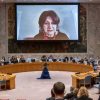
Solidarity and Negotiations to End the Ukraine War
On November 1, a statement of solidarity with Russians opposed to the Ukraine War was published. It was signed by more than 1,000 U.S. men and women who had opposed the U.S. invasions of Vietnam, Afghanistan and Iraq.
Counting the Massive Financial Costs of Illegal Fishing
As a new report lays bare the massive financial costs to developing states of illegal fishing, campaigners are hoping that drawing attention to the practice’s devastating economic effects will help push governments to greater action against the illicit trade.
Early Coal Retirement: How about a Global Auction
Report after report highlights that we can only achieve the greenhouse gas (GHG) emission reductions required by the climate goals of the Paris Agreement if much of the existing coal power generation capacity is retired early. To this end, one concept that deserves greater consideration is conducting an auction for early retirement of coal power plants worldwide: a global coal retirement auction. This article sets out the broad outlines of how this global auction might operate.
A Beacon of Light in Dark Times: the Dublin Platform for Human Rights Defenders
Before she was murdered in Honduras in 2016, the Lenca Indigenous woman and human rights defender Berta Cáceres poignantly said: “They are afraid of us because we are not afraid of them.”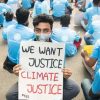
COP27 Climate Summit is an Opportunity to Promote Peace
Peace is precious. The past few months have offered daily reminders of this simple fact. War in Ukraine. Russian and North Korean nuclear threats. Growing tensions over Taiwan. Huge population displacements. Energy crisis. Economic turmoil. Rising global hunger and inequality.
Developing Countries Need Monetary Financing
Developing countries have long been told to avoid borrowing from central banks (CBs) to finance government spending. Many have even legislated against CB financing of fiscal expenditure. Central bank fiscal financing Such laws are supposedly needed to curb inflation – below 5%, if not 2% – to accelerate growth. These arrangements have also constrained a potential CB developmental role and government ability to respond better to crises.
Farm-Kids-Turned-Scientists Give Back on the Climate-Crisis Front Line
Dr Alice Karanja knows from personal experience the tough choices the climate crisis is putting people before in the Global South. Choices such as whether to have a healthy diet or give your children an education. Choices such as whether to go hungry or allow your children to have any schooling at all.
A Tale of Cities
For decades, urban practitioners have failed to consider the needs of women in city decision-making and planning. Imagine being a young girl in a bustling metropolis.
Russian Dispute Over Drones Threaten to Escalate World Food Crisis
A war of words between Russia on the one hand, and the US, Britain, France and Germany on the other—specifically on the deployment of drones in Ukraine -- has triggered an unintended consequence: a new world food crisis. The Western powers last week asked the UN to verify whether Iranian drones were being used “illegally” in violation of the 2015 Security Council resolution 2231 which endorsed the Joint Comprehensive Plan of Action (JCPOA) on Iran’s disputed nuclear programme.
What Does it take to Build a Culture of Equality & Inclusion at the UN? Reflections from Inside a Change Process
The organisational is personal. Every day since the two of us were asked back in 2020 to co-lead the process of culture transformation at UNAIDS, the United Nations organisation which drives global efforts to end AIDS, we have both felt at our very core how crucial it has been to get it right.
Will The Lettuce Outlast All This?
No. No lettuce, no matter how British it may be, could outlast such a steady depletion of the very foundation of life.
COP27 President Envoy on Youth: With Hurricanes, Floods, Heatwaves, Climate Change Cannot Be Ignored
COP 27’s official Youth Envoy, Dr Omnia El Omrani, realised the impact of climate change in 2017, and Hurricane Irma slammed Miami. As a doctor, she witnessed the influx of emergency patients into the hospital as a result of the hurricane, which piqued her interest in environmental and climate issues. She described it as a significant milestone in her life.
War, Greed and Mass Manipulation
In his treatise On War, the Prussian general Carl von Clausewitz (1780–1831) stated that war is “merely a continuation of policy with other means”. With his experience from the Napoleonic Wars von Clausewitz knew that totalitarian regimes could end up conducting huge and ruthless military campaigns. Furthermore, he assumed that to win a war it is necessary to mobilize and indoctrinate the inhabitants of an entire nation. Such an endeavour is called total war, a term that actually can be applied to Putin’s war in Ukraine.
While Developing Nations Hang on to a Cliff’s Edge, G20 & IMF Officials Repeat Empty Words at Their Annual Meetings
Held in-person for the first time in three years, the annual meetings of the International Monetary Fund and World Bank last week in Washington, D.C. failed to offer solutions to the dozens of developing countries in debt distress or on the forewarned global recession instigated by monetary tightening.
Broken Relationship with Nature Exposed as Global Wildlife Population Plummets
Home to a variety of iconic and rare animal and plant species, freshwater lakes, rivers, waterfalls, and the expansive Indian Ocean coastline, Kenya’s place as a biodiversity hotspot has never been in doubt.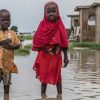
Climate Change Brings New Pest & Disease Pressures Previously Unimaginable
In temperate zones lie most of the world’s richest countries, which have also been up till now the world’s major breadbaskets, in meeting international grain, oilseed and livestock product needs.
Macroeconomic Policy Coordination More One-Sided, Ineffective
Widespread adverse reactions to the UK government’s recent ‘mini-budget’ forced new Prime Minister Liz Truss to resign. The episode highlighted problems of macroeconomic policy coordination and the interests involved.« Previous Page — Next Page »





The Week with IPS

NEXT STOP - SDGs
Tracking global progress towards a sustainable world
Tracking global progress towards a sustainable world
