Languages
Monday, November 23, 2026



News and Views from the Global South
Latin America & the Caribbean
MEXICO: Recurring Risks from Radioactive Materials
Mexico needs to take urgent steps to tighten oversight of the storage, handling and disposal of radioactive materials that can threaten the lives and health of its population, experts warn.
PERU: Endangered Monkey Survives in Tiny Private Paradise
A conservation area covering a mere 23.5 hectares has become a refuge for a unique and endangered animal species in the northeastern Peruvian region of San Martín: the Andean titi monkey. This wilderness preserve was created by a local woman who singlehandedly set out to re-establish a small area of native forest.BRAZIL: From Development Aid Recipient to Donor
Although Brazil's international development funds are still small compared to those of the industrialised world, the South American giant's foreign aid has grown considerably in the last eight years, and the country has gone from beneficiary of development assistance to donor.EL SALVADOR: Drivers Risk Extortion, Murder by Gangs
Zigzagging along the streets of the Salvadoran capital in his bus, José Nuila is much more worried about avoiding an attack by youth gang members than about making his way through the complicated tangle of traffic.
PERU: Local Gov’ts Fail to Prioritise Equality for Women
Legally, each of Peru's 25 administrative regions must have a plan for promoting equal opportunities for women. But over the last year, only 10 regions have actually allocated resources to the task of overcoming gender inequity, while another 10 have not even drawn up the compulsory equal opportunities plan.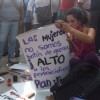
Mexican Women March for Rights, Mourn Slain Activists
For the first time, Mexico has a female attorney general - the highest post ever reached by a woman in this country. But elation at this achievement is overshadowed by grief over the brutal murders of women police chiefs and activists, and the persecution endured by the family of another woman who was killed in 2010.LATIN AMERICA: Boosting Accountability for Mining and Oil Industries
Guatemala has been accepted as a candidate country by the Extractive Industries Transparency Initiative (EITI), which aims to strengthen governance by improving transparency and accountability in the sector, and to reduce tensions between mining and oil companies and local people affected by their activities.OP-ED: Solid Present, Bright Future for Latin America’s Film Industry
Since the 1980s, despite chronic social crisis, Latin America has seen significant advances in economic and industrial development, which have given a boost to the region's film industry.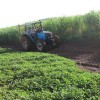
BRAZIL: Sugar Cane Fertilises Its Own Soil
The mechanisation of sugar cane harvesting, originally aimed at curbing the pollution caused by the burning of cane fields, has resulted in an added bonus: it has helped to improve soil quality, according to growers and technical experts in the southern state of São Paulo, where most of Brazil’s sugar and ethanol is produced.ARGENTINA: Banking on Women’s Experience
Argentina's president is a woman, Cristina Fernández, and the country has one of the highest percentages of women lawmakers in the world. But women also have other leadership roles, outside the political system.
ELECTIONS-PERU: Humala and Fujimori in Final Stretch
If retired military officer Ollanta Humala wins the Jun. 5 presidential runoff in Peru, he will have to govern with a highly fragmented Congress. And if lawmaker Keiko Fujimori triumphs, her most notable move may be the release of her father, former president Alberto Fujimori, who is serving 25 years in prison.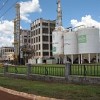
BRAZIL: Sugar Cane Fields Turned into Industry in Sertãozinho
"A disappointment" was his first impression of his new city. It was small, half the size of his hometown of Barretos, and had "weak lights," says Marcelo Pelegrini, remembering his family's move to this southern Brazilian city when he was nine years old, after his father got a job transfer.
BRAZIL: Belo Monte Dam Faces Endless Hurdles and Controversies
The Xingu river flows around small isles and islands and across rapids and waterfalls in Brazil's Amazon jungle, and has a dramatically reduced flow during dry season. Navigating it presents constant hurdles and risks.ELECTIONS-PERU: The Real Race Will Be the Run-Off
The only certainty about Sunday's general elections in Peru is that all the polls predict a victory for nationalist candidate Ollanta Humala, but say he will not have enough votes to secure the presidency in the first round.Social Networking Sites Mobilise Mexicans Fed Up with Violence
Thousands of people took to the streets in 20 cities across Mexico Wednesday to protest the wave of drug-related killings, in demonstrations triggered by the murder of the son of poet Javier Sicilia, in another show of the power of social networking sites in channelling public outrage.
HEALTH-COLOMBIA: Controversy Still Surrounds Malaria Vaccine Pioneer
The announcement of progress towards making synthetic vaccines against 517 infectious diseases, and the award of an international prize for his work have stirred up lively controversy around Colombian pathologist Manuel Elkin Patarroyo, a malaria vaccine pioneer.
WORLD HEALTH DAY-BRAZIL: First Map of Clusters of Antibiotic Resistance
Scientists in Brazil have created the first map of clusters of antibiotic resistance in Brazil, linking the phenomenon to abuse of the drug and opening doors to guide public policies for antibiotic prescription and sales.
Brazil Beefs Up Nuclear Emergency Plans
The Brazilian government is tightening safety procedures at its two nuclear power stations. Although this South American country is not prone to earthquakes or tsunamis, it is not exempt from natural disasters like landslides and flooding that could jeopardise evacuation plans if a radiation leak occurred.
BRAZIL: Porto Alegre Cyclists Step Up Demands for Bike Lanes
In the weeks since a motorist mowed down dozens of cyclists in the southern Brazilian city of Porto Alegre, the incident has becoming a rallying flag in the fight to create a more bike-friendly city.
ARGENTINA-BOLIVIA: Gas Pipeline to Boost Development, Revenues – But Not for Everyone
"The pipeline will carry gas to Bolivia and seven provinces in Argentina, but we who live in Campo Durán, where the pipeline starts, will not have gas," Julio Palavecino told IPS.BRAZIL: Science and Sugar Cane Produce Versatile Harvest
For nearly five hundred years, sugar cane was used almost exclusively for making sugar, with a handful of by-products like rum, alcohol and molasses. Now, in Brazil, it has become a source of multiple derivatives, and the focus of much scientific and technological research.« Previous Page — Next Page »


The Week with IPS

NEXT STOP - SDGs
Tracking global progress towards a sustainable world

