Languages
Thursday, November 26, 2026



News and Views from the Global South
Latin America & the Caribbean
COLOMBIA: Rights Groups Want "Body Count" General Investigated
Human rights groups are insisting that the resignation of Colombia’s army chief must not stand in the way of an in-depth investigation of the numerous human rights abuses in which he is implicated.MEXICO: Doubts Surround Death of Interior Minister
Nobody dares to say for certain that foul play caused the plane crash that took the lives on Tuesday of Mexican Interior Minister Juan Camilo Mouriño and a senior adviser involved in the war against the drug cartels. But the air is thick with doubts.DRUGS-BOLIVIA: DEA Ousted – What Now?
Relations between Bolivia and the United States have reached a new low over La Paz's recent decision to expel the U.S. Drug Enforcement Administration (DEA). The fight against drug trafficking and resources to rehabilitate addicts are also in jeopardy, experts warn.PARAGUAY: The Struggle for Land
The government of Paraguayan President Fernando Lugo is facing its first big challenge: providing solutions for the age-old dispute over land ownership between peasant farmers, large landholders and Brazilian settlers.RIGHTS-COLOMBIA: Army Chief Steps Down
General Mario Montoya stepped down as Colombia’s army chief, putting an end to his career Tuesday. The general is under investigation by the attorney general’s office, although he has not yet been charged.POLITICS: Civil Society Demands Voice at Americas Summit
Caribbean civil society groups say they want to have direct input at the Fifth Summit of the Americas to be held in Trinidad and Tobago next April, and are urging hemispheric governments to begin implementing some of the 600 recommendations that have been agreed upon at previous summits dating back to 1994.RIGHTS-COLOMBIA: UN Warns of Civilian Killings by Military
The extrajudicial executions that are being committed by government forces in Colombia constitute crimes against humanity, United Nations High Commissioner for Human Rights Navi Pillay said at the end of her six-day fact-finding tour of this South American country.
COLOMBIA: Native Protest Continues Despite Talks with Uribe
In his meeting with indigenous protesters Sunday, Colombian President Álvaro Uribe did not give in to any of the movement’s main demands, and the demonstrators decided to continue their protest, which is in its fourth week.RIGHTS-PARAGUAY: New ‘Archives of Terror’ Unearthed
The discovery Friday of new archives from the dictatorship of Alfredo Stroessner is expected to shed new light on the regime that ruled Paraguay from 1954 to 1989.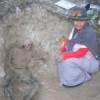
RIGHTS-PERU: Three More Bodies Found at Accomarca
The bodies of three civilians, victims of a 1985 massacre perpetrated by Peruvian soldiers in the highlands village of Accomarca, were disinterred by their families and judicial authorities. They may be the last to be exhumed by judicial order.PARAGUAY: Unjustly Imprisoned Inmates Revive Debate on Prison Conditions
An 11-year delay in releasing a prisoner in Paraguay drew attention to the need for a computerised register of inmates, and revived debate on a prison system that continues to be plagued by problems like overcrowding and lack of access to healthcare and food.RIGHTS-COLOMBIA: Extrajudicial Killings Under Scrutiny
The dismissal of 20 officers and seven noncommissioned officers for extrajudicial executions of civilians presented as battlefield casualties "is a triumph for human rights organisations and for Colombian society as a whole," said Reynaldo Villalba of the José Alvear Restrepo Lawyers Collective.CHILE: Maize Contaminated with Transgenics
The Institute of Nutrition and Food Technology (INTA) at the University of Chile has detected genetically modified organisms in four samples of conventional maize grown near fields where transgenic maize seeds are being produced for export.PERU: Prosecutors Investigate Wiretapping Operation
Prosecutors in Peru are investigating illegal wiretapping allegedly committed by private security companies or police and military intelligence bodies.VENEZUELA: Simon Bolivar in Orbit
Venesat-1 Simón Bolívar was launched into space Wednesday in China, making Venezuela the fourth Latin American country with its own satellite, along with Argentina, Brazil and Mexico.MEXICO: Oil Reforms Leave State in the Red
The oil industry reforms approved by the Mexican Congress and applauded by the government and most of the country’s parties, with the exception of factions on the left and part of the business community, will deprive the state of a source of funding that currently finances 40 percent of the public budget.
ARGENTINA: Illegal Embankment Continues to Harm Wetlands
The government of the northeastern Argentine province of Corrientes has been unable to enforce the ruling of the district's highest court, which nearly a year ago ordered the removal of a 30-kilometre embankment that is damaging the valuable wetlands ecosystem known as the Esteros del Iberá.COSTA RICA: Indigenous People Still Largely Invisible
In Costa Rica, the most advanced country in Central America in terms of human development, indigenous people tend to be neglected and forgotten.EL SALVADOR: Young People Get Summit, But No Convention
On the eve of the 18th Ibero-American Summit in the capital of El Salvador, President Antonio Saca still refuses to sign the bloc's Convention protecting young people's rights, even though the main theme of the meeting is youth and development.ECONOMY-SOUTH AMERICA: Eyes Wide Open
The reaction by South America’s Mercosur trade bloc to the current global financial crisis is limited for the time being to observing "possible impacts" on stock markets, production and unemployment, and "maintaining fluid and agile communications" regarding any measures taken by each member country.
COLOMBIA: Where Dialogue Seems Impossible
Dialogue - or, more accurately, the lack thereof - was the common denominator in two high-profile events Sunday in the western Colombian city of Cali, demonstrating to what extent this vehicle of mutual understanding is missing in this civil war-torn South American country.« Previous Page — Next Page »


The Week with IPS

NEXT STOP - SDGs
Tracking global progress towards a sustainable world

