Languages
Friday, November 27, 2026



News and Views from the Global South
Latin America & the Caribbean
EL SALVADOR: Violence Imposes Huge Economic Burden
Medical care for victims, protection of property and restoring material damages caused by the high level of crime in El Salvador take up a large proportion of state resources, while the authorities are failing to come up with a solution for the rising tide of violence.RIGHTS-CHILE: Historic Mass Arrest of Soldiers
In an unprecedented decision, Chilean Judge Víctor Montiglio ordered the arrest of 98 former members of the security forces in connection with the abduction and killing of 42 leftists in 1974.
COLOMBIA: No Big Changes Expected after Rebel Chief’s Death
The death and replacement of FARC chief "Manuel Marulanda" will bring neither a breakdown nor a change in direction in the Colombian rebel group, which has been militarily weakened and has fallen silent on the political front, according to experts on Latin America’s longest-lived guerrilla movement.OIL-MEXICO: PEMEX Reform Debate Entrenched in Dogma
The debate in the Mexican Congress over the government’s proposals to reform the state oil company, PEMEX, has placed the oft- amended constitution of 1917 and the elusive concepts of nationalism and sovereignty squarely at the centre of the controversy.SOUTH AMERICA: Regional Integration Back on the Agenda
Political and economic integration as a strategy to combat poverty in South America was put back at the top of the regional agenda Friday with the signing of a treaty that created the Union of South American Nations (UNASUR) in the Brazilian capital.POLITICS-CARIBBEAN: PMs Fight for Survival
Stephenson King and Bruce Golding waited years, even decades, to become prime ministers of their respective countries. Now both face the possibility of fresh general elections just months into their terms, although for different reasons.VENEZUELA: Fifty-Two Violent Deaths a Day, and No Respite in Sight
On the day a report was released ranking Venezuela as one of the most violent countries in the world, a local anti-drugs prosecutor was murdered, a mob lynched a suspected criminal in the capital, and gunmen fired 20 shots, killing another suspect.SOUTH AMERICA: Brazil Tries to Regain Initiative, at Summit
The formal creation of the Union of South American Nations (UNASUR) in the Brazilian capital Friday, where 12 heads of state and government will sign a treaty, highlights the differences between Brazil and Venezuela on the future of regional integration, say analysts.
LATIN AMERICA: The Divorce of Agriculture and Biodiversity
Latin America's vast biological diversity has contributed little to the region's commercial agriculture, despite being the birthplace of two of the world's four most widely consumed food crops: maize and potatoes.BRAZIL: Agribusiness Undermines Environmental Leadership Role
Brazil is a world leader in agriculture and on several environmental issues, but it will find it hard to reconcile both fronts, judging by the many battles lost by former environment minister Marina Silva, in spite of the political clout she wielded for over five years.MEXICO: Disappeared Oil Workers – Out of Sight, Out of Mind
Five workers and three pensioners from the Mexican state oil company PEMEX disappeared one year ago. A lawmaker suspects that they were detained by the army, but there are also signs that point to drug traffickers or the company’s own union.EL SALVADOR: Poor Eating Less While Food Prices Soar
Eating less is the only option left to the poorest of the poor in El Salvador, in the face of the steady rise in global food prices, which has had an impact on the domestic cost of staples like rice, beans, tortillas, milk, eggs and bread.
PARAGUAY: Women’s Cooperative Buys in Bulk to Beat Food Inflation
Making the old saying "cheaper by the dozen" their motto, a group of women in a poor neighbourhood of Asunción created a cooperative to buy food in bulk, in order to combat the rise in food prices.
Q&A: The Public Image of Chile’s Post-Pinochet Military
"Chilean society does not want to forgive and forget; it wants justice" in human rights abuse cases, says historian and political scientist Claudio Fuentes, one of the authors of a new study that takes a look at how Chilean perceptions of the armed forces changed from 1991 to 2007.CHILE: Courts Active in Human Rights Cases, but Results Mixed
A concert was held in the Chilean capital Monday to protest a judge’s decision to close the case involving the murder of folksinger Víctor Jara, who was killed by the dictatorship of Augusto Pinochet 35 years ago.ARGENTINA: Multimedia Youngsters not Isolated
Many parents in Argentina, like their counterparts in developed countries, worry that their teenage children spend too much time on their computers and cell-phones, with little real-life interaction with others, and devoting hardly any time to reading. But a new study shows that such beliefs are partly based on preconceived notions that do not stand up to scrutiny.CUBA: Exhibitionists Common but Ignored
Many Cuban women say they have been victims of male exhibitionism, a form of sexual aggression that is common in public spaces on the island, according to a documentary produced by the state Institute of Cinematographic Arts and Industry (INCAIC) which has attracted the attention of social scientists.
BRAZIL: Leading Agroscience Has Few Links to Small Farmers
Brazil has the most advanced agricultural science and technology system of the world's tropical countries, with an array of environmental and high-production solutions, but which rarely reach their intended target: the small farmer.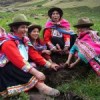
PERU: Women – The Guardians of Potato Biodiversity
In South America’s Andes mountain region, indigenous women have traditionally been responsible for selecting, conserving and managing seed potatoes from the countless native varieties of the crop, thus ensuring diversity and continued production while contributing to food security among their people.ECONOMY-ARGENTINA: Manufactured Crisis?
The ongoing conflict between the Argentine government and the country’s rural associations has prompted growing numbers of savers to withdraw their bank deposits in pesos and change them for dollars, even though experts, pointing to the strong fiscal situation and high levels of foreign reserves, say there is no reason to worry.COLOMBIA: Interpol Notes Improper Initial Handling of FARC Laptops
Interpol reported Thursday that the files found on computers that Colombia seized from a FARC guerrilla camp in March were not tampered with and did belong to the rebel group.« Previous Page — Next Page »


The Week with IPS

NEXT STOP - SDGs
Tracking global progress towards a sustainable world

