Languages
Thursday, August 27, 2026



News and Views from the Global South
Latin America & the Caribbean

Why Paraguay Can Be a “Beacon State” for Forest Management
Imagine a forest that covered half of your entire country. A biodiverse forest which supports thousands of species from giant anteaters to armadillos to jaguars. A forest that is home to one the world’s last uncontacted tribes.1
Synergy with Hydropower Plants Boosts Biogas Production in Brazil
Fomenting biogas production among agricultural producers may seem at first glance to be a distraction from the purpose of Itaipu, the giant hydroelectric power plant shared by Brazil and Paraguay, but in fact it is part of their energy business strategy.
Strengthening Caribbean Regional Integration
The Caribbean economies have long recognized the value of working together. Improving regional integration—for instance, through more intraregional trade and policy coordination—can help the region’s small-size economies build greater resilience and scale, as well as enhance bargaining power on the global stage.
Venezuela: Violent Abuses in Illegal Gold Mines
Residents of Venezuela’s southern Bolívar state are suffering amputations and other horrific abuses at the hands of armed groups, including Venezuelan groups called “syndicates” in the area and Colombian armed groups operating in the region, both of which exercise control over gold mines, Human Rights Watch said Tuesday, February 4.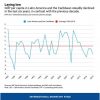
New Challenges to Growth in Latin America & the Caribbean
Economic activity in Latin America and the Caribbean stagnated in 2019, continuing with the weak growth momentum of the previous five years and adding more urgency and new challenges to reignite growth.
Leprosy Re-emerges as a Global Health Challenge
Fifteen years ago, Sattamma – a daily labourer in the Rangareddy district of southern India’s Telangana state – was abandoned by her husband after she was diagnosed with Hansen’s Disease.
Lithium and Clean Energy in Argentina: Development or Mirage?
The intense white brightness of the salt flats interrupts the arid monotony of the Puna in northwest Argentina, resembling postcards from the moon. Beneath its surface are concealed the world's largest reserves of lithium, the key mineral in the transition to clean energy, the mining of which has triggered controversy.
Solar and Biogas, the Perfect Agroenergy Duo in Brazil
 "They're the ideal duo," because the combination of solar and biogas sources makes it possible to provide electricity around the clock, one during the day and the other at night, says Anelio Thomazzoni, a pig farmer who has become a producer of clean energy in southwestern Brazil.
Haiti’s Cry for Help as Climate Change is Compared to an Act of Violence against the Island Nation
Haiti’s Environment Minister Joseph Jouthe has compared the climate emergency to a violent act and appealed to the international community for help to fight climate change.
Commonwealth: Commit to Limit Global Warming or Face Irreversible Impacts
Commonwealth countries, including those in the Caribbean, continue to push for more ambition, following reports that a few very influential parties have stymied efforts to respond to the climate emergency.
South-South Cooperation Offers Solutions to Urgent Climate Challenges
Climate change is the defining challenge of our time, and developing countries are recognized as hotspots for climatic risks. Through solidarity, peer-to-peer learning and collective self-reliance, developing countries are collaborating among themselves to address the threat.
Nature-Based Climate Solutions Opportunity for Latin America
Protecting and restoring natural areas in Latin America, home to fifty percent of the planet’s biodiversity and over a quarter of its forests, is critical if the world is to avert a biodiversity and climate disaster.
Water Is Worth More than Milk in Extrema, Brazil
"They called me crazy" for fencing in the area where the cows went to drink water, said Elias Cardoso, on his 67-hectare farm in Extrema, a municipality 110 km from São Paulo, Brazil's largest metropolis.
IDB Modernises Crucial Social and Environmental Safeguards
The Inter-American Development Bank (IDB) is in the process of modernising the social and environmental safeguards that govern the financing of projects considered vital for the construction of sustainable infrastructure in the Latin American region.
Evo Morales: Hero or Villain?
To be president in a country like Bolivia might be like a precarious act performed by a tightrope-dancer between “the Devil and the deep blue sea”. After 23 years as Bolivia’s President, Evo Morales finally lost his foothold and ended up as political refugee in Mexico, adding his name to a long list of previous revolutionary exiles, like Augusto Sandino, Fidel Castro, and most prominently – Leon Trotsky. The last one was murdered, though the others came back, something Evo Morales has promised to do:
Rock Glaciers Supply Water to Highlands Communities in Argentina
In Argentina's Puna region, at 4,000 metres above sea level, the color green is rare in the arid landscape, which is dominated by different shades of brown and yellow. In this inhospitable environment, daily life has improved thanks to a system of piping water downhill from rock glaciers to local communities.
Central America – Fertile Ground for Human Trafficking
Central America is an impoverished region rife with gang violence and human trafficking - the third largest crime industry in the world - as a major source of migrants heading towards the United States.
Going with the Wind: Transition to Clean Energy in Latin America & the Caribbean
The UN Climate Action Summit 2019, which took place in the days leading up to the 74th UN General Assembly, delivered new pathways and practical actions for governments and private sector to intensify climate action.
Solar Cookers Produce More Than Food for Mexican Women
The sun's rays are also used to cook food and thus replace the burning of firewood and gas, improve the health of local residents and fuel the energy transition towards the use of renewable sources - the objectives of an enterprise in the southern Mexican state of Oaxaca. 
More Women in Latin America are Working, but Gender Gap Persists, New UN Figures Show
More women are entering the workforce across Latin America, with an increase in 11 per cent in the last 30 years, putting the region ahead of the curve when it comes to growth in female labour force participation, according to new data published by the United Nations on Monday.
Solar Energy Transforms Villages in Argentina’s Puna Highlands
"On moonless nights it was very difficult to walk around this town," says Celia Vilte, a teacher from San Francisco, a highlands village of just 54 people in the extreme northwest of Argentina whose centre is not a town square but 40 solar panels, which provide one hundred percent of its electricity.« Previous Page — Next Page »


The Week with IPS

NEXT STOP - SDGs
Tracking global progress towards a sustainable world
Tracking global progress towards a sustainable world

