Languages
Sunday, October 4, 2026



News and Views from the Global South
North America
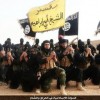
Foreign Fighter Recruits: Why the U.S. Fares Better than Others
More than 25,000 fighters seeking to wage “jihad” or an Islamic holy war have left home to join terrorist networks abroad.
Opinion: Two Winners and One Loser at the Summit of the Americas
U.S. President Barack Obama has earned a place in history for taking the first steps towards rectifying a policy that has lasted over half a century without ever achieving its primary goal of ending the Castro regime in Cuba.
Latin America Heralds New Era with United States
Latin America presented its own recipes for development in the new era of relations with the United States in the Seventh Summit of the Americas, where Cuba took part for the first time and the U.S. said it would close the chapter of “medd[ling] with impunity” in its neighbours to the south.
From Punta del Este to Panama, the End of Cuba’s Isolation
U.S. President Barack Obama was only four days old when Comandante Ernesto “Che” Guevara publicly castigated the United States’ policy of hostility toward Cuba at an inter-American summit, reiterated then Prime Minister Fidel Castro’s willingness to resolve differences through dialogue on an equal footing, and held secret conversations with a Washington envoy.
Child Labour on U.S. Tobacco Farms: A Stubborn Problem in a Billion-Dollar Industry
For many young people, the summer is synonymous with free time, relaxation, or family vacations. For less fortunate kids the summer means labour, with scores of youths taking on part-time work to support their families.
Opinion: Rape in Conflict: Speaking Out for What’s Right
Earlier this month, President Barack Obama delivered an impassioned speech marking the 50th Anniversary of the civil rights march from Selma to Montgomery, Alabama and the bloody attack on civil rights marchers by police.An American Missionary Kidnapped in Nigeria as Neighbouring Countries Seethe
With kidnappings and violent attacks almost a daily occurrence in Nigeria, the disappearance of an American missionary appears to have stirred a new wave of outrage among the international community at the worsening conditions in the West African country, once considered a rising star and the largest economy on the continent.
Tobacco Workers in Cuba Dubious About Opening of U.S. Market
“We have to wait and see,” “There isn’t a lot of talk about it,” are the responses from tobacco workers in this rural area in western Cuba when asked about the prospect of an opening of the U.S. market to Cuban cigars.
OPINION: U.S. and Middle East after the Islamic State
As the Congress ponders President Barack Obama’s request for an Authorization for Use of Military Force (AUMF) to fight the Islamic State (ISIS or IS), U.S. policymakers must focus on the “morning after” before they embark on another potentially disastrous war in the Levant.
Money Pipeline Flowing Between U.S. Congress and Big Oil
With battle lines sharpening over the stalled Keystone XL pipeline, a new analysis details the intense industry lobbying of both houses of the U.S. Congress since 2013 – to the tune of 58.8 million dollars by five refinery companies alone.
OPINION: This Is Going to Hurt Me More Than It Hurts You
“Enhanced interrogation”: the George W. Bush administration bureaucrats who coined the term had perfect pitch. The apparatchiks of Kafka’s Castle would have admired the grayness of the euphemism. But while it sounds like some new kind of focus group, it turns out it was just anodyne branding for good old-fashioned torture.Debating U.S. Foreign Policy: Where are the Women?
Women are running some of the United States’ most prominent foreign policy focused think tanks, leading U.S. diplomatic initiatives, and reporting from the front lines of the world’s most dangerous conflict zones.
Medical Marijuana May Not Benefit New York’s Poor Patients
A bill which will bring medical marijuana to New York State in 2016 will leave the treatment inaccessible to low-income patients, community groups warn.
Obama-Congress Iran Sanctions Battle Goes International
While it’s anyone’s guess whether a final deal will be reached over Iran’s nuclear programme this year, a number of key international actors have forcefully weighed in on calls from within the U.S. congress to impose more sanctions on the Islamic Republic.
U.S. May Soon Stand Alone Opposing Children’s Treaty
When the East African nation of Somalia, once described as a "lawless state", ratified the Convention on the Rights of the Child (CRC) early this week, it left two countries in splendid isolation from the rest of the world: South Sudan and the United States.
OPINION: Cuba and the United States – A New Era?
On Dec. 17, by freeing the five Cuban anti-terrorists who spent over 16 years in U.S. prisons, President Barack Obama repaired a longstanding injustice while changing the course of history.
The Day CIA Failed to Un-beard Castro in His Own Den
The controversial low-brow Hollywood comedy, 'The Interview', portrays the story of two U.S. talk-show journalists on assignment to interview Kim Jong-un - and midway down the road are recruited by the Central Intelligence Agency (CIA) to poison the North Korean leader.
From the American Dream to the Nightmare of Deportation
Julio César Cordero’s American dream didn’t last long. He was trying to reach Houston, Texas as an undocumented immigrant but was detained in Acayucán in southeastern Mexico. And like thousands of other deported Salvadorans, he doesn’t know what the future will hold.
OPINION: Sabotaging U.S.-Cuba Détente in the Kennedy Era
I grew up in Hickory Hill, my family’s home in Virginia which was often filled with veterans of the failed Bay of Pigs invasion.
OPINION: JFK’s Secret Negotiations with Fidel
On the day of President John F. Kennedy’s assassination in November 1963, one of his emissaries was secretly meeting with Fidel Castro at Varadero Beach in Cuba to discuss terms for ending the U.S. embargo against the island and beginning the process of détente between the two countries.
Thaw with U.S. Finds Transformed Civil Society in Cuba
The normalisation of relations between Cuba and the United States opens up a new path of “readjustments not free of risks”, which forms part of the process of “national transformation” ushered in by Raúl Castro, said Lenier González, one of the creators of the citizen initiative Cuba Posible.« Previous Page — Next Page »


The Week with IPS

NEXT STOP - SDGs
Tracking global progress towards a sustainable world
Tracking global progress towards a sustainable world
