Languages
Wednesday, October 7, 2026



News and Views from the Global South
Agriculture

Reviving Family Farming in Angola, Carrot by Carrot
"We never used to eat carrots, but now we like them," said Rebeca Soba, admiring her vegetable garden, an island of diversity in the midst of a vast sugarcane plantation. Vegetable gardening has been introduced at the Capanda Agroindustrial Pole (PAC) as a source of income for local small farmers.
War’s End Threatens Water Supply in Northern Sri Lanka
War is seldom good for anything, especially protracted conflicts like the one in Sri Lanka, which dragged on for over three decades and claimed between 80,000 to 100,000 lives.
Agricultural Waste Boosts Energy Production in Argentina
A joint project by the energy and agriculture authorities in Argentina is seeking to boost electricity generation from forestry waste and other rural products which have enormous potential, according to experts.
Senegal Finds the Cooperative Way to More Food
Over the past two years, millet production has reached record levels in Dya, a rural community in the Kaolack region of central Senegal, where the Agricultural Value Chains Support Project (PAFA) is supporting two farmers' collectives.
Farming in Bangladesh Stays Afloat – Literally
With the rains over Gopalganj district intensifying each year and much of Baikantapur village permanently waterlogged, Bijoy Kumar Sen had little choice but to abandon traditional rice farming and grow vegetables on bairas – floating islands built of straw and aquatic plants.Tractors Revolutionise Agriculture in Chad
Chad has more than 400,000 square kilometres of arable land, but poor rainfall and a reliance on basic agricultural techniques have left the country with a grain deficit in the past two years. The government is turning to mechanisation in a bid to improve harvests.Microfinance Brings Hope to Myanmar’s Farmers
After decades of grinding poverty under successive military dictatorships, Myanmar’s rice farmers have a chance at a better future through rural reforms ushered in by the country’s quasi-civilian government. Microfinance is at the root of it.
Losing Land, and Finding a Roof
Asmahan Ramadan and her family have taken thousands of photos on the rooftop of their home. Not of themselves, or of the overcrowded Dheisheh refugee camp they see every day.
Forcing South Sudan’s Idle Youth into Farming
Police in South Sudan have begun press-ganging every "idle" youth they can find to provide labour on police farms. The State Police Commissioner in Northern Bahr al Gazal state says young men cannot be left to drink tea and play cards all day while food insecurity threatens the country.
Thousands of Senegalese Producers Living off Market Gardening
Thousands of farmers are earning a living growing fruit and vegetables in the Niayes, a strip of fertile land running north along Senegal's western coastline from the outskirts of the capital, Dakar. But land speculation threatens the future of this market gardening.A Green Gold Mine in the Heart of the DRC Capital
A disused cemetery in the heart of Kinshasa, the capital of the Democratic Republic of Congo, has been transformed into a profitable urban garden. Relying on compost they make themselves on the site, a small group of gardeners are enjoying plentiful returns.
Men and Women Farming Together Can Eradicate Hunger
Three years ago, the residents of the semi-arid Yatta district in Kenya’s Eastern Province lived on food aid due to dwindling crops of maize that could not thrive because of the decreased rainfall in the area. That was until a local bishop, trying to find ways to prevent mothers from forcing their teenage daughters into prostitution, changed everything.
Women Spend 40 Billion Hours Collecting Water
As the weeklong international conference on water concluded Friday, it was left to one of the keynote speakers from the United Nations to focus on a much neglected perspective on water and food security: the role of women.
International Food Prices Again at Record Levels, World Bank Warns
After decreasing somewhat in recent months, international food prices have again risen dramatically, according to figures published on Thursday by the World Bank. Statistics for July indicate a 10 percent rise over just the previous month, and a six percent increase over already high prices from the same time frame a year ago.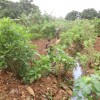
Farming Among the Waste in Cameroon
Cameroonian urban famer Juliana Numfor has six plots of land where she grows maize, cassava, sweet potatoes and leafy vegetables, including cabbages, wild okra and greens.Filling the Granaries in Burkina Faso
The seeds were sown, and the harvest is beginning to come in. Burkina Faso farmers are reaping the benefits of their government's programme to develop and popularise improved varieties of maize.
“Operation No Back Way to Europe” Keeps Young Farmers at Home in Gambia
Mohamed Ceesay, a 20-year-old farmer from the Central River Region in the Gambia, is a high school dropout. But thanks to an initiative to discourage local youths from emigrating to Europe, he earns almost half the salary of a government minister from his rice harvest.
“The Truth is That All Problems Have Solutions” – Even Climate Change in Ethiopia
Eight years ago Kenbesh Mengesha earned an uncertain income collecting firewood from local government forests and selling them to her fellow slum-dwellers in Addis Ababa, Ethiopia. She would earn on average about 50 cents a day, if she was lucky.Getting a Grip on Food Security in DR Congo
The Association for Integrated Rural Development is one of a number of rural organisations on the periphery of Kinshasa, the capital of the Democratic Republic of Congo, which are strengthening the city's food security while demonstrating how to maximise sustainable use of agricultural land.Food Security and the Failure of Mechanisation in DRC
Mechanisation was expected to transform agriculture in the Democratic Republic of Congo's central province of East Kasaï. But a project to offer tractors for ploughing land has fallen flat.
Livelihoods Drying Up on Malawi’s Lake Chilwa
Fisherfolk and farmers living near Malawi’s second-largest water body, Lake Chilwa, are relocating en masse and scrambling for space around its shores as the lake has dried to dangerously low levels.« Previous Page — Next Page »





The Week with IPS

NEXT STOP - SDGs
Tracking global progress towards a sustainable world
Tracking global progress towards a sustainable world
