Languages
Saturday, October 17, 2026



News and Views from the Global South
Education

Q&A: Rescuing Child Soldiers in CAR
The protection of children remains critical in the Central African Republic, where parents willingly give their children to armed groups in exchange for protection and services.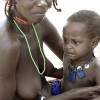
In the Pursuit of Education: Burkina Faso’s School for Shepherds
Salou Bandé is proud to stand at the front of the only classroom in the village of Bénnogo, 90 kilometres north of the Burkina Faso capital, Ouagadougou, sharing his knowledge with his students. He is part of an initiative to improve education for nomadic children in the West African country.To Reduce Teen Pregnancies, Start with Educating Girls
Each year, 16 million girls aged 15-19 give birth. 50,000 of them die from complications related to pregnancy and childbirth. And 95 percent of those births occur in developing countries.
Understanding the Roots of Ghana’s Child Labour
At eleven years old, Thema, a native of Kumasi, hopes to be a nurse when she grows up. Currently, however, she is employed wandering between taxis and tro-tros or minibus taxis at rush hour, carrying packs of ice water on her head and selling them for 10 pesewas apiece. She manoeuvres through traffic in Ghana’s second-largest city with practiced ease; she has been doing this for four years.
South Sudan’s Women Await Independence From Poverty
One year after the formation of South Sudan, the country’s women say that independence has not resulted in the positive political, economic and social changes that they had hoped for.
Liberia’s Baby Blues – No Policy for Pregnant School Girls
Patricia Kollie should be at school today but instead she is at home in Gbarnga, Liberia, pounding a pile of cassava leaves in a wooden mortar. Her entire body is slightly swollen. Her dress fits a little too snug at the stomach.
Success of Remedial Education in DRC
The government of the Democratic Republic of Congo is enjoying success with the remedial education centres set up to give children from underprivileged backgrounds a free education and vocational training.
Green, Cyclone-Resistant Schools for Madagascar
This year, the cyclone season's heavy rains did not mean the usual days off school for children in Marolondo, a village in the Fénérive-Est district, 450 kilometres northeast of Antananarivo, the capital of Madagascar.
Distribution of Laptops Expands in Latin America’s Classrooms
In Latin America, the distribution of laptops in public schools, an effort that has enjoyed success in countries like Argentina, Uruguay and Venezuela, is being studied by the governments of other nations interested in learning from their experience about the challenges that can be expected.Facing Painful Cuts and Tuition Hikes, U.S. Students “Occupy Education”
Shawn Deez, a freshman in peace and conflict studies, says she thinks she knows why some classes are scheduled at the University of California, Berkeley, and some are not. It's corporate influence that makes the difference, she said.U.N. Meet Holds Governments to Account on Women’s Equality
In 2008, delegates meeting for the annual U.N. Commission on the Status of Women (CSW) agreed that much greater investments in women and gender equality were a critical – and overlooked – aspect of sustainable development.SOUTH AFRICA: Rural School Running on Methane Bio-Gas
Tucked against the rolling hills of South Africa’s Eastern Cape province, a small rural school has been turning its kitchen scraps, and agricultural and human waste into methane gas for cooking, and nutrient-rich fertiliser, and is even recycling its water.« Previous Page





The Week with IPS

NEXT STOP - SDGs
Tracking global progress towards a sustainable world
Tracking global progress towards a sustainable world
